

Why custodians must adapt with technology, not reinvent themselves
AS THE US$245 billion digital asset industry continues to grow, modern custodian banks today are expected to leverage technology to better safeguard both the traditional and digital assets of their customers.
But is this really enough to thrive in the current Covid-19 economic crisis that's set to trigger a potential global recession?
The true challenge custodians are facing is how to use technology to enhance their existing services, without completely reinventing themselves.
In other words: custodians must do more than simply safeguard assets; they must move toward using technology to better serve them.
From safeguarding to servicing digital assets
Throughout history, custodians have had to adapt with technology to deliver on their core financial services. And with at least US$9.8 billion in cryptocurrency assets stolen by hackers since 2017, it's no surprise that the safeguarding of assets has remained a core function of many custody service providers.
But what happens to all their other added-value services - trade settlements and clearing, funds processing, asset servicing, open finance and access to capital markets - when all the attention is focused purely on technology-backed security?
Companies that currently hold only digital assets are so focused on safekeeping, they forget to invest in the technology needed to build up all the other vital service offerings.
The same can be said for larger, more traditional custodians who have adopted the technology needed to better safeguard digital assets from cyber attacks - but have yet to find ways to cost-effectively service these assets.
Parallels between traditional and digital assets
As custodians move towards building out these added-value services, they must first understand the parallels between traditional financial services and the digital asset space.
Let's take the example of company shares. In a traditional setting, a custodian that holds Apple shares for a customer is required to collect dividends on behalf of that customer. In much the same way, custodians operating in the digital asset space should be able to collect income for security tokens owned by customers.
Underlying all this is the fact that tokenised securities are still representations of value or contractual rights in real-world assets. Just as traditional custodians hold bullion on behalf of investors, modern custodians must be able to hold gold-based tokens for digital asset investors.
Like stocks, these digital tokens act as records of ownership of the asset, effectively becoming the digital version of a real piece of gold. At the end of the day, it's crucial that custodians understand how to continue to service these assets the way traditional custodians would.
While the core custodial service remains the same, the technology that's needed to enable the servicing of digital assets is different to that of their traditional counterpart. So, what technologies should custodians invest in to build out these services?
Moving from stewards to servicers
Custodians in the digital asset space must invest more heavily in technology and sufficient R&D.
This means not only investing in the development of blockchain-backed platforms, but also in leading cryptographic techniques. What this will do is not only enhance digital asset security but allow for customer transactions to be completed more efficiently. Custodians should also consider employing cryptographic experts, or training their current traditional custody service providers in how to utilise blockchain-backed technologies to better serve digital asset investors.
By properly investing in the expansion of these services, custodians will evolve into "one-stop-shops" for digital asset investors, where they can provide their customers with a premium, customised service, similar to that of a custodian bank. It's crucial they continue to do this, or risk being left behind as new competitors enter the digital asset space.
Custodians of the future should keep their eyes on the past
Finally, while we see the importance of custodians integrating technology within their service offerings, they can't forget to stay true to their core custodial principles. In other words, they must be innovative and nimble, without failing to deliver on their fiduciary duties.
Again, this is where traditional finance can offer some inspiration: a custodian, at its core, should always be relationship-driven. This means custodians operating in the digital asset space must find ways to continue to listen to their customers, protect their assets, and support them in their investment strategies.
Automated technology-backed services may be becoming an inevitable part of future custodial services, but custodians must not deviate from their services such that they lose the fundamental principles of what they stand for.
At the end of the day, custodians have built trust with their customers on the foundation of strong, human connections. It's these foundations upon which the finance industry continues to grow.
TRENDING NOW

He built the Vingroup empire. Now South-east Asia’s richest man is handing some key roles to his sons

Seatrium allocates S$200 million for new share buyback programme
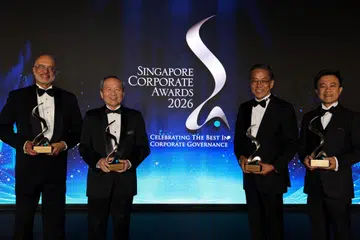
32 companies, 6 individuals bag accolades at Singapore Corporate Awards 2026

Stocks to watch: Mapletree Logistics Trust, Seatrium, Keppel DC Reit, Food Empire

