Why Japan is centre stage in anti-China alliance
The US regards Tokyo as a critical bulwark against the advance of China in Asia-Pacific.
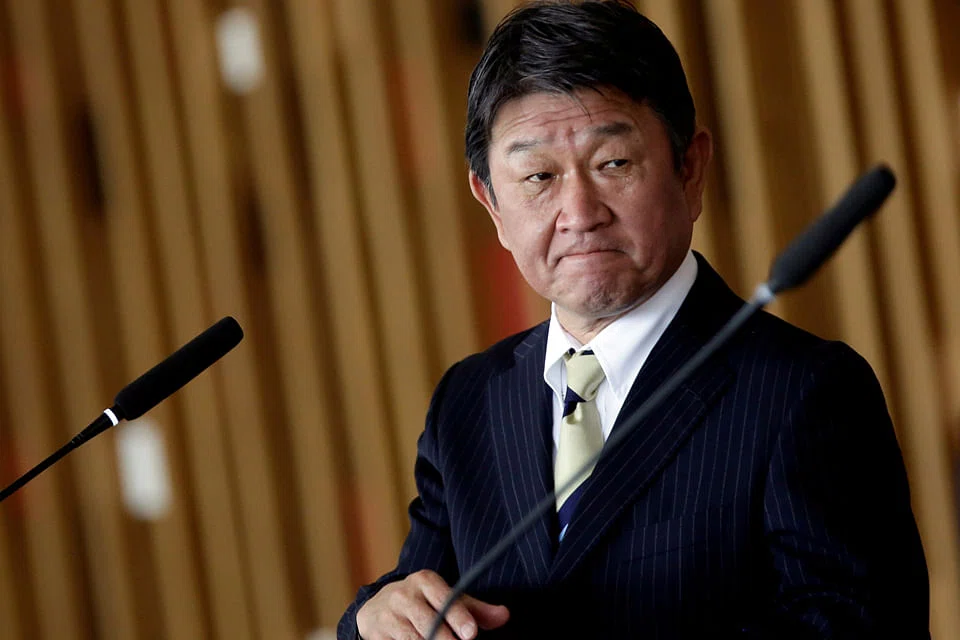
JAPAN'S growing geopolitical importance will be showcased in coming days as the country hosts the US Secretary of State and Defence Secretary on Monday, and helps convene a reported Quad meeting of Prime Ministers Yoshihide Suga, Narendra Modi, Scott Morrison, and President Joe Biden too.
Next week's visit by US Secretary of State Anthony Blinken and Lloyd Austin to Tokyo will be the first major overseas trip of both key Biden team officials. Their destination, where they will meet for so-called two-plus-two talks with Japanese Foreign Minister Toshimitsu Motegi and Defence Minister Nobuo Kishi, reflects growing US concerns about the challenge posed by a rising China, and North Korea's nuclear and missile programmes.
It is China's increasingly assertive foreign policy in the Asia-Pacific region that is top of the agenda, and the United States is seeking to strengthen ties with its key regional allies. Japan is at the heart of this with the nation increasingly perceived by the Biden team as a critical bulwark against the advance of China and potentially Russia in Asia-Pacific, as was the case during the Cold War too.
Building from the Blinken-Austin-Motegi-Kishi dialogue, the first leadership meeting is reported to convene virtually too of the Quadrilateral Security Dialogue (Quad), between Mr Suga, Mr Biden, Mr Modi and Mr Morrison. US National Security Adviser Jake Sullivan calls this four-way forum the "foundation upon which to build substantial US policy" in the region, and Mr Blinken on Thursday will also engage online with his counterparts in India, Australia and Tokyo.
DIPLOMATIC INITIATIVE
One of the items under discussion is a new campaign Washington, Tokyo, Canberra and New Delhi are working on to distribute Covid-19 vaccines in Asia-Pacific to counter the influence of China. The White House has recently held talks with other members of the Quad about this new diplomatic and security initiative.
Important as Australia and India are in the Quad, the new Biden team sees Japan as being the potential anchor of the US-led anti-China alliance in Asia. For a start, Tokyo is a longstanding member of Western clubs such as the G-7 alongside Italy, Germany, France, United Kingdom, Canada and the United States.
There has also been policy speculation that it could be invited to join the so-called "Five Eyes" intelligence alliance which currently comprises Canada, the United States, United Kingdom, Australia and New Zealand.
Yet, Washington also values the financial lynchpin role that Tokyo can play as the world's third largest economy. Since the end of the Second World War, the gradual transformation of Japan's world role stemmed, in part, from its phenomenal post-war business success which led to growing calls for it to match its economic power with commitment to international political relations too.
Outside of the US, many other Western countries, including in Europe, also welcome Japan's invigorated commitment to international trade and the "rules-based" international order. Not only did Tokyo sign last year a bilateral agreement with Washington, but it has also committed to an EU-Japan trade agreement covering around a third of global GDP and almost 650 million people.
Moreover, Tokyo was at the vanguard of the so-called Comprehensive and Progressive Agreement for Trans-Pacific Partnership (CPTPP) last year with 11 Asia-Pacific and Americas nations (namely Australia, Canada, Singapore, New Zealand, Japan, Chile, Brunei, Malaysia, Mexico, Peru, and Vietnam) which account for around 13 per cent of global trade and a combined population of around 500 million.
This had been originally intended by the Obama administration to lock the United States into deeper strategic partnerships with traditional allies in the region, and it is plausible that the Biden team could seek to join in the next four years.
Beyond these structural factors driving Japanese international policy, former prime minister Shinzo Abe - the longest serving premier in the nation's history - proved personally very adept at consolidating relationships with Western leaders.
He even succeeded in persuading Donald Trump with his America First outlook that the security of Japan needed a strong US commitment as the "cornerstone of peace" in Asia-Pacific. This despite his 2016 assertions that the bilateral relationship had become too one-sided with Japan needing to undertake more financial burden-sharing in international security.
This has created a significant legacy for Mr Suga to build on and fortify Japan-US ties in the face of significant international uncertainty about a range of issues, including North Korea.
Concerns about Pyongyang are rising again after a recent International Atomic Energy Agency (IAEA) report indicated possible reprocessing of nuclear fuel for bombs in the country. US officials believe the move by North Korea could be intended as a bargaining chip with the Biden team to press for sanctions relief. As the administration reviews its policy towards Pyongyang, the IAEA called North Korea's continued nuclear activity a clear violation of UN sanctions and "deeply regrettable".
BEIJING'S ASSERTIVENESS
Japan had been worried that Mr Trump may look to a deal with Kim Jong-un under which Pyongyang would agree to give up missiles capable of reaching the United States, without eliminating short- and medium-range missiles that threaten Tokyo and other Japanese cities.
This issue, however, has become less salient given the stalling of Mr Trump's dialogue with North Korea, and Mr Blinken has said Mr Biden's approach to North Korea could involve more sanctions or other unspecified diplomatic incentives.
Yet, the major driver for the increasing closeness of US-Japan ties is China with a range of worries, including Beijing's assertiveness around the Japan-controlled Senkaku Islands in the East China Sea. This is why Tokyo will welcome its centrality in US foreign policy in the Biden era.
Both sides will reiterate in forthcoming meetings their opposition to unilateral attempts to change the status quo by force or coercion in the East and South China seas, and share their "deep concerns" over Beijing's controversial coastguard law.
The legislation, implemented on Feb 1, allows the Chinese coast guard to use weapons against foreign ships it sees as illegally entering China's waters, raising concerns that it could result in an escalation of maritime disputes. Chinese coast guard vessels have repeatedly engaged in Japanese waters around the uninhabited Senkaku Islands, called Diaoyu in China, in an apparent attempt to undermine Japan's control over them.
Taken together, this is why Tokyo's importance in the Western alliance is of growing, strategic importance. Building from its longstanding membership of clubs like the G-7, the Biden team believes that Japan could now become the anchor of the Quad as it seeks to double down on US alliances in Asia-Pacific in the post-Trump era.
- The writer is an associate at LSE IDEAS at the London School of Economics