Why large corporates need a 'foreign policy' nowadays too
It would align a company's external affairs activity in a clear strategic framework and enable the company to negotiate uncharted territory.
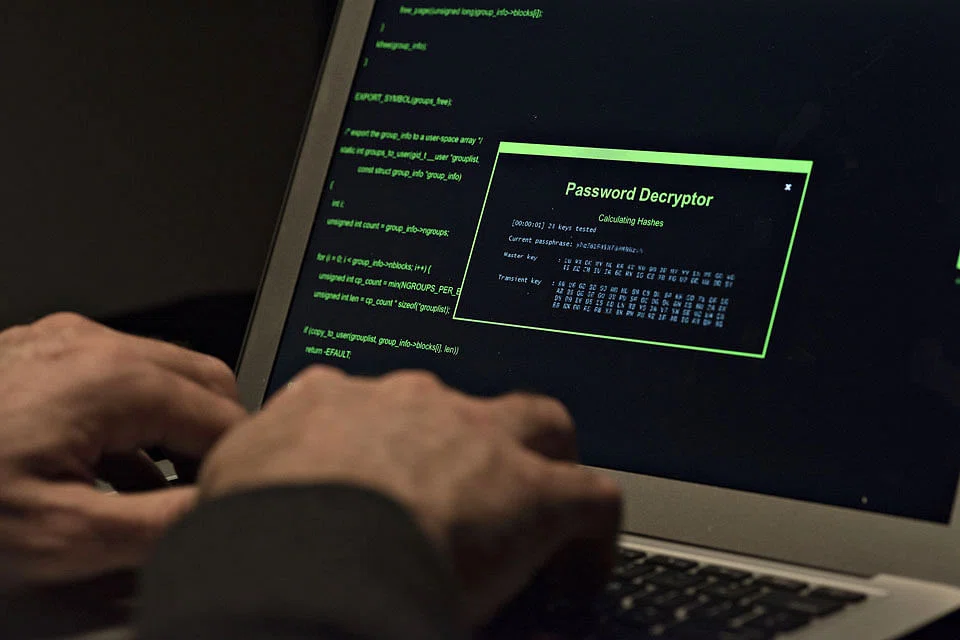
THE United Nations has announced that it will be contacting AT&T, the US multinational telecommunications firm, about allegations reported last weekend that the company previously helped the US National Security Agency (NSA) wiretap communications at the world body's headquarters in New York City.
The development come in a broader context of accusations that AT&T granted the NSA access to huge quantities of emails and helped wiretap exchanges.
The leaked NSA documents, dated from 2003 to 2013, reportedly described AT&T as "highly collaborative" and praised the firm for its "extreme willingness to help" with NSA operations around the world. The documents reportedly also assert that AT&T maintained a "close partnership with FBI" and provided access to "Cable Stations/Switches/Routers (IP Backbone)".
The UN has previously received assurances from the US government that it does not monitor its communications.
However, a spokesman for the world body this week took the trouble to re-emphasise this point, as enshrined in the 1961 Vienna Convention, saying that "the inviolability of the United Nations is well established under international law and we expect member states to act accordingly and to respect and protect that inviolability". The latest allegations, which reportedly stem from documents that former US contractor Edward Snowden has leaked, reopen concerns about US government surveillance programmes and the role played by technology firms.
At least some of these companies are worried that fallout from the surveillance programme revelations could damage their reputation and financial bottom line.
For instance, one survey in 2013 by the US-based Information Technology and Innovation Foundation estimates that US cloud computing providers alone might lose to international rivals 10-20 per cent (US$21.5-35 billion) of foreign markets over the next three years.
And in this context numerous technology firms have therefore previously called for substantial reforms to US government surveillance programmes.
BLURRED CONCERNS
The AT&T allegations underline how traditional public and private sector concerns of public policy and corporate affairs respectively have become blurred, in sometimes complex and difficult questions relating to domestic and international politics and law. To be sure, this is not a new phenomenon, but nonetheless appears to be increasing in incidence and salience.
Partly, this is driven by globalisation, and the growth of the high-technology industry. As US President Barack Obama has noted, "technology is reshaping every aspect of our lives".
The latest accusations are by no means the first time that technology firms have been caught in controversies in recent years. For instance, members of the European Parliament passed a resolution in February 2010, following the disputed Iranian presidential election of 2009, which called on EU institutions immediately to "ban the export of surveillance technology by European companies to governments and countries such as Iran".
Moreover, during the events which overthrew former Egyptian president Hosni Mubarak in 2011, some companies were forced by the regime to temporarily shut down their networks. Meanwhile, Google and Twitter collaborated on a "tweet to speak" programme which was used as a communications platform by some anti-Mubarak protesters.
In another instance, Google unintentionally sparked a diplomatic row in 2013 after changing the name on its "Palestinian territories" homepage to "Palestine".
Palestinian President Mahmoud Abbas reportedly called it a "victory for Palestine and a step towards its liberation", while the Israeli government complained to the firm.
Israeli Foreign Ministry spokesman Yigal Palmor, for instance, asserted that "Google is not a diplomatic entity, which begs the question why they are getting involved in international politics".
More recently, Sony Pictures Entertainment was caught in the international diplomatic spotlight late last year over the release of the satirical Hollywood movie The Interview, which attracted strong condemnation from the North Korean regime. After the firm was cyber hacked, allegedly by Pyongyang, the film's launch was postponed.
However, the movie was ultimately released after criticism of Sony by President Obama, and some in the artistic community, after Sony had appeared to have temporarily given in to the demands of cyber attackers who had threatened 9/11-style attacks on cinemas showing the film.
CODES OF CONDUCT
To be clear, technology firms are not alone in experiencing issues from working with diverse political authorities across the world. Indeed, internationally focused companies in many other industries, ranging from energy and extractives, to fast-moving consumer goods, have long been confronted with challenges too.
Firms are guided by various international codes of conduct, including the UN Guiding Principles on Business and Human Rights, which reinforce corporate social responsibility practices. However, in this complex environment of sometimes uncharted territory, some of the most enlightened companies have recognised the need to also take a more decisive shift towards what has been termed strategic "corporate foreign policy".
Corporate foreign policy aligns a company's external affairs activity - including media relations, risk management, corporate social responsibility, government affairs, and operational planning - in a clear strategic framework. Recognising the need for an unusual mix of core competencies (for example, in advanced diplomacy) in some of these corporate functions, capability (including tools, training and infrastructure) can be enhanced where any gaps exist.
Other example areas of capability where firms occasionally have gaps include foresight and horizon scanning to anticipate and plan for social, economic and political opportunities and threats. Firms may also need clearer internal guidance for determining decision-making, protecting stakeholders (including customers), and/or remaining faithful to corporate values, especially in fast-moving, unpredictable, crisis situations.
As globalisation advances, an increasing number of international companies, and not just in the technology sector, will encounter these pressures. And, at the same time, their actions are increasingly under a microscope of scrutiny.
For those firms which misstep, the fallout can be very damaging, both for the financial bottom line and reputationally. However, for those which are proactive and invest in their capability, the prizes - both in terms of mitigating risk and seizing opportunity - are potentially ever more significant.