

Why policy prudence is a virtue
The challenges facing policymakers today maybe a cakewalk compared with what lies ahead
Sonal Varma
MOST central banks today are debating how to navigate the growing trade-off between growth and inflation. In reality, these trade-offs are not as stark for Asia yet. The growth recovery is progressing well. Reopening has lifted services, tech demand is strong, domestic monetary conditions are accommodative, and weakness in China has been offset by strength in the US. Inflation has finally caught up, and central banks are pivoting, but with policy rates generally low, further rate hikes are par for the course.
The path ahead, though, does look more treacherous.
Even though the risk of higher inflation in Asia is now broadly recognised, its magnitude is still underappreciated. If we are right, then inflation is likely to continue drifting higher this year in most economies, marking new highs.
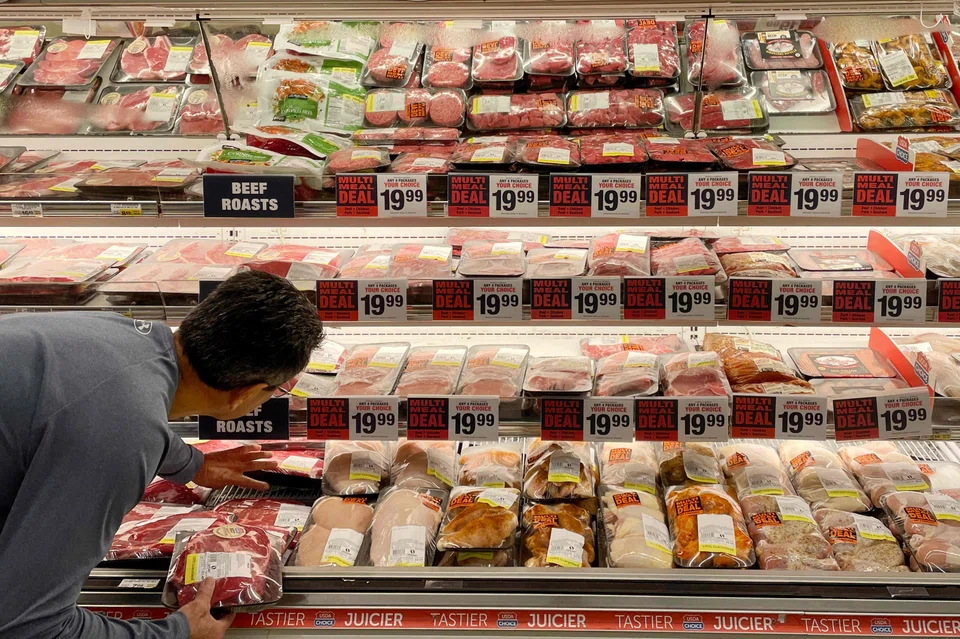
Food price inflation is the biggest risk. Barring India and Thailand, all other Asian economies are net food importers and the share of food in consumer expenditure is also much higher than the US or Europe. The recent acceleration in global food prices is yet to be fully reflected in Asian CPI data, as the spillover into Asia typically occurs with a lag, due to various government interventions.
Already, there are signs that food price inflation is broadening from mainly cereals and edible oils to higher meat price inflation due to rising feedstock costs. Wheat prices are higher today, but substitution effects could mean higher rice prices in the coming months. Higher food prices will add to dining out costs. Fertilizer shortages could lead to lower crop yields and lower food output. Food protectionism risks exacerbating these trends. When combined with the tight demand-supply balance in the energy markets, services reopening and margin squeeze for firms, risks appear skewed towards higher inflation.
Even though inflation looks like it is headed higher, there are signs that a growth slowdown is in the pipeline. Reopening tailwinds will fade after a few quarters. Recession or not, a synchronised global growth slowdown would puncture Asia’s exports cycle. A rotation of US consumer demand from goods to services and a cyclical peak in tech demand mean that Asia’s exports growth could turn negative. A slowdown in exports, tighter global financial conditions, high uncertainty and lower corporate profit margins will probably mean a downshift in the capex cycle with a lag. The rising cost of living is a headwind for households with less savings buffers. Growth cracks will likely start appearing later this year.
The trade-offs are much worse for emerging Asia, where the recovery from the pandemic has been incomplete. The double whammy from the pandemic and now the cost-of-living crisis may accentuate the K-shaped recovery, risking economic, social and political consequences.
Policymakers have their work cut out, but the usual rhetoric that central banks should look through high food and energy prices while fiscal policy acts as the first line of defence, has limits.
Inflation that emanates from the supply side, if driven by frequently purchased items, such as food and fuel, can have a strong influence on consumers’ perceptions of inflation. The rising cost of living will prompt workers to negotiate for higher minimum wages. Some of this is already beginning to occur; for example, Jakarta raised the minimum wage by 5.1 per cent year-on-year for 2022, Manila by 6.6 per cent (agricultural workers) and Malaysia by 25 per cent (urban areas). Monetary policy has to act pre-emptively to prevent these second-order effects from materialising. In emerging Asia, where inflation expectations are not well anchored and there is fiscal dominance, higher inflation is a bigger risk.
Moreover, fiscal interventions to shield consumers from higher inflation are better suited, if the price rise is temporary. If not, then price caps, subsidies and tax cuts keep underlying demand strong, and prevent consumers from making the necessary demand adjustment in response to higher prices. In such cases, a more targeted support programme for vulnerable segments rather than a blanket subsidy is a better strategy. This approach is also better, because Asia’s path towards medium-term fiscal consolidation looks challenging. Fiscal finances were hit materially during the pandemic and are again under pressure due to higher commodity prices. If growth weakens next year, then the choice will be between no fiscal consolidation in this cycle, raising taxes in a slowing economy or pruning the more productive capex.
Policy choices are no doubt difficult, but the trade-off between growth and inflation is not a concurrent one, but an intertemporal one. The decision economies make today will determine their tomorrow.
Sonal Varma is chief economist, Asia ex-Japan, at Nomura.






