Why S'pore is renewing focus on private markets

When global private markets continue to be mainstreamed and de-risked, it is wise for MAS to focus on private markets as an even larger channel for firms to access capital.
Published Wed, Nov 1, 2017 · 09:50 PM

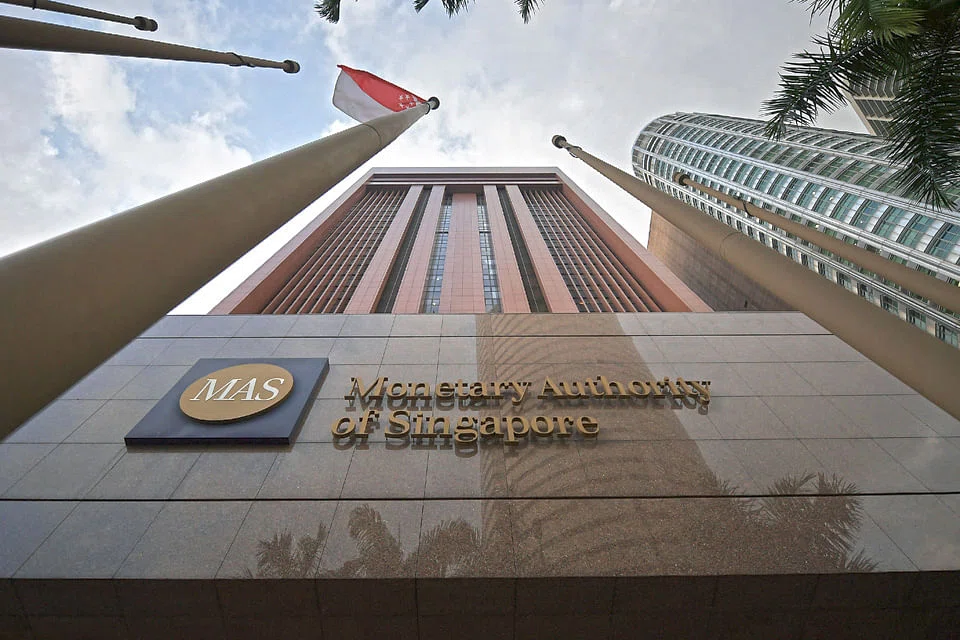
    EARLIER this week, the Monetary Authority of Singapore (MAS) released the industry transformation map (ITM) for financial services, which aims to achieve annual growth in financial sector real value-added of 4.3 per cent and to create 4,000 additional jobs in the financial services and fintech sectors.

    One of the key measures MAS announced under this ITM is to leverage its external fund management programme to anchor deeper asset management capabilities in Singapore. In order to position Singapore as the Asian centre for capital raising and enterprise financing, it will build private market funding platforms to enable growth companies to gain better access to capital.

    To understand why MAS puts a renewed focus on the private markets, rather than simply reiterating the benefits of public listing, it may be useful to look at how companies access capital in more mature markets and how the roles of public and private markets have drastically evolved over the past 20 years.

    Between 1996 and 2016, the total market capitalisation of the US stock market grew modestly from US$12 trillion to US$25 trillion. However, during the same period, the number of publicly listed companies in the US halved from 7322 to 3671.

    Private companies are staying private much longer and many public companies go private by delisting. There are reasons for this, including competitive costs associated with required disclosures, administrative and direct costs of listing and remaining public, and regulation. The most-often reason cited is that many company senior managements prefer long-term value creation over the short-term emphasis on quarterly performance.

    As a result, according to S&P Capital IQ data, the average public companies today are 50 per cent older and about four times larger than 20 years ago. These companies also grow slower. During the same last 20 years, the number of companies in the S&P 500 growing at 20 per cent or greater has halved.

    STRONG LEVELS OF DELISTING

    Since 1996, delisting from public exchanges in the US has remained strong with an average of 415 per year, outpacing the average annual new listings of 185. On July 14 this year, Singapore-based Global Logistic Properties received a S$16 billion privatisation bid by a Chinese consortium.

    On the contrary, the private markets are widely believed to have grown from about US$300 billion in 1999 total enterprise value to US$4.7 trillion in 2017 - roughly a 15-fold increase.

    Investor interests in the private equity industry as an asset class have grown. According to Cambridge Associates, as of 2017, buyout and growth equity funds achieved returns of 14 per cent over a year, 12.5 per cent over five years, 9.4 per cent over 10 years and 12.7 per cent over 20 years. Compared to public markets, private equity has delivered higher returns over the long term for the emerging markets and Europe over the five, 10 and 20 years' time horizons. It also beat S&P 500 over 10 and 20 years. Private equity returns as a whole are also less volatile than public markets returns.

    The backdrop of the new interests by MAS in private markets also reflect several more recent developments.

    As larger and stabilised "public-like" assets either stay in or return to private ownership, PE is no longer a cottage industry that houses small- and high-risk assets. The largest privately held companies such as Uber, Xiaomi, Didi Chuxing and Airbnb each commands market capitalisation of over US$20 billion. According to Forbes, the 225 largest private companies in the US this year employed 4.7 million people and represented US$1.57 trillion in revenues.

    Private markets have also grown well beyond venture and buyout investing, and today includes additional sizeable asset classes such as infrastructure and real estate. Infrastructure, for example, grew 40 per cent in 2016 in terms of funds raised. Private debt market has also grown exponentially. Some of these assets are yielding assets that are fixed income-like, further reducing the risk of a well-structured private market portfolio.

    Companies no longer view private ownership only as a transitional period or means to an end. Sale to another corporate and financial buyer accounts for 90 per cent of the exits of privately owned companies, leaving the rest to IPOs. Sale to another buyout fund accounts for about 40 per cent of exits in recent years, up from 10 per cent in 1996. These so-called "secondary buyouts" have produced a large number of private assets that have been previously owned by sophisticated financial owners who typically made efforts to reduce operational inefficiencies and risks of these assets.

    We see a growing group of long term-minded institutional investors along with the rise of sovereign wealth funds, and large social security and public pension funds. Sovereign wealth funds' assets under management have grown to about US$7.4 trillion, twice the US$3.5 trillion in 2007. These investors are content with holding private assets over a long period of time, favouring yielding income and long-term value creation over short-term performance.

    We also have seen a number of product innovations from the industry. The widely perceived illiquidity associated with investing in private markets is no longer iron-clad. When the underlying assets are de-risked through robust and financial sound ownership and/or cross-asset class diversification, the industry has been able to offer products with semi or full liquidity.

    Since June 2016, for example, Partners Group has been offering private markets investment funds to defined-contribution pension plans in the US, UK and Australia with daily liquidity and pricing, and also has long-running semi-liquid products with over US$5 billion AUM with a 14-year track record.

    APPEALING INVESTMENT PRODUCTS

    In Singapore, Temasek subsidiary Azalea is trying to introduce PE-based investment products that will appeal to both institutional and retail investors. In June 2016, it issued Astrea III, the first listed private equity bond in Singapore backed by cash flows from PE funds. The bond received overwhelming positive responses from investors and were oversubscribed.

    When global private markets continue their long journey to be mainstreamed and de-risked, and with the emergence of long-term institutional investors such as SWFs and industry innovations that have removed illiquidity as the main concern of less long term-minded investors, it is wise for MAS to focus on private markets as an even larger channel for companies in Asia and across the world to access capital.

    In addition, private markets industry - including infrastructure investing - needs a large number of players in the ecosystem to work together, and requires complex intermediation. Asset managers want to talk to each other. Asset managers want to talk to asset owners. Financial investors buy and sell from strategic investors. All investors want to talk to business owners. Banks and advisors intermediate transactions. You also need legal talent nearby to get the papers negotiated.

    The complexity of such an ecosystem naturally creates a high-entry barrier for most cities to play a meaningful role, but a sophisticated global financial centre like Singapore would position itself for such requirement extremely well. The new focus in the ITM of MAS on the mature end of private markets is likely to pay off in the long run to further establish Singapore as a global financial centre in Asia, which intermediates between private capital and enterprises.