Why targeted lockdowns could be better for everyone
Covid lockdowns may be with us for a long time, but they could be made sharper, less painful and possibly even more effective
AS the optimism of summer begins to fade, rising Covid-19 cases in specific regions and outbreaks in countries that previously seemed to have the virus under control have led to a realisation that the global fight against the pandemic is far from over. With colder months on the way in many Northern Hemisphere regions and the threat of new variants developing, the potential for further snap lockdowns, as we have recently seen in Australia, China and Singapore, cannot and should not be discounted.
Throughout the pandemic, governments around the world have adopted the principle that such simple, sweeping confinements are the most effective short-term method for tackling rising cases, as the population waits for vaccination programmes to have an impact. However, the question remains whether full lockdowns are the most efficient solution for societies and economies that have been battered by the pandemic. The answer might well be no.
Our new study found that taking a more nuanced approach, which tailored the severity of a lockdown by age group and activities, could actually result in fewer lives lost and less ensuing damage to the economy, while also reducing confinement time for everyone.
Of course, these results come with the understanding that such an approach would be both complicated to implement and potentially contentious; one can point to Bosnia and Herzegovina's highly controversial laws that made it illegal for children and seniors to venture outdoors during the early days of Covid as evidence of this. Certainly, uniform lockdowns are easier to sell to the public, with their appearance of fairness.
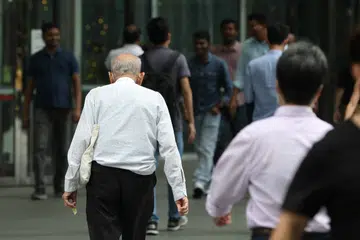
But what would happen if society leaned into the "unfairness" of lockdown instead of denying it? After all, even such ostensibly universal measures as evening curfews are inherently discriminatory. They have little impact on retirees and young children who still have the freedom to enjoy their mornings and afternoons but curb the potential for leisure activities of working adults.
FINE-TUNING CONFINEMENT
Indeed, our research springs from the intuition that age groups vary in their extent of engagement in certain activities, the makeup of their social interactions as they do so and (most crucially) their susceptibility to falling seriously ill with Covid. Instead of treating all social encounters as if they posed an equal threat of spreading dangerous new infections, lockdowns should be aimed at controlling mixing between the generations in different activities. Common pursuits such as work, school, transport, and leisure could even serve as levers to separating the age groups by placing them onto divergent routines.
By the same token, confinement could be finetuned to preserve in-person encounters with a relatively high ratio of economic value to health risk - ie business meetings between working-age adults. Dual-targeted lockdowns, therefore, offer policymakers far more flexibility and transparency when making difficult yet necessary trade-offs between economic activity and public safety.
To explore this premise, we created a flexible AI framework to model how mobility and social mixing among 9 age cohorts would likely affect economic and health outcomes for everyone. On the back of the model, we developed algorithms for translating those probable outcomes into decisions for the intensity level of dual-targeted (age and activity) interventions. We then calibrated the model using actual data for the Île-de-France region (Paris and surrounding environs): hospitalisations and deaths, community mobility, social mixing patterns for each cohort, and economic measures such as wages and employment rates.
Even when only targeting by either age or activity (as opposed to both), our analysis found improved results compared to less fine-grained confinements. Specifically, an age-targeted regional lockdown could have saved the French economy up to 2.9 billion euros (S$4.5 billion) in the 90-day horizon starting mid-October 2020 compared to a uniform lockdown, for the same number of deaths; an activity-targeted lockdown, up to 2.1 billion euros; and a dual-targeted lockdown, anywhere from 3.3 billion-5.3 billion euros.
Furthermore, for the same economic losses, an age-targeted lockdown could have potentially reduced the death toll in Île-de-France by anywhere between 19 per cent and 65.8 per cent (at least 263 fewer deaths), compared to a uniform lockdown; an activity-targeted lockdown, anywhere between 18.5 per cent and 66.5 per cent (at least 256 fewer deaths); and a dual-targeted lockdown, anywhere between 33.3 per cent and 88.6 per cent (at least 460 fewer deaths).
As argued above, enforced curfews are one example where the measures implemented in France have already been targeting activities and are already discriminatory in effect; why not then go the extra mile and ensure that such discrimination is transparent and applied in a way that achieves the best possible health and economic outcomes?
HARD DECISIONS IN COVID TIMES
The AI framework is a much more data-driven and transparent instrument for policymakers to make hard decisions about how much economic activity to curtail for the sake of absolute safety. Of course, every context is different - which is why we created an online dashboard that governments could use to vary recommendations based on their range estimates of the cost of each life lost, the number of ICU beds and Covid tests available, and the local population's tolerance for the "unfairness" of a dual-targeted lockdown regime.
We appreciate that this is a highly sensitive topic and how much a society values life compared to economic activity drives some key trade-offs, with different valuations leading to different confinement policies. These are extremely delicate decisions, and the framework can be used as a tool to quantify and make these trade-offs transparent, offering impartial guidance to policymakers as they make their difficult choices.
The issue of fairness will no doubt constitute the primary objection to dual-targeted lockdowns. In a sense, however, uniform lockdowns represent the worst of both worlds: a mere illusion of fairness with sub-optimal results for everyone. Debates over discrimination are already taking place as countries look to limit activities that can be undertaken by non-vaccinated citizens. The dual-targeted approach could and perhaps should be part of that wider conversation. The method does discriminate in the activities it permits the different age groups to engage in - yet it also produces superior outcomes across the board, including less overall confinement for every cohort.
While there is plenty of cause for optimism regarding the Covid pandemic, the reality is that there is still a long way to go for many countries in terms of controlling case numbers and ensuring enough of their citizens are vaccinated to allow for herd immunity. This is particularly relevant in many developing countries where such programmes are still in their early stages and economies are less robust and less capable of withstanding the financial fallout from blanket lockdowns.
The reality is we don't know what's in store after herd immunity has been achieved. Some experts have predicted that Covid could still be with us for many years to come, circulating at a lower level with occasional flare-ups. Long-term management of Covid and future pandemics will demand refined interventions to keep economies strong and societies safe. Dual-targeted approaches within an AI framework could be one way forward.
- The writers are from INSEAD. Florin Ciocan is an assistant professor of Technology and Operations Management. Spyros Zoumpoulis is an assistant professor of Decision Sciences. Dan Iancu is a visiting professor of Technology and Operations Management at INSEAD, and also associate professor of Operations, Information and Technology at Stanford Graduate School of Business. This article first appeared in INSEAD Knowledge.