

Why Tencent is slow to monetise WeChat
Tencent's monetisation strategy runs counter to traditional business norms. The tech giant prefers to take it slow, and protect its user experience.
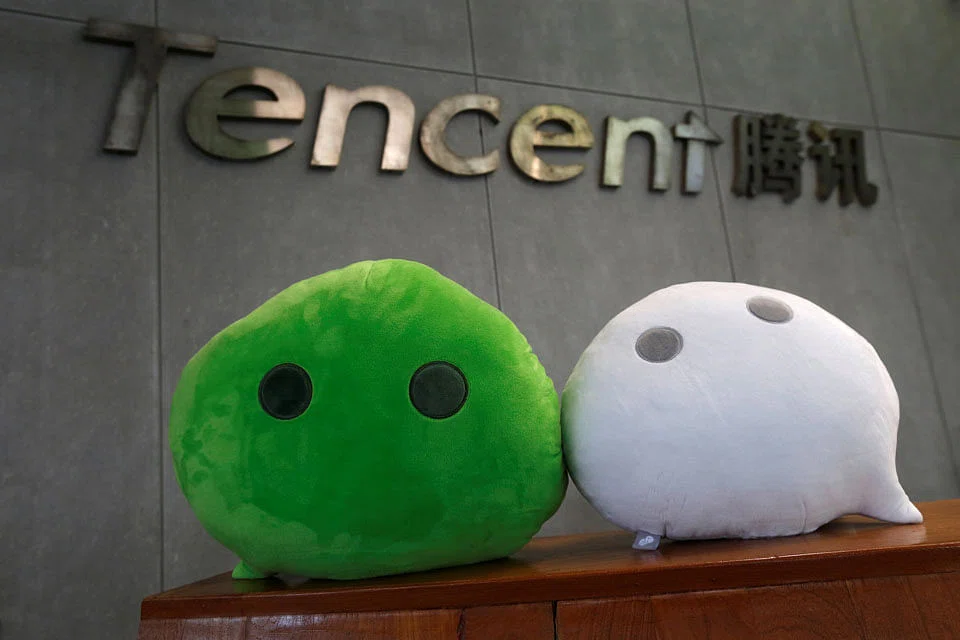
THE US$22 billion Chinese technology giant Tencent is sitting on an advertising goldmine. Just 18 per cent of its total revenue in fiscal year 2016 came from online advertising, and industry analysts believe that the company's WeChat social media app in particular is under-monetised.
Compare this with Facebook's model: advertising makes up 98 per cent of its total revenue. So why hasn't Tencent yet made the most of its advertising potential?
To answer this, we need to understand its monetisation strategy - and its philosophy on user experience. And to do that, we must go back to the company's start. Co-founded in 1998 by Ma Huateng (or Pony Ma) and four friends, Tencent launched its first product - a free PC-based instant messaging (IM) service called OICQ, later renamed QQ - in 1999.
It secured a million users in its first year, but the company remained unprofitable. It was only in 2001, following the launch of the MobileQQ IM platform for cellphones, that Tencent turned its first profit: US$1.2 million on sales of US$5.9 million. Three years later, Tencent was listed on the Hong Kong Stock Exchange.
According to news reports late last year, Tencent was still not getting more aggressive on advertising loads because it was working on understanding its users for better targeting to increase the likelihood of people clicking the ads. Hence, targeted advertising using behaviour data can become Tencent's engine for growth in the next years. It is just beginning to scratch the surface of the potential advertising goldmine.
In 2005, it introduced Qzone - a multimedia social networking service. By 2010, thanks to Mr Ma's decision to open up Qzone to apps from third-party developers, Qzone became the largest social networking platform in China with 492 million active users.
Capitalising on the growing importance of mobile, WeChat was born in 2011. Since then, Tencent has added official accounts, payment services, a game centre and even an office chat app to WeChat.
Investors rewarded the company for its ability to execute in its core businesses, while also developing adjacent businesses. The company's market capitalisation grew with a five-year compound annual growth rate of 40 per cent between 2011 and 2016, and broke into the league of the top 10 most valuable listed companies in the world last April.
Tencent's monetisation strategy so far has been counter-intuitive to traditional business norms, where companies first create a product or service and then seek customers. In contrast, Tencent started with a distribution platform and built its reach before moving on to monetise the diverse applications. Its biggest revenue stream through the 2010s has been value-added services. That came chiefly from smartphone and PC-based gaming, and also from social networking (digital content subscriptions, membership subscriptions and virtual item sales) accounting for over 70 per cent of its total revenue. The rest has come from online advertising and e-commerce.
Gaming has thus developed into Tencent's core revenue stream. By 2020, mobile gaming is expected to be larger than all traditional platforms for games (such as console and PC) and Tencent has positioned itself at the forefront of this race. Since the inception of online gaming, Tencent has meticulously worked toward securing its position as the largest developer and operator of online games for desktop personal computers.
It turned its attention to mobile gaming in 2013 by launching game centres in Mobile QQ and WeChat, giving it a large mobile games user base. Then over the past few years, it has focused on the global gaming market, buying stakes in or making large acquisitions of overseas gaming companies, thus becoming the world's largest online gaming company, with a 13 per cent market share. Its game revenues passed the US$10 billion mark in its fiscal year 2016.
In mid-2017, when the Chinese government accused it of causing gaming addition with its mobile game Honor of Kings, the biggest game ever in China, Tencent restricted play time for younger users at home. However, at the same time, it brought the game to Western markets, launching Honor of Kings in Europe under the new name Arena of Valor. Clearly, the world is Tencent's playground for the online gaming business.
In this context, it is perhaps unsurprising that Tencent hasn't yet felt the need to leverage the advertising potential of WeChat - it has had plenty of other profitable revenue streams to focus on.
That being said, advertising revenue has been rising at more than 50 per cent year on year since 2013 to make up 18 per cent of total revenue in 2016. It is clear that this is definitely a growing revenue stream.
Tencent launched advertisements in WeChat Official Accounts in mid-2014 and WeChat Moment (the photo sharing app) in early 2015. In 2017, Tencent claimed that it had the ability to build "a whole advertising ecosystem", providing tech, data, content, media and so on.
However, it has exercised careful control over ad loads so that they would not have an adverse effect on the user experience. For example, WeChat limited the number of native ads shown in a user's WeChat Moments feed to one per day. The challenge now is in balancing its monetisation efforts with the tolerance of its user base for advertisements.
Poshu Yeung, vice-president of the company's international business, said: "We're trying to preserve user experience. We could dive in and make a lot more money, showing five ads per day and likely making five times more revenue, but that's not what we want to do. We're going to take this slowly."






