Will Powell be reappointed?
Threatened with demotion and termination several times by Trump and disliked by Democrats demanding more diversity, the current Fed chair is probably still Biden's pick.
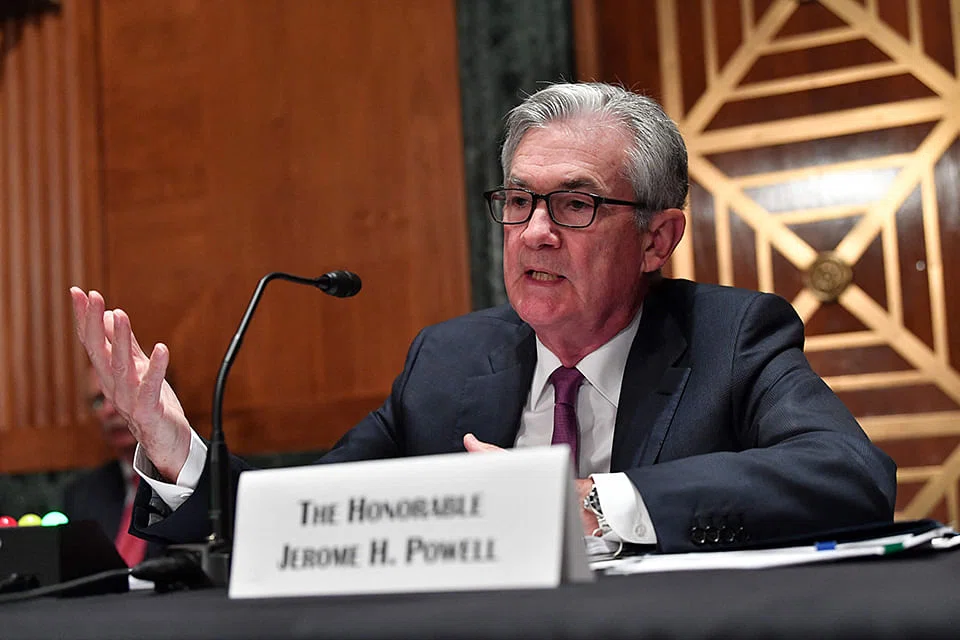
BEFORE he was appointed by former President Donald Trump to head the US central bank, Jerome "Jay" Powell, who had worked in the George HW Bush administration, was regarded as a conservative economist and an "inflation hawk" who identified with Republican policies.
But then, and like all his predecessors, Mr Powell, a former lawyer and financier, highlighted his political independence after becoming the Fed chair. In fact, he became a target of attacks by Republican President Trump who argued that by lowering interest rates, the US central bank was putting the American economy at a disadvantage vis-a-vis other economic competitors.
Indeed, President Trump had threatened to demote or even fire Mr Powell several times, and the expectation in Washington was that Mr Trump would replace him if he were to be re-elected for a second term as president.
Yet, Mr Powell was able to maintain close relationships with both Republican and Democratic lawmakers during his four-year term that is coming to an end in February.
And, notwithstanding the attacks by Mr Trump, Mr Powell has received high marks for his handling of monetary policy during the high turbulence in the financial markets against the backdrop of the global pandemic.
That may explain why the conventional wisdom in Washington now is that President Biden would probably reappoint Mr Powell for a second term next year, preferring to keep in place a steady hand that would reassure investors instead of replacing him with the favoured Democratic candidate for the job, Fed governor Lael Brainard. The latter move is one that could create uncertainty in Wall Street on the eve of the midterm elections.
A WHITE CONSERVATIVE MAN
But some Democrats, especially members of the party's strident progressive wing, want Mr Biden to replace Mr Powell, and in the name of increasing diversity in government, they suggest that reappointing a white conservative man for the job would not be proper under the current political zeitgeist.
These same Democratic critics, noting that the Fed also has a mandate to secure "maximum employment", want to see the central bank play a more activist role in dealing with issues that have nothing to do directly with monetary policy, including regulation, especially of financial institutions, climate change and social-economic "inequities".
Such a stance that insists that the Fed plays a role in promoting political-social change runs contrary to the need to protect the political autonomy of the central bank. And any nominee for the job who would identify himself or herself as politically close to the "woke" brigade would likely be rejected by all the Republicans and a few centrist Democrats in the Senate.
Mr Powell, however, has actually been criticised by some Republicans for backing Mr Biden's economic agenda and, more specifically, for rejecting the notion advocated by congressional Republicans - that the Biden administration's fiscal policies have been fuelling inflation and that the Fed should consider raising interest rates.
"A pretty substantial part, or perhaps all of the overshoot in inflation, comes from categories that are directly affected by the reopening of the economy," Mr Powell told lawmakers at a recent hearing, in response to this Republican criticism.
According to the view advanced by Mr Powell and echoed by his predecessor at the Fed and current Treasury Secretary Janet Yellen, President Biden's far-ranging recovery plans are creating the conditions for economic growth but without triggering long-term inflation.
Most observers expect Dr Yellen, who has praised the Fed's performance during the pandemic, to lobby the president to reappoint Mr Powell, probably joined by Ron Klain, the White House's chief of staff who is a centrist Democrat with ties to Wall Street.
At the same time, two leading progressive Democrats - Senator Elizabeth Warren of Massachusetts and Senator Sherrod Brown of Ohio, the chairman of the Senate Banking Committee, who would lead the confirmation of the next Fed chair - have been critical of what they consider to be Mr Powell's failure to impose tighter regulation on the big banks, and for allegedly seeking to weaken the protections of the Dodd-Frank Act that was passed after the 2008 financial crisis.
While the Fed is not expected to be under pressure to raise interest rates anytime soon, it would have to consider the need to begin slowing its purchases of US government debt and mortgage-backed securities, as the economy heats up, a move that could spook investors and hurt the recovery.
STILL HAVING BIPARTISAN SUPPORT
Despite their criticism of Mr Powell and in particular, of his backing for the Biden administration's economic agenda, most Republicans in the House of Representatives and the Senate, with the exception of a few self-proclaimed populists, are likely to support his reappointment. They prefer to see him continuing to serve four more years than being replaced by a new nominee with progressive leanings.
"You have earned and deserve another term as chair of the Federal Reserve," said North Carolina Representative Patrick McHenry, the Finance Committee's top Republican, during recent congressional hearings, reflecting the views of most Republicans on Capitol Hill.
Meanwhile, many progressive Democrats recognise that notwithstanding his past reputation as an inflation hawk, Mr Powell's decision not to move ahead with steep interest rate hikes, and in fact, to adopt easy-money policies until the unemployment rate falls, have been critical in terms of allowing both the Trump and the Biden administrations to pursue expansive fiscal policies.
In a way, there have been no signs that Ms Brainard has opposed any of the major decisions that Mr Powell has made and she is in all likelihood expected to pursue the same interest rate policies if she does replace the current Fed chair.
And the last thing that the Biden administration needs now is a long and heated battle over the confirmation of a Fed chair that would rattle the money markets and antagonise voters during an election year.
It would, however, be interesting to see how Mr Powell - who has voted in the past to approve most bank mergers or acquisitions that have come before the Fed - responds to the Biden administration's new aggressive plans to reduce economic concentration, or trust busting.