

Will Trump's Deal of the Century succeed?
His plan to bring about peace between the Israelis and the Palestinians has a big problem - the Palestinian Authority, one of the two key players, has been conspicuous by its absence
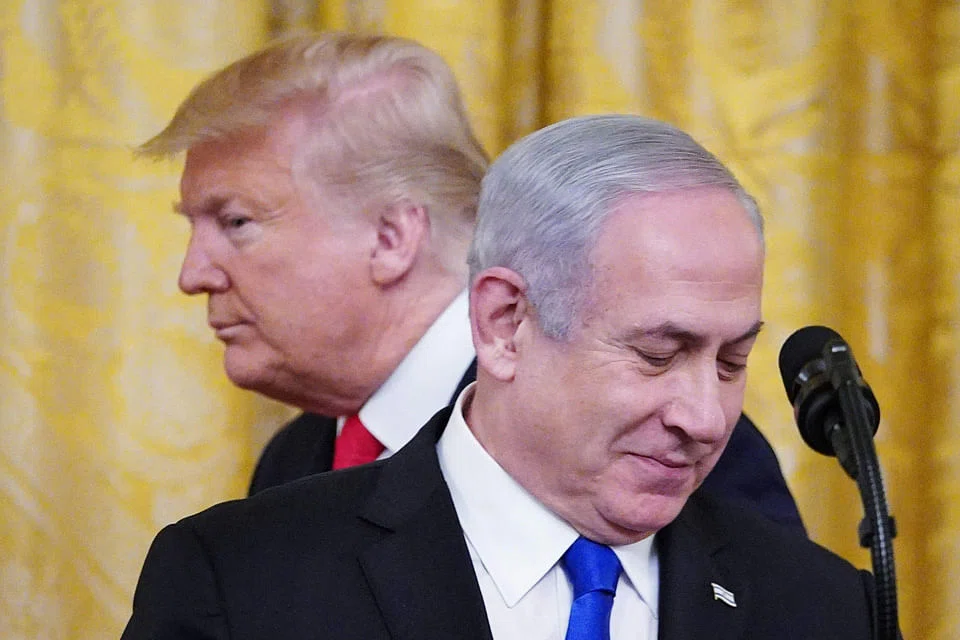
ONE of the main problems in US President Donald Trump's plan to bring about peace between the Israelis and the Palestinians became obvious when he unveiled his so-called Deal of the Century in Washington on Tuesday: one of the two sides expected to take part in the anticipated negotiations is apparently not planning to show up for the talks.
President Trump has created high expectations in the Middle East when he announced upon entering office in 2017 that he would succeed where his predecessors had failed, by achieving a diplomatic coup in brokering a peace agreement between the Jews and the Arabs who have been fighting for more than a century over control of the Holy Land.
The author of The Art of the Deal pledged to press both sides to make the necessary painful concessions, insisting that his legendary negotiating skills will help overcome their differences - rooted in history, culture and religion - that have made it next to impossible to resolve the Israeli-Palestinian conflict.
Highlighting the importance that he attached to the diplomatic effort, President Trump selected Jared Kushner, his son-in-law who also serves as a White House adviser, to be in charge of the Middle East initiative, telling White House reporters in 2017 that "it might be a bigger and better deal than people in this room even understand".
When President Trump disclosed the details of his plan at the White House this week, standing next to him applauding was Israeli Prime Minister Benjamin Netanyahu. But there was no sign of Mahmoud Abbas, the president of the Palestinian Authority (PA), in the room.
MISSION IMPOSSIBLE
One has to give credit to Mr Kushner for pursuing what many considered a mission impossible. For the last three years he has been shuttling between Jerusalem and the main Arab capitals, meeting with the leaders of Saudi Arabia, Jordan and Egypt, and holding long hours of talks with PM Netanyahu and President Abbas and their aides.
Cultivating close personal ties with the powerful Crown Prince Mohammad bin Salman of Saudi Arabia, and other heads of the Arab Gulf States, Mr Kushner succeeded in convening an economic summit in Bahrain last June that brought together Israeli and Arab businessmen. That was followed by an American commitment to provide US$50 billion to a future Palestinian state.
But at the same time, the Trump administration has taken steps that were seen by the Palestinians as clear signs that the US was siding with the Israelis in the conflict, including by recognising Jerusalem as the official capital of Israel and ordering the US Embassy to move from Tel Aviv to Jerusalem, and later on by cutting assistance to the PA and closing down the office of the Palestinian representative in Washington; not to mention the decision to revoke the nuclear deal with Israel's arch-enemy, Iran.
Moreover, the administration appointed David Friedman, a staunch supporter of the Likud, PM Netanyahu's ruling party, as US ambassador to Israel, and many Palestinians have expressed scepticism that Mr Kushner - a practising American Jew and a Zionist, as well as a close personal friend of PM Netanyahu - could serve as a honest broker in dealing with the Israeli-Palestinian conflict.
That, among other things, explains why Mr Kushner has failed to make any progress in trying to resolve the key issues at the centre of the conflict when it comes to the Palestinian demands, including the fate of the Jewish settlements in the West Bank, the future of the Palestinian refugees, and the status of the holy sites in Jerusalem, while the PA has continued to refuse to recognise Israel as a Jewish State and demanded that Israel withdraw from all the occupied Palestinian territory in the West Bank.
But Trump administration officials did succeed in preparing an 80-page-long and very detailed blueprint for achieving peace in the Middle East, that President Trump introduced on Tuesday, and which presented a clear American vision of what it expected the Palestinians and the Israelis to do in the coming months in order to reach an agreement.
And that is actually quite a big deal: the Trump administration is pressing for the establishment of an independent Palestinian State with its capital in East Jerusalem that would live in peace with Israel while providing guarantees for Israel's security by continuing to control the Jordan Valley that separates Israel and Jordan and as well as the Jewish settlements in the West Bank.
Moreover, the plan calls for building a tunnel that will connect the Gaza Strip with the West Bank, for the investment of hundreds of millions of dollars, coming mostly from the Arab oil states in the Palestinian economy, and by providing financial compensation for the Palestinian refugees whose families had fled Israel in 1948.
But President Abbas and other Palestinian leaders have already rejected the American plan while the Hamas movement that controls the Gaza Strip calls for the destruction of the Jewish State.
TRANSFORMING THE REGION
At the same time, there are signs that the leaders of the moderate Arab states - led by Saudi Arabia, Egypt, and Jordan - that regard Iran and not Israel as the main threat to their security, are willing to consider the Deal of the Century as a basis for negotiation with Israel over the future of Holy Land and may try to press the PA to reconsider its stand on the issue.
In fact, reflecting this evolving Arab position, the ambassadors of Oman and Bahrain in Washington attended Tuesday's ceremony at the White House, in which President Trump and PM Netanyahu spoke about the need to transform the Middle East from a centre of war and violence into a region where peace and economic prosperity reigns.
While the ceremony introducing the peace plan focused on diplomacy and trade, it also had an obvious political context: Israel's PM Netanyahu was indicted in several corruption cases, hours before the Middle East peace plan was announced, and his political fate will be determined by the results of the parliamentary election that will take place in March, when he will face strong opposition from the centrist Blue & White party headed by retired General Benjamin Gantz.
Mr Gantz was briefed by President Trump at the White House on Monday and has expressed strong support for the American peace plan. But some of PM Netanyahu's critics have expressed their suspicions that the American president introduced the plan a month before the Israeli election in order to provide a political lift to his BFF in Jerusalem.
At the same time, the introduction of the plan comes in the midst of the impeachment process under which President Trump is facing now a trial in the Senate that could end with his acquittal of ouster from office. And all of that is happening on the eve of a critical American presidential election.
That means that by this time next year, neither PM Netanyahu nor President Trump may quite be in office to promote the Deal of the Century they celebrated this week.
TRENDING NOW

Temasek’s Wan Chee Foong to helm PIL, Lars Kastrup to be board adviser

Chagee, Mixue and Luckin won the market. Sustaining their edge is the harder part

He built the Vingroup empire. Now South-east Asia’s richest man is handing some key roles to his sons
One-third of Singapore-listed firms at risk in severe AI downturn: MAS

