

Will 'worst trade treaty' ride to Trump's rescue?
 Add BT as a preferred source
THE new United States-Mexico-Canada agreement (USMCA), one of the most comprehensive trade agreements outside the EU, comes into force on Wednesday. While the deal remains shrouded in deep political controversy, its achievement underlines the limits to the current deglobalisation era that has been fuelled by the coronavirus crisis.
The USMCA - which is in effect a North America Free Trade Agreement (Nafta) 2.0 - will serve as a political cornerstone of economic relations within the continent, including the more than US$1 trillion in annual trilateral trade. Yet amid the celebrations this coming week of what even "America First" President Donald Trump has previously called a "wonderful" and "historical transaction", there remains much political angst.
Nafta, originally signed in 1994 during Bill Clinton's presidency, was the first major trilateral trade accord negotiated between a developing country (Mexico) and developed counterparts (United States and Canada). That distinctive era, soon after the end of the Cold War, saw economic globalisation largely unchallenged as a political orthodoxy across much the world.
TRENDING NOW

Why China is tightening controls on overseas stock trading
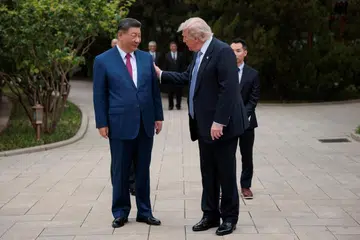
Xi Jinping has just rewritten the rules of US-China rivalry

‘Even a CEO’s job can be replaced by AI’: DBS CEO Tan Su Shan bets big on agentic AI

‘Whole deck of cards just toppled’: FoodXervices’ Nichol Ng on how a 92-year-old family business unravelled – and what’s next

