

Will Year of the Goat bring out the market bulls in China?
Moves to ease liquidity, Beijing's recognition of the link between governance and economic growth and its war on corruption could help.
CHINESE equities had a resurgence in 2014, driven primarily by improved domestic sentiment. Since mid-2014, the government, through the People's Bank of China (PBOC), has been taking measures to ease short-term interbank liquidity and lower the borrowing cost of companies, especially the small and medium-sized enterprises (SMEs). A rate cut last November confirmed to us that a new easing cycle was likely unfolding, when the PBOC announced it was lowering the one-year benchmark lending rate by 40 basis points to 5.6 per cent and the one-year benchmark deposit rate by 25 basis points to 2.75 per cent.
While we see reasons why Chinese equities could continue to perform well this year, we also believe it will be difficult to repeat 2014's strong performance. Stock valuations have come up, and the growth outlook for corporate earnings has not improved by as much. Additionally, margin financing has ballooned, reaching high levels, causing the government to impose some curbs recently. We believe the government could enact further measures to stop small investors from becoming over-leveraged and the market from becoming overheated.
Therefore, in our view, last year's strong market performance shouldn't lead investors toward unrealistic expectations this year.
Themes to watch for in 2015
On the surface, lower oil prices look positive for China, an oil-importing country; as a net consumer, it would pay less for what it needs.
The government took advantage of the situation by increasing the fuel consumption tax late last year, thereby benefiting its income. Even with the fuel tax increase, drivers and travellers are likely to pay less if prices continue to drop.
However, if one sees the price of oil as an indicator of global economic health, the trend would suggest that global demand - for not just oil but also other commodities and finished goods - could remain weak. This would then not be good for China's export and manufacturing sector. Because of growing disinflation expectations, domestic demand and industrial output may be pressured. We believe the PBOC will stand ready to introduce easing measures when needed.
Divergent monetary policy actions are taking place around the world. While the European Central Bank is just embarking on a huge new quantitative easing effort, and Japan seems likely to continue its ambitious stimulus programme, the debate continues in the United States and the United Kingdom about whether interest rate hikes will be forthcoming.
We believe liquidity should continue to flow from Europe and Japan, and the impact of rising US interest rates on emerging markets would appear to be generally negative as a higher US interest rate will likely induce fund flows back to the United States.
However, in our view, many emerging market countries appear to be well prepared for possible US interest rate hikes. For example, India has largely fixed its current account deficit; Indonesia, because of lower crude oil prices and the new government's determination to remove subsidies, has also lowered its current account deficit.
As we said, we believe China will likely benefit from lower oil prices, and appears likely to maintain a large trade surplus. In contrast, commodity-producing countries like Brazil and Russia will likely be more vulnerable. These countries could need to raise interest rates to stem fund outflows - so this global divergence in monetary policy will be something we will be watching for in 2015.
We see China's economy also likely to continue to be under adjustment in 2015 and that - along with the need for reforms of the ownership structure of its state-owned-enterprises (SOEs) - may provide potential opportunities for investors. Some industries, for example, those in paper and cement, where excess capacity has been largely streamlined, may also offer opportunities. With further potential rate cuts from the PBOC, banks may also benefit through lower loan losses, given that corporate customers will have a smaller interest burden.
China's new policy goals
One topic addressed at the World Economic Forum in Davos, Switzerland, in January was how new economic, environmental and governance priorities are shaping China's future. It is a broad subject, but I believe one of the most relevant and interesting areas for us as investors is China's recognition of the important link between economic growth and governance. China's economy is getting close to middle-income level, and to continue growth, we believe it needs to provide intellectual property protection and better-structured institutions to encourage private investment. The governance of the public sector, including the SOEs, will need to be enhanced as well, so we have seen the introduction of mixed ownership (private participation) in state-owned companies.
I believe this is only the beginning. Gradually, with more private participation, we expect a more diverse ownership in the SOE sector, and later on, gradual exiting of the state from various commercial activities.
Another important policy move we see is the crackdown on corruption. In the short term, efforts to clean up corruption have been generally negative for economic growth. For example, luxury consumption has decreased, and many large projects are being delayed or held back because of investigations. Of course, China's government isn't the only one grappling with problems related to corruption - nearly all governments struggle with it - but it is an area where we are delighted to see progress being made.
We think China's current leadership has to make clear that this is not short-lived action; in our view, the current movement has to be followed by serious institution-building efforts that help ensure long-term growth and social stability.
Shanghai-Hong Kong connect
A milestone last year for the Chinese market was the implementation of the Shanghai-Hong Kong (HK) Connect Programme, which was launched after a long delay and which links the stock markets in Shanghai (A Shares) and Hong Kong (H Shares). It enables investors in Hong Kong to trade and settle shares listed in mainland China (north-bound), and investors in mainland China to trade and settle shares in Hong Kong's market (south-bound) through the exchange and clearing house in their home market.
Due to barriers such pre-trade checking and shareholders' rights under nominee structure, the programme so far has not been as forthcoming as the market originally expected. At the moment, with a heavier north-bound flow, Shanghai seems to be benefiting more. But I think as Chinese investors become more sophisticated, the south-bound flow is likely to increase, making the flows more balanced. If that happens, we probably would see China-related equity names in Hong Kong trading more in tandem with the A-share market, which seems driven more by sentiment and policy news and has experienced greater volatility.
An anticipated Hong Kong-Shenzhen exchange connection would be a natural extension after the successful launch of Shanghai-HK Connect. This again would likely enlarge the investable universe for Hong Kong investors. Shenzhen can offer somewhat different choices for investors, as there are more privately-owned companies in certain new high-growth industries - for example medical, software and information technology and service-related consumption.
In contrast, Shanghai listings include more SOEs and traditional industrial companies. We believe the Shenzhen Stock Exchange can borrow from the Shanghai-Hong Kong experience to enhance its capabilities in areas of listing approval, investor protection and listed companies' reporting and monitoring.
For China, we believe this could further help the internationalisation of China's renminbi (RMB), as there could be more investment alternatives for offshore RMB. If the three markets (Shanghai-Hong Kong-Shenzhen) are fully combined, they would become the second-largest market in the world, and we think this should attract greater attention from investors around the world.
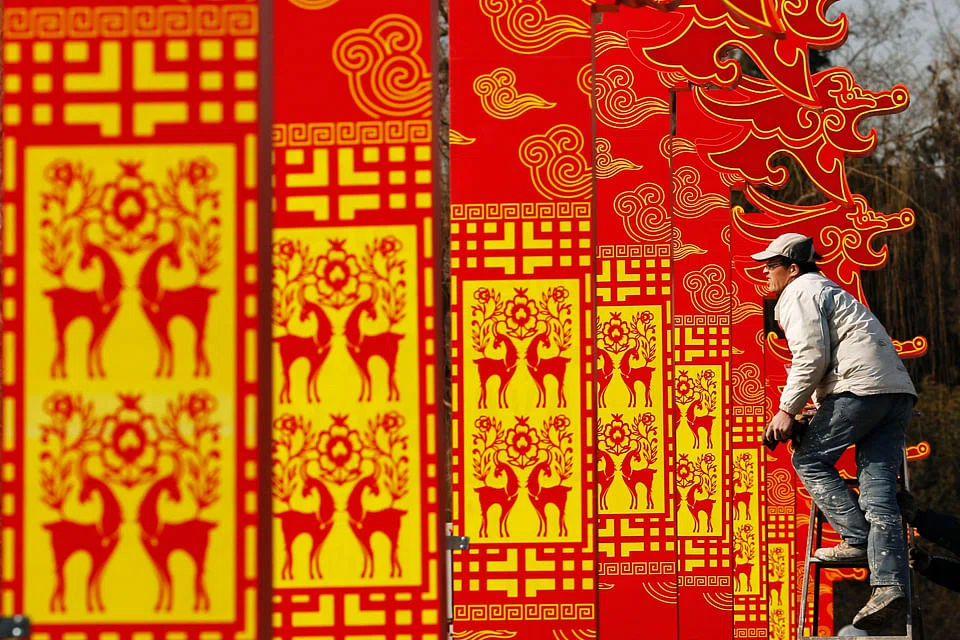
In China, the Year of the Goat can signify peace, happiness and good harvest - and we are hopeful these positive traits will prevail. If we look back into history, we have seen some positive market performances in other Goat years. Of course, we do not rely on lore, and it is often said in finance: "Past performance is no guarantee of future results".
But, as investors in China, we believe there is no reason the goat and the bull cannot be friends.






