
World awaits crucial IPCC climate report
The stakes in the fight against global warming are higher than ever.
 Add BT as a preferred source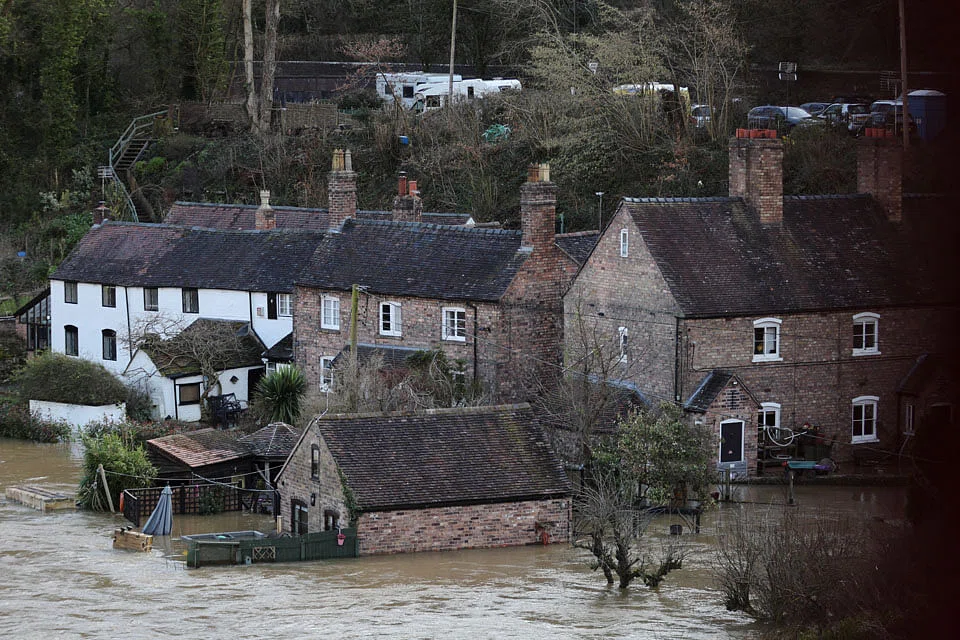
London
THE single biggest agenda-setting climate-science report of the year, which will be released at the end of this month, is the key business of this week's session of the UN-convened Intergovernmental Panel on Climate Change (IPCC), which concludes on Friday (Feb 25).
The panel, a collection of hundreds of the world's top scientists, issues three huge reports on climate change every five to seven years. The latest one will be a no-holds-barred update on how climate change already affects humans and the planet, what to expect in the future, and the risks and benefits for business and society of adapting to a warmer world.
Yet, the IPCC meeting is not the only one in recent days to flag red lights on the climate crisis. The Munich Security Summit, which ended last Sunday, released research showing that climate change is seen as a bigger threat than war by a majority of people living in some of the world's top economies. The poll lists concern over global warming, habitat destruction and extreme weather as the top three risks named by 12,000 people surveyed globally.
Add to this the G20 finance minister meeting in Indonesia last week, at which the chair of the session, Minister Sri Mulyani Indrawati, said that global warming poses a significantly greater threat than the pandemic. She remarked that G20 members should proactively address the issue, a key theme of this year's Indonesian presidency of the major world powers.
While the full details of the IPCC report are still being decided this week, it is already making clear that the stakes in the fight against global warming are higher than ever. Species extinction, ecosystem collapse, mosquito-borne disease, deadly heat, water shortages and reduced crop yields are already measurably worse due to rising temperatures.
Navigate Asia in
a new global order
Get the insights delivered to your inbox.
Last year, there were unprecedented floods, heatwaves and wildfires. So this is not just more scientific projections about the future, but about extreme events and slow-onset disasters that people are already experiencing, such as the massive flooding in Germany last year that killed scores and caused billions in damage.
The report will underscore the urgent need for adaptation, and preparing for devastating consequences that can no longer be avoided. In some cases, this means that adapting to extremely hot days, flash flooding and storm surges has become a matter of life and death.
In these circumstances, pessimism may grow in coming months about the future of global efforts to combat climate change. Yet, while the scale of the challenge remains huge, last year's Glasgow Pact gave hope that a critical mass of countries can ratchet up their emissions cuts in future to try to meet the targets agreed in Paris in 2015.
To deliver on this agenda, it is estimated by McKinsey that the world needs to invest some US$9.2 trillion a year in the infrastructure of the sectors most prone to carbon dioxide emissions in the coming three decades. This projected expenditure for a successful economic transition to cope with climate change is much higher than the US$5.7 trillion now being spent each year by key sectors, including power, manufacturing, transport, buildings, agriculture and forestry.
As a proportion of global GDP, the total investment required would be 6.8 per cent, rising to as much as 8.8 per cent between 2026 and 2030 before falling.
The report warns that the economic transformation will affect every country and every sector, with those most reliant on fossil-fuel-burning experiencing the most change. McKinsey also says the transition will be front-loaded with, for example, the cost of electricity rising before falling later.
The report also highlights that many low-carbon investments are opportunities for economic growth and would lead to a lower-cost, more efficient economy. Moreover, the transformation becomes more expensive the longer action is delayed.
While this scale of investment is huge, it is not impossible to deliver, and a key question is what is now needed from governments to stimulate this agenda. The roadmap for moving forward is already clear.
Firstly, implementation of the Paris deal will be most effective, through national laws where politically feasible which will send clear signals to the private sector. The country "commitments" put forward in 2015 will be most credible - and durable beyond the next set of national elections - if they are backed up by national legislation where this is possible, as it is more difficult to roll back than regulation.
While the moves so far made by governments since Paris are not yet enough, the treaty has crucially put in place the domestic legal frameworks, which are crucial building blocks to measure, report, verify and manage greenhouse gas emissions. Specifically, countries are required under the agreement to openly and clearly report on emissions and their progress in reaching the goals in their national climate plans submitted to the UN. Under the Glasgow Pact, states must also update these regularly yearly, rather than previously every half decade, to highlight measures being pursued to implement the goals.
What this movement towards a more robust stance on climate change shows is the scale of the transformation in attitudes already taking place among many governments and wider societies across the globe. As is being shown yet again this week at the IPCC session, many countries now view tackling global warming as in the national self-interest and see, for instance, that expanding domestic sources of renewable energy not only reduces emissions, but also increases energy security by reducing reliance on imported fossil fuels.
Reducing energy demand through greater efficiency reduces costs and increases competitiveness. Improving resilience to the impacts of global warming also makes economic sense. And domestic laws also give clear signals about direction of policy, reducing uncertainty, particularly for the private sector.
In the future, the ambition must be that these frameworks are replicated in even more countries, and progressively ratcheted up. Now is the time for more states, from the Asia-Pacific to the Americas, to build what could be a foundation of global sustainable development for billions across the world, starting with implementation of Paris.
- The writer is an associate at LSE IDEAS at the London School of Economics
Decoding Asia newsletter: your guide to navigating Asia in a new global order. Sign up here to get Decoding Asia newsletter. Delivered to your inbox. Free.
Share with us your feedback on BT's products and services

