Yellen faces huge obstacles in executing Biden's big economic plan
At some point in the next four years, the pragmatic Treasury secretary may discover that data and facts by themselves are not going to determine the outcome of policy debates.
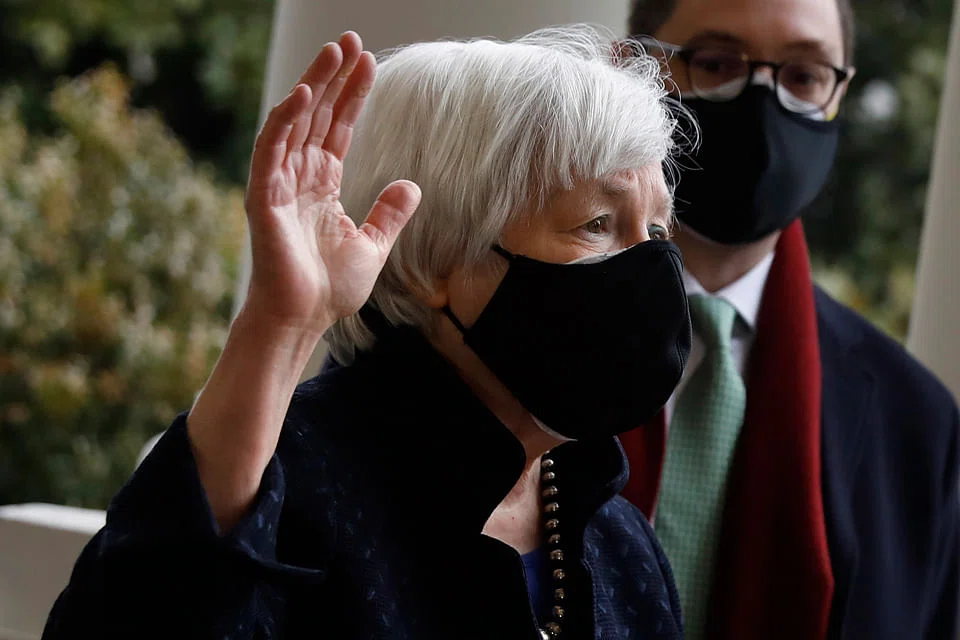
THE 74-year-old economist Dr Janet Yellen has made history this week by becoming the first woman to lead the US Treasury Department, after a bipartisan majority in the Senate confirmed her nomination by an 84-15 vote on Monday.
Democratic Senator Ron Wyden called her an "NBA All-Star" when it comes to clearing the Senate nomination process, noting she has been previously confirmed four times for economic positions by the Senate.
"She's 5-foot nothing, but hand to God / She can pop a collar, she can rock a power bob," was how the rapper Dessa described her, in a nod to Dr Yellen's no-nonsense hairstyle and her diminutive stature in a tribute commissioned by the public radio programme Marketplace.
But this would not be the first time that Dr Yellen made history by shattering the glass ceiling. She became the first woman to chair the US Federal Reserve in 2014 until 2018, when then President Donald Trump declined to nominate her for a second term; reportedly one of the reasons for his decision was her height, with the Donald explaining that Hollywood films depict central bankers as towering men exuding intelligence and confidence.
Dr Yellen was also the second woman to chair the White House's Council of Economic Advisors, and would now be known as the first and only woman who has held three of the federal government's most powerful economic jobs, and indeed so far the only person to hold all of them.
Or as the rapper Dessa put it, "She needs a three-sided coin that always comes up heads / To put the triple crown down when she goes to bed."
While the post of secretary of Treasury is seen in the popular mind as the most important economic position in the government, some would argue that in a way, Dr Yellen had much more power to influence the direction of the American and global economies when she headed the US central bank than she would have now as Treasury secretary.
After all, the Fed chair is first among equals as he/she leads a somewhat secretive and not very democratic organisation. The Fed comprises economic wonks who discuss obscure monetary policy issues behind the closed doors in the Eccles Building in Washington, DC that houses the main offices of the Board of Governors of the Federal Reserve System, and who tend to follow the lead of the chair, whose words investors tend to put great stock in.
Being Treasury secretary means that you are the boss of a department of the federal government that produces currency, collects revenue and borrows money. But then you operate under the guidance of two more powerful bosses - the US president and Congress - that place limits on your ability to make important decisions and implement them. In this case, investors pay more attention to what you do, an outcome of a process that involves many players, and less attention to what you say.
As head of the Treasury, Dr Yellen will be tasked by President Joe Biden to carry out his policies, starting with overseeing the execution of his ambitious economic plan centred around a US$1.9 trillion American Rescue plan, that includes US$1,400 stimulus cheques, expanded unemployment benefits, and increased funding for Covid-19 vaccination and testing. First she has to get it steered towards approval by Congress and then to distribute the money to help battle the pandemic and revive the economy.
In that context, Dr Yellen would be facing a divided and sceptical Congress that is expected to raise questions about the size and scope of the plan which she defended during confirmation hearings last week. She insisted that the main priority of the Biden administration would be to get the nation through the pandemic before addressing America's structural economic problems, like raising taxes or the ballooning deficit.
"Right now, with interest rates at historic lows, the smartest thing we can do is act big," she told the Senate Finance Committee.
Whether President Biden's plan would sail through Congress depends very much on the balance of power on Capitol Hill and the ability of the White House to persuade Republican and conservative Democratic Senators to approve a massive spending plan, that some of them argue isn't required in order to revive the economy, and are worried about the spectre of gigantic government deficits.
Dr Yellen's catchphrase during her term as the chair of the Fed was that changes in policy should be "data driven", stressing that her decisions were not driven by ideology but by facts, and it is likely that she will be making similar arguments as Treasury secretary, promoting her role as a pragmatic policymaker.
Yet there is no denying that President Biden and his Democratic Party are committed to an economic agenda, Bidenomics, that reflects certain ideological principles.
More specifically, the new president has made it clear that he plans to use the power of the federal government to address income inequality and deal with climate change, two goals that are not shared by the Republicans who control half of the members in the Senate.
In fact, some of the parts of the American Rescue plan are redistributive by nature, including raising the child tax credit by 50 per cent to US$3000 or more for the year and making it refundable; expanding the enhanced weekly unemployment insurance benefits by US$100; and extending a 15 per cent increase in food stamps.
The Biden administration hopes that these and other steps would help slash the poverty rate, which isn't a top Republican policy priority. If enacted, President Biden's proposals could add US$5.3 trillion to deficits, or 25 per cent of gross domestic product. Republicans would argue that the economy is already rebounding and would continue to grow if Americans are vaccinated and businesses are reopened.
Moreover, for many Democrats supercharging the economy and reducing the unemployment rate would not be enough, if unemployment continues to drag among disadvantaged Americans, especially Blacks and Hispanics, and economic and social inequality continues to grow, not to mention the need to increase spending on fighting climate change.
Hence, at some point in the next four years, the pragmatic Dr Yellen may discover that data and facts by themselves are not going to determine the outcome of policy debates.