

The coming US recession will be self-inflicted
The looming economic contraction will be unique in post-war America as the first directly caused by White House policy
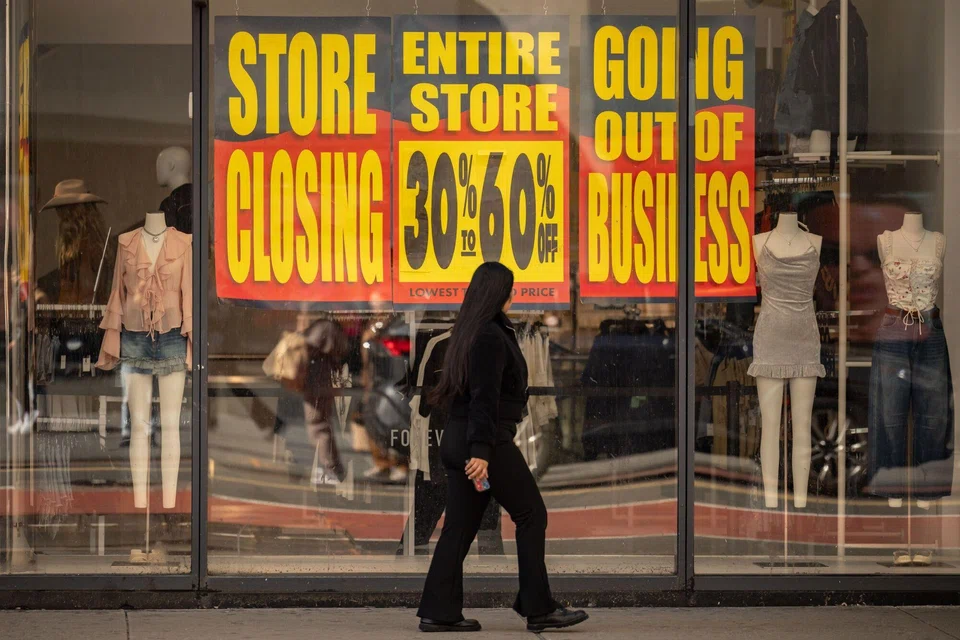
THE US economy is plodding towards a recession, a result of the Trump administration’s pursuit of three contractionary policies in tandem: reducing the size of the federal government, instituting broad tariffs and deporting workers. Unless these policies that shrink the economy are abandoned, a recession is all but guaranteed.
Recessions happen. We have suffered 13 since World War II. They all hit familiar beats. Jobs will be eliminated, hiring will slow and unemployment will rise. Also, businesses will shutter, workers will give up on the labour market and wage growth will be anaemic. And when a recovery begins, it can take years for the economy to fully heal.
Still, each recession is unique. The constant evolution of the economy means that the conditions surrounding a recession and recovery are never identical. With that in mind, it is worth taking stock of what will make the coming downturn different.
To start, this will arguably be the only recession directly caused by White House policy. To be sure, most contractions have a policy component, but between cause and effect are many opportunities to course-correct.
For example, the 2008 recession that accompanied the global financial crisis and lasted into 2009 was set in motion, in part, by the Clinton-era decision to not regulate over-the-counter derivatives despite warnings that their opacity posed risks. But the effects of the financial crisis did not fully play out until a decade later. Today, the channel is clear and fast.
The positive, if there is any, is that although federal agencies are being shuttered, most of the workers let go are technically on leave and thus still paid their full salary. Also, the Department of Government Efficiency has claimed large amounts in savings, but they do not hold up to scrutiny and there is no evidence spending has decreased. The deportations have focused on small groups of individuals, falling far short of the mass expulsions promised by the White House.
Tariffs, however – both the ones levied by the administration and those put on the US by its trading partners in retaliation – are paralysing business activity and rattling consumers. Wall Street firms are rapidly reducing their estimates for how much gross domestic product will expand. The Federal Reserve Bank of Atlanta’s widely followed index of the economy in real time has turned negative. The Conference Board and the University of Michigan both report steep declines in consumer confidence.
The coming recession thus poses two questions not applicable in prior downturns. First, if a policy is causing a recession, will lawmakers turn that policy off when economic activity contracts? And second, if they do, will that be enough to prevent or soften the recession? There is no answer to either question, only guesses.
President Donald Trump has started to embrace the idea that a recession is inevitable, saying that pain is necessary in order to achieve his envisioned “golden age” of America – a sentiment notably absent on the 2024 campaign trail. But he has walked back from proposed tariffs multiple times already this year, and may do so again if the financial markets react negatively enough. And of course, Congress could intervene.
It could all be too late. Recessions are often self-fulfilling in that if enough people believe it will happen, it will happen, as consumers pull back on things like spending and businesses cut workers in anticipation of the inevitable downturn.
Aggregate demand sees three hits during recessions: workers who lose jobs; workers who are afraid of losing their jobs; and workers who keep their jobs, but experience much slower wage growth. All three cohorts pull back on spending to various degrees. Tariffs can be turned off, but can demand be switched back on?
Aside from its cause, this recession will test the economy with two new variables. The first is that the massive baby boomer generation, the youngest of which is 61, are mostly retired. That changes the age distribution of the labour market, which has become much younger. Researchers have found, however, that age affects the impact of monetary policy. A younger population (under 35) dampens it, while a middle-aged population (40 to 65) amplifies it.
The second is that income and wealth inequality has never been greater. The top 10 per cent of households earn just under half of all income and account for just over half of all spending. A recession hitting an economy with all of its proverbial eggs in one basket is a new problem.
This group has already shown increasing sensitivity to fluctuations in the stock market in their spending. What they do during the next downturn may have an outsized effect on the economy compared with past recessions. In any economy, many people spend because they must, like to purchase necessities such as groceries. What happens to aggregate demand that is more reliant on people who spend because they feel buoyed by rising asset values?
Each of the post-war recessions can all lay claim to some kind of horrific honorific: highest unemployment since the Great Depression (2020); most consecutive months of job loss (2008 to 2009); longest time to regain the jobs that were lost (2008 to 2009); shortest time since the prior recession (1981); worst supply shock (1973); and so on. This one’s claim to infamy is that it will be the only one self-inflicted.
Monetary policy history buffs may quibble and say that the 1981 recession was also self-inflicted by an aggressively tight interest rate policy, but that was responding to dire economic conditions – inflation rates above 10 per cent. Tariffs, government spending cuts and deportations are responding to 4 per cent unemployment and price growth below 3 per cent. One is a necessary pain and the other is voluntary. That is a horrific honorific if there ever was one. BLOOMBERG
TRENDING NOW

Once staunchly pro-China, Malaysian Chinese businesses are now distancing themselves from Beijing

Looking beyond looming CEO succession, should UOB potentially pursue a transformative merger?

Could stablecoins be the future of money?

Grab CEO’s wife Chloe Tong on life with Anthony Tan and finding her purpose

