Congratulations Nikkei, now don’t screw it up
After 34 years, Japan has finally hit a new all-time stock high. The country must learn from past mistakes to ensure this one lasts
HISTORY might not repeat itself, but it rhymes. The last time Japanese stocks hit an all-time high, the yen was floating around 145 to 150 to the US dollar; the Bank of Japan (BOJ) was working on interest rate hikes amid concern over inflation, which was nonetheless modest compared with other countries. The country’s soft power was dominant overseas; self-help and management gurus floated supposed secret Japanese life hacks.
Many things have changed since that longstanding record for the Nikkei 225 Stock Average on the final trading day of 1989. That was the era of arrogance captured in The Japan That Can Say No, the essay by conservative politician Shintaro Ishihara and Sony Group co-founder Akio Morita, that advocated for an assertive nation – the period where it was seen as a trade monster that was coming for US jobs.
No matter how bullish foreign investors might be on Japanese stocks today, no one thinks a country that just saw its gross domestic product surpassed by Germany is on course for global dominance.
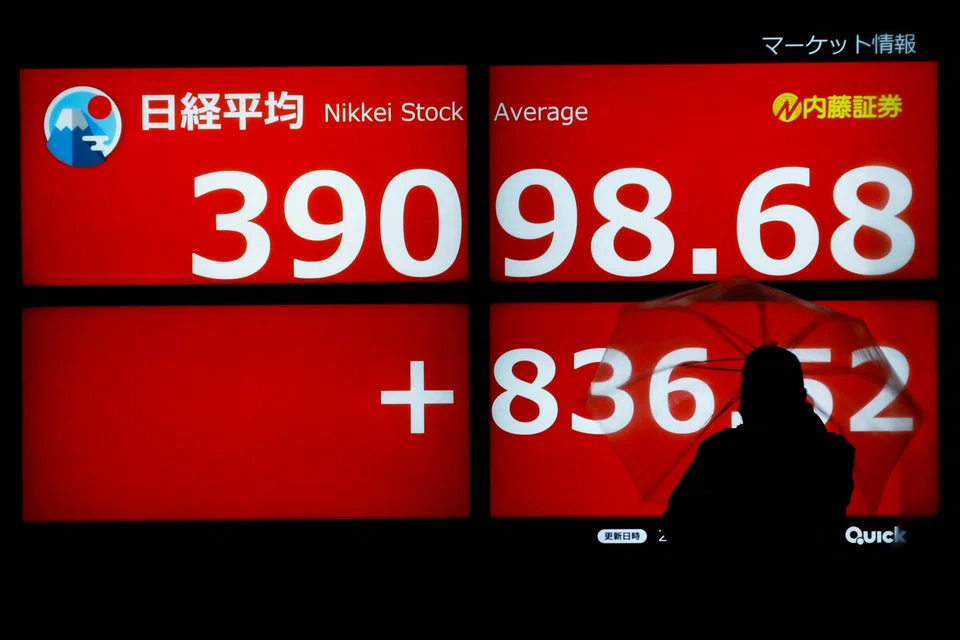
But with the Nikkei closing at an all-time high of 39,098.68 on Thursday (Feb 22), there is reason to hope that this might not be a fleeting affair. The entire country recognises the 1989 bubble to be a monumental moment of hubris and excess. The Nikkei’s price-to-earnings ratio hovered as high as 70 amid ludicrously optimistic assumptions that the rapid-growth era would never end, while company balance sheets were laden with debt and bad assets.
Those sceptical of the current boom argue that this is nothing more than another instance of a once-a-decade cycle in which interest in Japan is resurgent, but fleeting. But there are good reasons to believe that this time, things are different. Investors are souring on China, and problems like the low fertility rate that once seemed unique are now experienced worldwide.
Unlike past rallies, this narrative is not dependent on one man. Compared with the overly hopeful expectations for former leaders Junichiro Koizumi and Shinzo Abe, there is little linking the incumbent, Fumio Kishida, to the current stock market success.
To silence the sceptics, Japan needs to find a way to maintain the momentum. It can start by keeping foreign investors on board this time – their interest is crucial to sustaining stocks as well as convincing often more-sceptical domestic traders.
Japan Exchange Group chief executive officer Hiromi Yamaji has led an intriguing pressure campaign to induce firms to boost their valuations that has captured the imaginations of global money managers. He must continue his slow-burn revolution, and keep turning the screws on companies that are not cooperating.
The narrative that boardrooms are backward or dismissive of shareholders still has broad reach, but Yamaji is the best hope yet of dismissing it.
Second, the country must manage political concerns. During the Koizumi and second Abe administrations, overseas money faded when expectations of overnight improvements met with the reality of doing business at the pace at which Japan moves.
A new prime minister within the year is looking like a distinct possibility unless Kishida’s abysmal polling numbers improve, though a continuity candidate seems the most likely. Political risk can spook investors, and a more radical choice (perhaps conservative firebrand Sanae Takaichi) could give them pause.
Finally, the BOJ must learn from past mistakes. The central bank was widely blamed for its missteps: helping to inflate assets in the first place through overly easy policy; then popping the bubble too rapidly by hiking too fast; and finally for prolonging the downturn with a slow series of cuts after the economy was floundering.
While governor Kazuo Ueda has made it clear his intention to bring negative rates to an end, it is possible he already missed his window – the country has slipped into a technical recession. With this year’s wage talks crucial to finally lifting salaries, it might not be the best moment to hike for the first time since 2007. Ueda must chart his course carefully.
This could all still unravel: Warren Buffett’s investment in Japanese trading houses has done more than anything to convince people that the nation is a destination for shareholders again, but what would happen if he were to close out his positions?
The country’s economic challenges are both real and not going away; inflation and wage growth could easily peter out, returning the narrative to one of stagnation. The sceptics have been proved correct more often than not. That is why this is a critical moment that requires institutions to get things right. It cannot wait another 34 years. BLOOMBERG