

Consider housing policy tweaks to boost Singapore’s birth rate
Jumbo HDB flats for local couples with three kids or more?

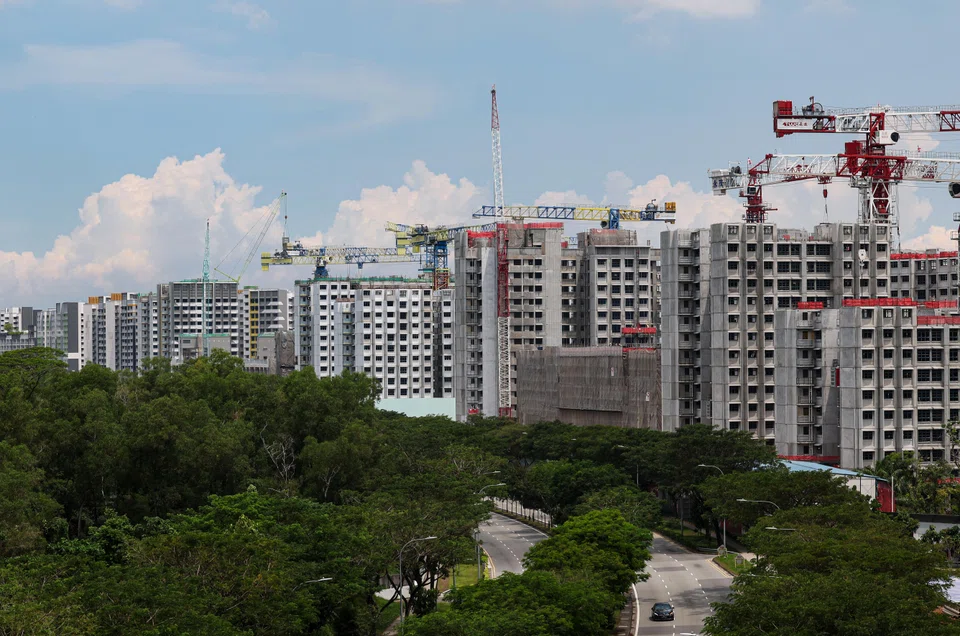
THE total fertility rate (TFR) per female among Singapore residents hit a record low of 0.97 in 2023, down sharply from over 1.7 in the early 1990s.
The number of resident life-births in 2023 of 30,510 compares with over 46,000 in the mid-1990s.
With 2024 being the auspicious Chinese year of the dragon, the TFR could jump significantly.
Still, despite many policies supporting marriage and parenthood, Singapore has an acute problem of not having enough babies.
Various housing measures support marriage – key among which is enabling local couples who meet the eligibility criteria to buy flats from the Housing and Development Board (HDB) at subsidised prices. By tying the knot, eligible young couples stand to receive a windfall in the future, from owning an HDB Build-To-Order (BTO) flat.
Among recent refinements, starting from June’s BTO exercise, a local couple comprising, say, a full-time national serviceman and a full-time student who is eligible for deferred income assessment, will pay a lower initial down payment of 2.5 per cent of purchase price when signing the Agreement for Lease, which takes place within nine months of booking a flat. The remaining down payment of 17.5 per cent of purchase price is payable during the collection of keys.
Housing moves
Could even more be done on housing, alongside moves on other fronts, to boost the TFR?
First, enabling more single young adults to live on their own may raise their chances of finding a partner.
HDB could consider building rental homes targeted specifically at single young adults. Such public rental housing flats could be reserved for leasing at reasonable rates by local singles who are aged below 35.
Rental flats for young singles can feature elements popularised by co-living operators, such as sophisticated shared spaces to promote mingling. For example, have a state-of-the-art gym, a fully-equipped communal kitchen, an arts studio and co-working spaces.
Second, consider further prioritising married couples aged 30 and below in securing new HDB flats.
Recent changes gave additional priority in securing a BTO flat to eligible married couples aged 40 and below. For example, they get an extra ballot in their flat applications.
The median age of first marriage has generally been on the rise over the years. As age can affect the fertility of men and women, giving eligible married couples aged 30 and below even more priority in getting a BTO home might lead to couples marrying sooner and having more babies.
Third, consider rolling out housing incentives that are tied to the number of children a couple has.
Going forward, buyers of new-built HDB homes that are classified as Plus or Prime will need to pay back the HDB a portion of sale proceeds when they sell their units, because such flats built in choice locations receive larger subsidies.
Maybe, a local couple with two kids should get back part of what they paid for their BTO unit. Possibly, the payback can rise for a couple with three kids or more.
Fourth, consider building HDB flats islandwide that are larger than new-built five-room units, which may be around 1,200 square feet (sq ft).
Build new HDB jumbo flats with four or five bedrooms that are around 1,500 sq ft each. Let local families with three or more children buy these new HDB jumbo flats, which are to be used for their owner-occupation. After all, having a more spacious home is conducive to bringing up a large family.
These jumbo flats can be resold directly to HDB based on prevailing market valuation.
Fifth, consider giving concessions on home-loan repayments to local couples who have children. Lessening the financial burden of servicing a large multi-year home loan can help reduce the financial stress of having children.
Such a move will give couples with kids greater room to take on more flexible roles if needed, so as to free up time for child-rearing. Indeed, many parents greatly value spending more time with their children, especially in their early years.
Sixth, help high-earning local couples, who bust the monthly household income ceiling for BTO and executive condominium (EC) units, to comfortably afford a private property. The income cap to qualify for a BTO buy is S$14,000, while the ceiling for new EC buyers is S$16,000.
One concession could be to waive Buyer’s Stamp Duty (BSD) for young local couples who buy their first private home. A couple may greatly value saving nearly S$70,000 in BSD on a S$2 million home.
Helping high-earning local couples in their home-ownership journeys might nudge busy career-minded talented young locals to speed up their marriage and parenthood plans.
Paying a heavy price
The above suggestions are not exhaustive and may be insufficiently radical.
Additional moves to help young locals on the housing front will be financially costly too. Already, HDB runs a major deficit in its Home Ownership Programme. Moreover, government expenditure may rise to fund growing healthcare needs.
Crucially, factors such as the school system, workplace practices as well as perceptions on social mobility also impact decisions by couples to have kids.
Personal choices to be single or childless should be respected. Some people may prefer singlehood or cannot find the right partner. Some people may dislike having kids or see adding to the human population as harming the environment.
However, boosting TFR matters in ensuring Singapore’s economy remains dynamic over the long run. Having a successful economy is non-negotiable for collecting taxes to help pay for spending on healthcare and social needs.
Many parents invest a lot to raise their children. Society at large may need to pay a heftier price to help ensure that Singapore residents have many babies.
Sure, numerous countries in the rich world face a dire fertility problem too. Still, Singapore should aim to be exceptional by creatively solving the fertility conundrum.
As we welcome a new prime minister soon, let’s do more in housing and other areas for a future where many young Singaporeans have large families.
TRENDING NOW

Once staunchly pro-China, Malaysian Chinese businesses are now distancing themselves from Beijing

Stocks to watch: HPL, Aims Apac Reit, Zico, Advanced Systems Automation, ComfortDelGro

‘How many will survive?’: Bubble fears arise as China’s humanoid robotics face reality check

Smaller board lots can’t fix a market run by three banks

