

Consider letting young Singaporeans borrow more to fund housing dreams
How about a 35-year loan with loan-to-value of 80% for under-35s?

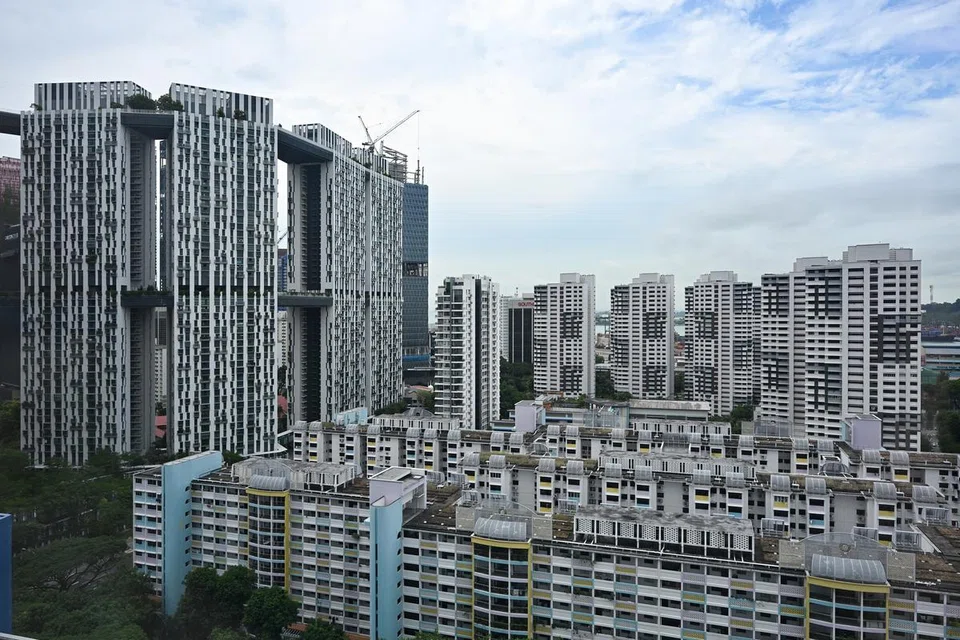
BORROWING to buy a dream home? Availability of debt financing is good, and interest rates may come down. However, a myriad of rules govern how much one can borrow.
For a borrower with no outstanding housing loan, the loan-to-value (LTV) limit for a home loan from a financial institution is 75 per cent. A lower LTV limit of 55 per cent applies if the loan tenure exceeds 25 years for Housing and Development Board (HDB) flats and 30 years for private homes, or if the loan period extends beyond the borrower’s age of 65 years.
Currently, the maximum tenure for loans from financial institutions is capped at 30 years for HDB homes and 35 years for non-HDB homes.
For HDB housing loans, the LTV limit was recently lowered from 80 per cent to 75 per cent. The maximum loan period is 25 years. A lower LTV or loan period may apply, depending on the borrower’s age and the flat’s remaining land lease.
People taking up home loans have to meet total debt servicing ratio (TDSR) requirements. A borrower’s TDSR should not exceed 55 per cent. TDSR refers to the portion of a borrower’s gross monthly income that goes towards repaying the monthly debt obligations, including the loan being applied for.
In addition, people borrowing to purchase an HDB flat, or an executive condominium (EC) for which the minimum occupation period of the EC has not expired, have to meet the mortgage service ratio (MSR) cap of 30 per cent of a borrower’s gross monthly income.
MSR refers to the portion of a borrower’s gross monthly income that goes towards repaying all property loans, including the loan being applied for.
The stringent rules help to ensure prudent borrowing and that borrowers are not overly-levered. This in turn strengthens the banking system and facilitates a more stable housing market.
However, housing loan rules should perhaps be relaxed for young locals buying their first homes.
A couple may be ineligible to buy an HDB Build-To-Order (BTO) or new EC unit because they bust the monthly household income ceiling of S$14,000 and S$16,000 respectively. Or a couple might need a home for fairly immediate occupation and hence cannot wait, say,a few years to collect the keys to their new home.
In the above cases, a couple might buy an HDB resale flat. A couple buying a four-room unit in a popular location for S$900,000, need to find at least S$225,000 from their savings to fund the purchase, assuming they receive no financial assistance. For a resale condominium costing S$1.5 million, the said couple would need to finance a minimum of S$375,000 from their savings.
Higher LTV
Perhaps the LTV limit for local first-timers under-35 can be raised to 80 per cent for home loans from HDB and financial institutions. Also, the maximum tenure of such loans could be 35 years with the LTV limit of 80 per cent.
With a higher LTV limit of 80 per cent versus 75 per cent, a buyer of a S$1 million dollar home can pay S$50,000 less from his savings.
The monthly instalment on a S$750,000 loan with a 25-year tenure at an interest rate of 3.75 per cent per annum is S$3,856. The instalment amount reduces by about 17 per cent to S$3,209 for a 35-year tenure.
In short, with a longer loan tenure, a borrower may better meet TDSR and MSR requirements, as well as have more disposable income for other needs.
More generous home loan rules can help young locals better achieve their housing aspirations, thereby anchoring talented young locals to home. Also, alleviating some of the stress associated with buying a home could encourage some to marry younger, have children earlier and have more children.
For example, a dating couple who can borrow more to buy a home might bring forward wedding plans if they do not need the extra time to save for the down payment on a home.
Prudent borrowing
At the same time, extending housing loans based on LTV of 80 per cent provides more of a buffer to lenders as they extend secured financing for assets whose values would need to plunge over 20 per cent to be of concern.
Certainly, there is substantial disruption in the job market. And losing a job can severely hurt a borrower’s ability to service a housing loan. Still, given the availability of training opportunities and the rising education level of workers here, young workers, in particular, are well positioned to pivot to pursue new career opportunities.
Moreover, the income of younger borrowers might rise relatively quickly as they advance in their careers. The ability to service a home loan can thus improve over the duration of the loan. Additionally, as incomes grow and savings accumulate, borrowers may make early partial loan repayments and possibly repay loans in full prior to their maturity.
Extending a loan with a higher LTV limit until the borrower turns 70 is reasonable as life expectancy and years spent in employment rise. In 2023, the resident labour force participation rate of those aged 65 years and up was 31.5 per cent, up from 17.6 per cent in 2010.
The current retirement age in Singapore of 63 will rise to 65 by 2030. The re-employment age will be 70 by 2030. Beyond 2030, might the retirement age and re-employment age rise further? With a tight job market and an ageing population, more locals may need to be economically active for longer over time.
Tightening home loan conditions can help cool the housing market and ensure price stability. Nonetheless, being able to borrow is vital for many young, first-time home buyers. Allowing them room to borrow more need not undermine prudent borrowing and should not heat up the housing market, provided supply is adequate.
It is hoped, however, that young locals would not “over-consume” housing if they are given room to borrow more to pursue their housing dreams.






