

Consider lowering ABSD for foreigners buying homes in selected areas such as Marina South

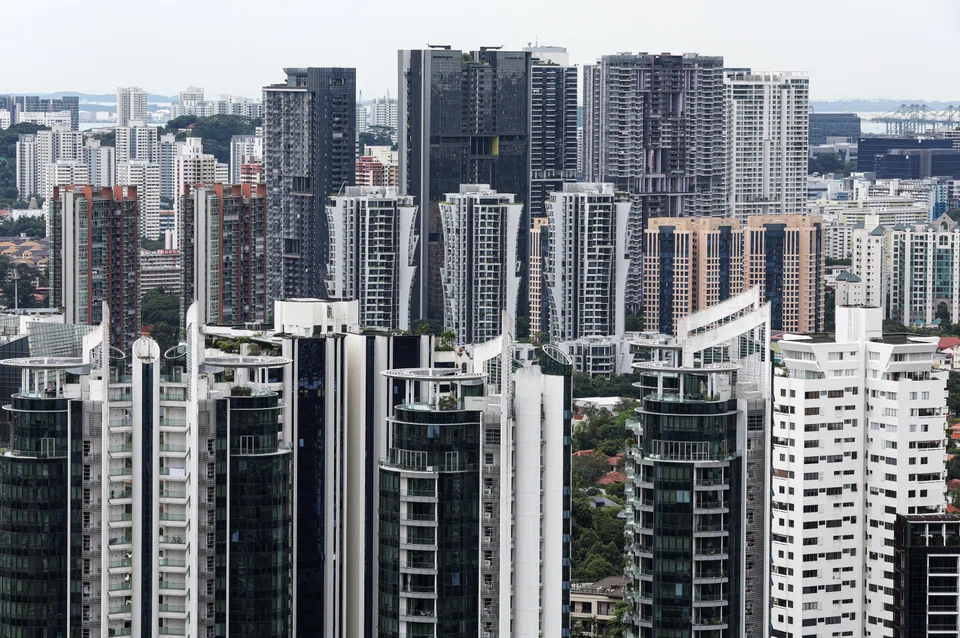
THE Urban Redevelopment Authority (URA) recently rejected the sole bid of nearly S$770.5 million or S$984 per square foot per plot ratio (psf ppr) for the 99-year leasehold Marina Gardens Crescent site in Marina South because the bid price was too low.
Uncertainty over housing demand in the Marina South area could have driven developers to be cautious in their evaluation of the Marina Gardens Crescent site.
The lack of local schools in the surrounding area is a possible factor hampering demand from locals for future homes in Marina South. Also, developers may fear that demand for homes in general from foreigners who are not Singapore permanent residents (SPRs) and investors could be lacklustre.
The Marina Gardens Crescent plot, which can be used for residential and commercial development, has now been put on the reserve list of the H1 2024 Government Land Sales (GLS) Programme. Developers can apply for the sale of the site, which may generate around 775 private homes, with a minimum price that is acceptable to the government.
While we wait to see if the government will get an acceptable offer for the Marina Gardens Crescent site in future, perhaps efforts should be made to improve demand for the site.
To revive foreign buying interest, the government could consider lowering Additional Buyer’s Stamp Duty (ABSD) rates for purchases of homes by non-SPR foreigners in selected areas. Examples of such areas which may be less popular with locals buying homes for owner occupation are Marina South, Sentosa and possibly parts of the Downtown Core.
Could ABSD rates for non-SPR foreigners buying homes in these locations be halved from 60 per cent to 30 per cent?
Home buying by foreigners
Purchases of private homes by non-SPR foreigners fell by around one-third in 2023 compared to the year before that.
Going by a check on data from URA Realis on Feb 14, the number of caveats lodged by non-SPR foreigners for private homes here (excluding executive condominiums or ECs) in 2023 was 623 – versus 934 in 2022, 1,120 in 2021, 745 in 2020, 1,005 in 2019, and 1,225 in 2018.
The number of caveats lodged by non-SPR foreigners in H2 2023 was 146, down from 477 in the first six months. The share of caveats for private homes, excluding ECs, lodged by non-SPR foreigners fell to 1.5 per cent in H2 2023, from 4.9 per cent in H1 2023, 4.3 per cent in 2022 and 5.5 per cent in 2019.
Blame the hike in ABSD that non-SPR foreigner buyers face.
The ABSD rate for non-SPR foreigners has risen sharply from 10 per cent since December 2011, when ABSD was introduced. It was most recently raised last year, from 30 per cent to 60 per cent, with effect from Apr 27, 2023.
Some non-SPR foreigners pay no ABSD. Nationals and permanent residents of Iceland, Liechtenstein, Norway, Switzerland and the US enjoy the same stamp duty treatment as Singapore citizens under the respective free-trade agreements with these countries.
Singapore citizens pay no ABSD on their first home, 20 per cent on a second residential property purchase, and 30 per cent on the third and subsequent purchase.
However, non-SPRs from countries such as China, Indonesia and India pay 60 per cent ABSD when buying homes here.
Certainly, policies governing the private housing market should favour locals buying their first home.
Moreover, excessive foreign buying of private homes here can distort the market and make it harder for locals to achieve their private home ownership aspirations.
Benefits from foreigners buying homes
Nonetheless, there are benefits to non-SPR foreigners buying homes here.
First, Singapore seeks to lure global talent. The economy gains by drawing top talent here. Attracting global talent to live, work and play here is helped when non-SPR foreigners do not face onerous obstacles in buying homes here.
Non-SPR foreigners who own homes here can help spread the Singapore story in their homelands and within their networks.
Also, buying a home here can help talented non-SPR foreigners become familiar with Singapore. Some of these foreigners may subsequently deepen their Singapore ties and become SPRs or even Singapore citizens.
Second, some non-SPR foreigners may lease out their homes here. Having ample supply of private rental homes for overseas people working or studying here as well as locals looking to rent a home provides tenants with choice and competitive rentals.
Third, non-SPR foreigners who buy homes here contribute to tax revenue.
Buying a home incurs transaction taxes, and property taxes are payable by all homeowners. Buyer’s Stamp Duty (BSD) rates are progressive. And residential property tax rates are higher for non-owner-occupiers than for owner-occupiers, as well as for pricier properties.
If non-SPR foreigners buy 100 homes costing S$3 million each and pay ABSD, the amount collected in BSD and ABSD totals about S$102 million, assuming ABSD of 30 per cent.
Budget 2024 contained good news for some homeowners, home buyers and housing developers. As there are good reasons to lower ABSD rates for non-SPR foreigners buying homes in certain areas, maybe the government can announce such a change outside of Budget 2024.
Lowering ABSD for non-SPR foreigners in selected areas may risk making these areas hotspots for home purchases by said foreigners. Still, buying of homes by non-SPR foreigners could be at a measured pace if the ABSD rate is 30 per cent.
Having lower ABSD rates for non-SPR foreigners buying homes in selected areas can help show Singapore’s openness to foreigners when many countries are increasingly inward-looking. It can also enhance tax revenue collection. Such a move can also ramp up the pace of development in areas such as Marina South.
Ultimately, having non-SPR foreigners account for close to 5 per cent of total private home transactions, excluding ECs, should hardly distort the private homes market here.
Meanwhile, as long as the government helps ensure an adequate supply of private homes and the economy grows, locals will still be able to achieve their private homeownership aspirations.
What will the Dragon Year hold for Singapore property? On the 15th day of the Chinese New Year, I will discuss Singapore property with PropNex’s Ismail Gafoor, OrangeTee & Tie’s Justin Quek, Savills’ Alan Cheong and you. Get tips to navigate the HDB, private homes and commercial property markets. Join me at the BT Property Outlook 2024 Seminar on Feb 24. Sign up at http://bt.sg/btproperty24
TRENDING NOW

If Europe goes to war, the fallout will be felt in East Asia

Indonesia stocks suffer worst plunge in nearly 30 years as MSCI proposes standalone status

Keppel seeks US$1 billion for Vietnam investments as it joins country’s international financial centre

Philippines’ FDI slowdown exposes uneven investment prospects across S-E Asia

