Consider waiving Buyer’s Stamp Duty for some young Singaporean couples buying their first home

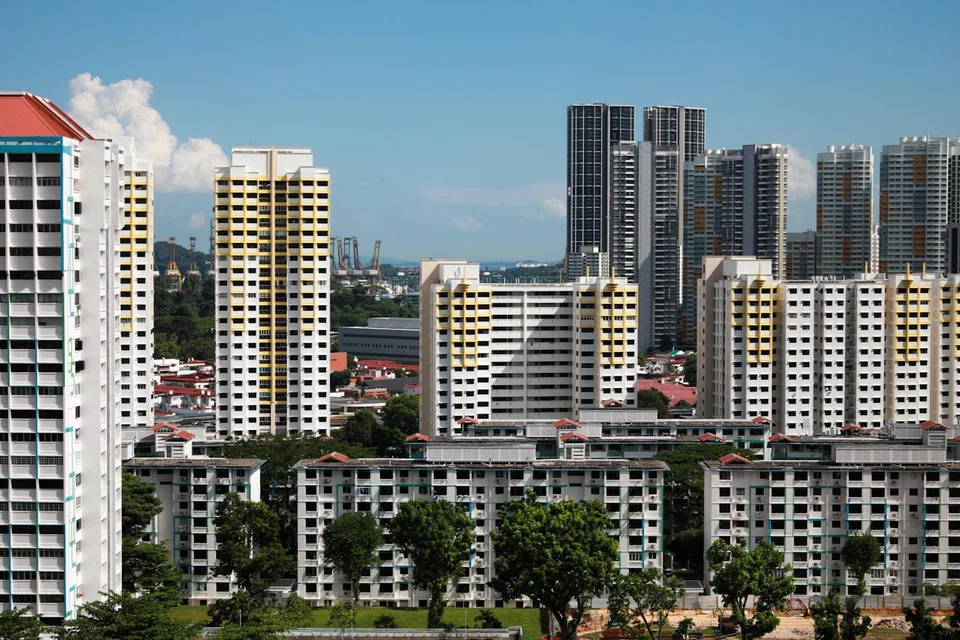
YOUNG local couples have been getting plenty of help on the housing front recently.
Among measures unveiled, married couples aged 40 and below, who are buying their first home, get an additional ballot chance for their Housing and Development Board (HDB) Build-To-Order (BTO) applications from the August BTO exercise.
Eligible first-timer couples buying an HDB resale flat can now get a CPF Housing Grant of S$80,000, up from S$50,000, for a two-room to four-room flat, and S$50,000, up from S$40,000, for a five-room or larger flat.
Spare a thought, though, for high-income earning young couples who are Singapore citizens. Couples whose gross monthly household income exceeds S$14,000 cannot buy a BTO unit or get the CPF Housing Grant.
Buying HDB
Take two couples who buy four-room HDB flats in the same mature estate. A couple earning S$160,000 per annum buys a BTO unit for S$650,000 while a couple earning S$190,000 a year buys a resale flat that costs 40 per cent more at S$910,000.
In the above scenario, the price-to-income ratio (PIR) for the higher-earning couple of 4.8 times is worse than the other couple’s 4.1 times.
If both couples buy an HDB four-room resale flat for S$910,000, the PIR for the higher-earning couple is better than the other couple’s 5.2 times after factoring in receipt of S$80,000 in CPF Housing Grant.
Still, when buying an HDB resale flat, especially a pricey unit, the higher-earning income couple is somewhat disadvantaged. Because they qualify to receive a housing grant, the lower-earning couple may be better able to come up with the down payment.
HDB loan
Crucially, a couple whose monthly household income does not exceed S$14,000 can take up an HDB housing loan when buying an HDB flat. This option is not available to couples whose monthly household income exceeds S$14,000.
The loan-to-value (LTV) limit for an HDB housing loan can be up to 80 per cent of a flat’s purchase price. The maximum LTV for a housing loan from a bank is capped at 75 per cent for the first loan.
The interest rate on the HDB housing loan – pegged at 0.1 per cent above the prevailing CPF Ordinary Account interest rate – is 2.6 per cent per annum. The annual interest rate may be around 4.6 per cent for a floating rate home loan from a bank.
The difference between the monthly repayment amount of a 25-year loan of S$600,000 with interest rate of 2.6 per cent and 4.6 per cent is about S$647 or S$7,764 per annum.
However, the maximum loan duration for an HDB housing loan can be shorter than that of a housing loan from a bank.
I bought my first home upon getting married in the late 1990s, just before turning 30. My wife and I busted the then monthly household income ceiling of S$8,000 for buying a new HDB flat.
With the help of an interest-free loan from parents that was used to partially fund the down payment, we bought a private home that cost about six times of our annual income.
Our first home was a spacious 20-plus-year-old, centrally-located apartment. We could have kept the home price to annual income ratio below five times if we bought a smaller unit in the suburbs.
Today, the affordability of private homes may not be as good.
In 2022, 21.3 per cent of resident households had monthly income from work including employer CPF contribution of S$17,500 or more.
A household earning an annual income amounting to 12 times of S$17,500 or S$210,000 could struggle to find a resale private home in the suburbs of about 1,000 square feet that costs S$1.26 million or six times of such an income level.
Should young adults today marry as quickly as possible, so they can buy an affordable BTO home? Singapore’s total fertility rate can get a much-needed boost if more people marry younger.
Nonetheless, getting married is a huge commitment and should not be rushed into because of buying a BTO flat.
Stamp duty waiver
Local couples whose monthly income does not exceed S$16,000 can buy a new Executive Condominium (EC) unit, which is a hybrid between private and public housing. However, some locals may find locations of new ECs unappealing, or they may bust the income ceiling to buy a new EC unit.
Some young couples may even consider asking their employers to hold back on giving them a pay raise or turn down a job switch that sees their household income cross S$14,000 a month, so they can buy a BTO flat.
Maybe more help can be given to Singapore citizen couples aged 40 and below who earn over S$14,000 a month in buying their first home. Consider waiving the Buyer’s Stamp Duty (BSD) for young first-timer local couples buying HDB resale flats, without a housing grant, or those buying private homes. The BSD waiver can apply to homes below S$3 million.
For homes, BSD rates are 1 per cent for the first S$180,000, 2 per cent for the next S$180,000, 3 per cent for the next S$640,000, 4 per cent for the next S$500,000, 5 per cent for the next S$1.5 million and 6 per cent for the remaining amount.
Housing policies here support marriage and parenthood. The government also encourages homeownership by locals.
Thus, extending more help to high-earning young married local couples seems reasonable. If waiving BSD nudges high earning young locals to get married and anchor themselves here, Singapore gains.
Moreover, any impact on home prices from waiving BSD for high-earning young first-timer couples buying their first homes may be minimal.
Recent hikes in Additional Buyer’s Stamp Duty for foreigners buying any home and locals buying multiple homes further tilt the playing field in private homes towards local first-time buyers.
It’s certainly progressive to get property investors to pay higher taxes to help fund the needs of an ageing population. We could, concurrently, help young local couples even more in their homeownership journeys by tweaking taxes further.