

A consummate entrepreneur, Sim Wong Hoo never U-turned from Creative

Kenneth Lim
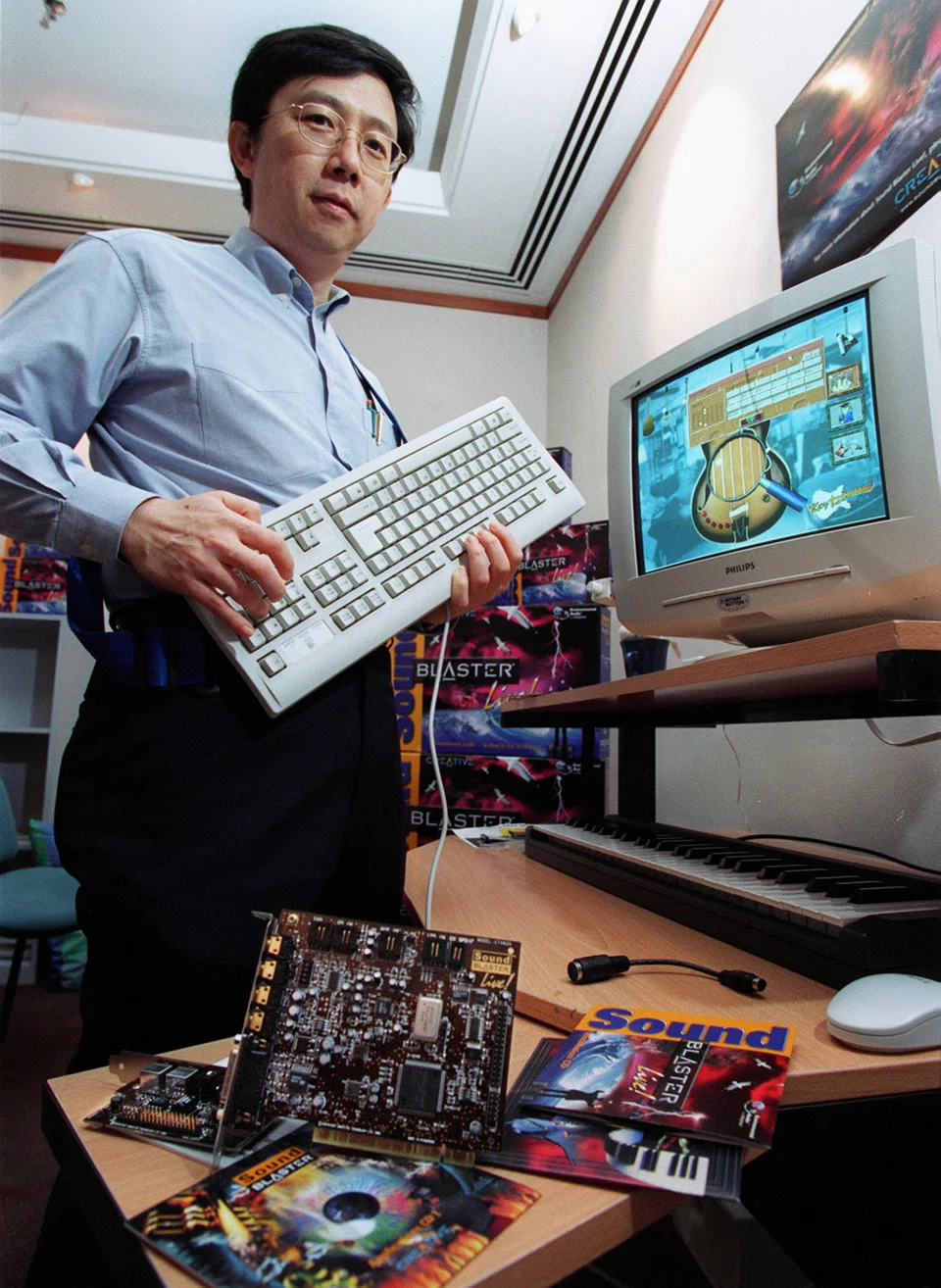
I WAS in school when I first encountered the Sound Blaster. I didn’t know what a sound card was at the time, but my friends who were savvier about computers seemed to think they were getting a good deal at the roadshow that had come to school.
The demonstrations with the computer chess pieces that could speak in audible human voices were literally game-changing. All I’d heard from my computer until then were monotones crudely strung together to imitate real-world sounds, as if aural impressionism were a thing.
It’s hard to explain to younger colleagues today how revolutionary and ubiquitous the Sound Blaster was in its heyday; how inspiring it was that a Singaporean named Sim Wong Hoo was behind it; and how impressive it was that Sim’s company, Creative Technology , became the first Nasdaq-listed Singapore company.
After all, for all of his past success, Sim has had little to show over the past two decades. Sure, Creative may once have made Sim the 37th wealthiest person in South-east Asia as ranked by Forbes, but it’s now a loss-making shadow of its grand past that could soon be watch-listed by the Singapore Exchange. Sim may have coined and popularised the term “no U-turn syndrome” to lament Singaporeans’ reluctance to act without prior approval, yet the once-poster boy of Singapore entrepreneurship only really has one big hit under his belt.
But those who scoff at Sim’s track record are missing the point. Sim was the consummate entrepreneur not simply because of his early success, but also because, even in the face of failure, he never stopped building his business.
Sim’s and Creative’s fatal mistake was waging war against Apple’s iPod MP3 player. When I interviewed Sim in 2004 as he prepared to launch the Creative Zen Micro, he laid out an ambitious and costly campaign to push out waves of new products and a flood of marketing. Apple had a market share of about 54 per cent at the time, and Creative was a distant second with a 16.5 per cent share, but Sim was undaunted.
Creative’s strength was in its audio technology, he explained. Feature for feature, the Zen and Zen Micro seemed on paper to be clearly superior to their Apple counterparts.
But Sim, an engineer at heart, couldn’t find a way to best Apple’s design aesthetics and user experience. And just three years after the interview, Apple announced the iPhone – which turned MP3 players irrelevant. If there was ever a case study for how features alone don’t sell a product, this would be it.
Even after losing the war, Sim never stopped trying. After a period in which Creative seemed preoccupied with pursuing intellectual property claims, the company finally got a breakthrough in 2019 with its Super X-Fi line of audio products that can create “three-dimensional” soundscapes. The products won a number of industry awards, and gave the company and its stock a new breath of life. In a statement, Creative interim chief executive Song Siow Hui shared that Sim was engaged and working the night before his death.
The Covid-19 pandemic disrupted supply chains and momentum, but Creative once again had a champion product to headline its resurgence. Getting there would not have happened if Sim had thrown in the towel, or if he had wavered in his conviction that Creative’s special value to the world was its audio technology.
Sim will not see his company navigate its next chapter, but his enduring steps leave a path for other entrepreneurs to follow.

