Continuity, change, and a gamble
As different countries go to the polls this year, businesses and investors wait to see if the election results will lead to policy shifts
THIS year of many elections comes in tandem with a time of global tumult, and poll results will be consequential. Different personalities and parties jostle for attention and support, like jugglers performing during an earthquake. But headlines aside, there are overarching questions about the balance between continuity and change that matter to business.
Generally, incumbents tend to promise more of the same, while opponents call for new directions. For businesses and especially foreign investors, many place a premium on stability. The risks from sudden and adverse political change are real and yet they do not have a vote. How should they interpret the considerable range of outcomes?
A spectrum of outcomes
The election that warrants the most attention is that for the American presidency, coming in November. This is guaranteed to be a heated contest, notwithstanding the advanced years of the candidates. There is a stark choice with high stakes, especially after Donald Trump’s conviction in court.
For key policies that impact businesses too, there are likely consequences. The last time Trump won, he quickly reversed initiatives taken by his predecessor on free trade in the Asia-Pacific and on climate change commitments. Expect, if he wins, that he may similarly gut Joe Biden’s initiatives for an Indo-Pacific Economic Framework for Prosperity (IPEF) as well as the green manufacturing incentives embedded in the Inflation Reduction Act.
Change is also brewing in Europe, the other home of liberal democracy. Mid-year European parliamentary elections do not change the leadership; but the results, which point to the mood among citizens, show a significant swing to the right across the continent. This can have many effects, not only on social and political issues but also on economic policies. One likely impact will be to de-emphasise incentives and policy measures for Europe’s Green Deal.
The world’s largest democracy, India, has also witnessed elections, with results that mix elements of change and continuity. Prime Minister Narendra Modi won a rare third term and will continue to lead. However, his party secured far fewer seats than expected.
Some commentators assess that he has been “humbled” in his push for a Hindu-based nationalism. But, while he won fewer seats, the nation-wide support remains and there are strong, even strident, voices behind him. The next policy steps of his new government will bear watching.
Perhaps one key example of continuity is presented in Singapore’s own changeover in prime ministers in mid-May. Some do ask about its significance, with PM Lee Hsien Loong handing over to Lawrence Wong after two decades in charge. But assurance of continuity comes from the new PM’s years of experience in public service and that Lee remains in the Cabinet as senior minister.
This changeover, however, comes before the general election and is best seen as a first phase of transition. Anticipate the vote soon, with further Cabinet changes to follow as a younger fourth generation comes into its own in leadership. Still, compared with the political swings elsewhere, Singapore seems a paradigm of continuity.
Not either-or, but both
Yet, promises of continuity have to be seen in the context of a world that is undergoing profound pressures in terms of finance and trade, security, climate, energy and social cohesion. Major transitions are under way and adjustments will be needed.
Consider energy policy. This is subject now not only to the geopolitics and security of oil-producing countries, especially the Middle East. It is also affected by concerns about climate and sustainability as well as worries about equity and energy prices. Economies must address climate concerns and reduce carbon, while remaining competitive and providing equitable energy access to all citizens.
As such, past conventions do not suffice. New paradigms and bold initiatives are needed.
In our region, energy consumption is predicted to climb steeply with economic growth. There is rich potential in green energy including solar, hydro and wind. This type of energy is much needed as the countries grow, but current rates of adoption and investment remain low.
It is timely that Asean and its key investors work together to develop a regional energy grid, focused on clean energy. This was one key message from the IPEF Clean Economy Investor Forum, hosted in Singapore last week (Jun 6), with US Commerce Secretary Gina Raimondo and other ministers from across the region in attendance.
This energy example tells us that the status quo will not meet our needs. Even if we desire continuity and stability, this is no licence to sit still and rely on past formulae. Rather, there is a need to analyse the next steps, combine that with the political and social coalitions to make necessary change, and move ahead.
The question about continuity and change is, as such, not an either-or question. Think instead of how best we can do both – change current practices and adjust to global transitions, in order to deliver a continuity in outcomes. Correspondingly, it may be the more stable systems of governance that can effectively deliver the necessary changes.
Rolling the dice
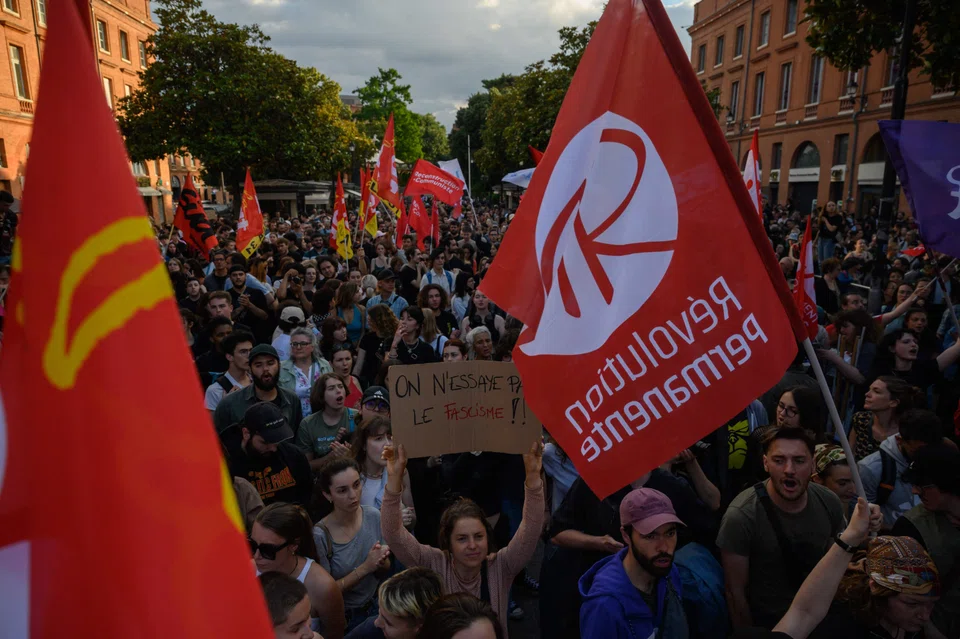
Political gambles, however, will be played to try to continue in power. The latest headline on this comes from France. President Emmanuel Macron has called for snap elections for the country’s parliament following the Europe-wide vote, aforementioned, which saw a swing to the right.
The concern seems to be that the growing momentum to the far-right will make it seem inevitable that the next French presidential election, due in 2027, will usher in Marine Le Pen, his longtime far-right opponent. The gamble Macron is taking is that France’s national polls will show prevailing support for his centrist party, and this would stem perceptions of declining support and it becoming a lame-duck government.
This roll of the dice, however, has scared markets. Immediate reactions included a broad sell-off in French stocks and bonds and a notable dip in the euro. The eventual results may placate investors, but it remains to be seen how things settle.
Still, the biggest gamble remains with the United States, the world’s largest economy and political leader. The Nov 5 election results relate not only to America’s domestic priorities but will ripple outwards into the world. If Trump wins, there is reason to fear not only ripples, but also tsunami waves.
Such a fate hangs over the IPEF initiative for a clean economy and the provision of green energy. This bold and necessary effort has gained momentum from being a flagship engagement policy under the Biden administration. Yet, for the same reasons, its fate is to be decided by the November vote and politics.
The writer is chairman of the Singapore Institute of International Affairs. He moderated the opening dialogue of the recent IPEF Clean Economy Investor Forum in Singapore.