

As COP29 planning begins, reforms needed to fulfil Paris ambition
The climate summit will be Azerbaijan’s largest-ever event – but also requires huge changes
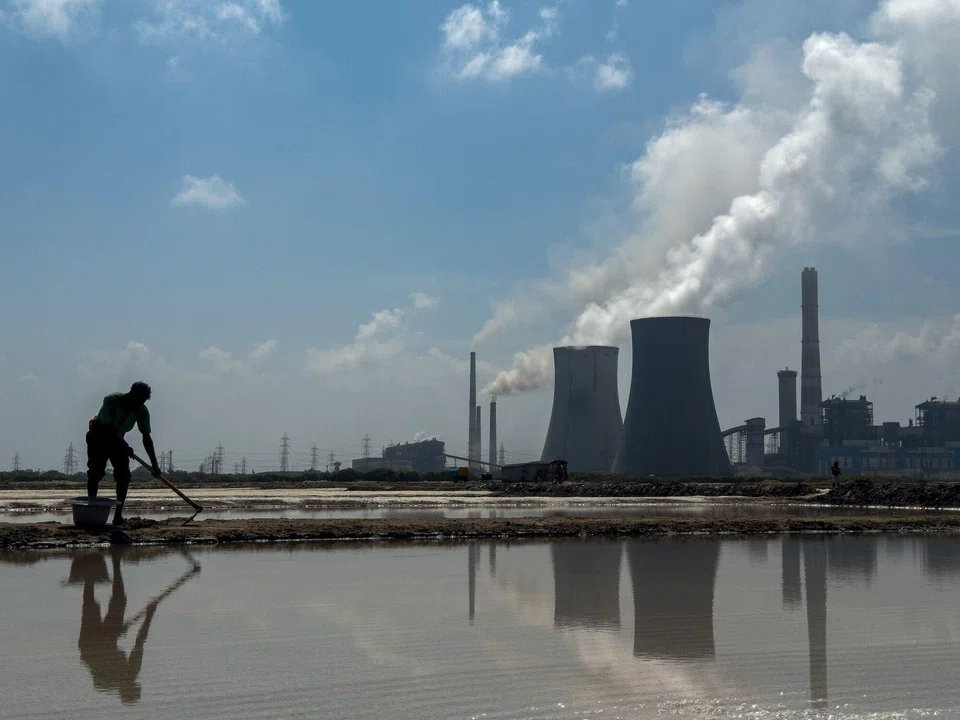
PLANNING for this year’s global climate conference, COP29, has begun in earnest – and organisers expect it to be fossil fuel giant Azerbaijan’s largest-ever event in terms of attendance and scale.
However, huge reforms are also needed if the summit is to deliver an effective global climate deal.
One thing that COP29 president-designate Mukhtar Babayev and the new organising committee should consider is the summit’s ballooning attendance.
In the early days, attendance averaged perhaps as low as around 5,000. After the pandemic, however, this grew to just under 40,000 at COP26 in Glasgow in 2021, and around 50,000 at COP27 in Sharm el-Sheikh. Last November and December in Dubai, a staggering 70,000 people attended. This is approximately a trebling from the last pre-pandemic edition, COP25 in Madrid in 2019.
Yet larger numbers have not meant greater achievements.
These summits’ comparative failure to deliver on the ambition set in Paris in 2015 has led to growing calls for a fundamental change to the longstanding United Nations-led climate framework.
In essence, there is a growing sense that COPs may no longer be able to deliver what is needed.
Better than nothing
To be fair, COP28 did eventually result in a deal – though only after the designated end of the event. The deal text included historic language on the transition from fossil fuels to cleaner energies.
Another welcome development was the inclusion of a 2030 global deforestation goal, along with positive wording on the role played by indigenous communities. There is therefore hope that the deal could mean a closer integration of nature and climate concerns.
The text emphasises the importance of conserving, protecting and restoring nature and ecosystems, in the journey towards the Paris Agreement’s temperature goal. This includes enhanced efforts in halting and reversing deforestation and forest degradation by 2030.
Yet, positive as the deal is in some respects, the summit took steps backward as well. Critically, the Paris goal of limiting global warming to 1.5 degrees Celsius is in increasing peril.
The Global South, indigenous peoples and island communities have heavily criticised the COP28 global stocktake, which monitors the implementation of the Paris Agreement and evaluates progress towards its goals. Many conclude that current pledges mean world leaders are a long way from honouring their Paris promises.
Poorer countries were also frustrated by the lack of a concrete plan to adapt to climate change – and the lack of money to do so.
There is very little in the COP28 text on climate finance. Developing countries still need hundreds of billions more in finance, to help them make the transition away from fossil fuels.
Some other stakeholders were critical of the stocktake’s focus on solutions that are unproven – for now – at scale, such as carbon capture and storage (CCS).
European Commissioner for Climate Action Wopke Hoekstra said: “We cannot ‘CCS’ ourselves out of the problem. The reality we need to face is that we have to phase out fossil fuels, period.”
Another criticism is that COP28 did not put enough emphasis on carbon market negotiations, which collapsed following fraught discussions earlier this month.
Governments could not reach agreements on the country-to-country trading regimes, nor rules for the overall carbon market – meaning that all of these negotiations have been pushed out.
Time for change
It is in this context that calls are growing for major changes in how COPs are organised and run.
Optimists may look at the growing attendance numbers and assert that this reflects how the world is taking climate change more seriously. However, the process has become congested, too. Various stakeholders have asserted that the Dubai event nearly collapsed.
In part, this is why statesmen such as former US vice-president Al Gore – a key architect of the Kyoto climate treaty agreed in 1997 – are proposing reforms. These include relying on a majority vote, instead of the current need for unanimity, so that petro-states can no longer delay the pace of progress.
Going forward, a key question is how best to start advancing the agenda for COP29 in Azerbaijan and COP30 in Brazil.
For a start, negotiations should be turbo-charged now, with all countries prepared to reach a clear agreement in late 2024 and 2025 respectively.
This must now include pushing key countries to increase their ambitions and submit improved pledges, so that there is a remaining chance of sticking to the 1.5 deg C limit.
If the Azerbaijan event fails to deliver too, doubts over the future of the COPs are likely only to grow, especially after the succession of events in petro-states.
There are only a few years left to address the major issues before the window of opportunity may close in the 2020s. An increasing body of scientific evidence indicates that the globe is set for potentially devastating climate change.
There may yet be time – limited though it is – to avoid this through faster, bolder action.
This includes the need for even stronger public-private partnerships to drive game-changing outcomes crafted by the world’s best diplomats and negotiators.
Ahead of COP29, the ambition must be for all world powers to come together and build much faster momentum.
If this happens, and the COP process is fundamentally reformed, there may still be time left to deliver a global sustainability framework for billions across the world.
The writer is an associate at LSE IDEAS at the London School of Economics
TRENDING NOW

ComfortDelGro appoints two new independent directors

Once staunchly pro-China, Malaysian Chinese businesses are now distancing themselves from Beijing

NoonTalk needs continued financial support from CEO Dasmond Koh, auditors warn

DP Architects sets the benchmark for sustainability disclosure and design

