

Could HR and talent professionals better help individuals tap SkillsFuture credits?
They are in the best position to identify the skills that employees should pick up, and which employers value

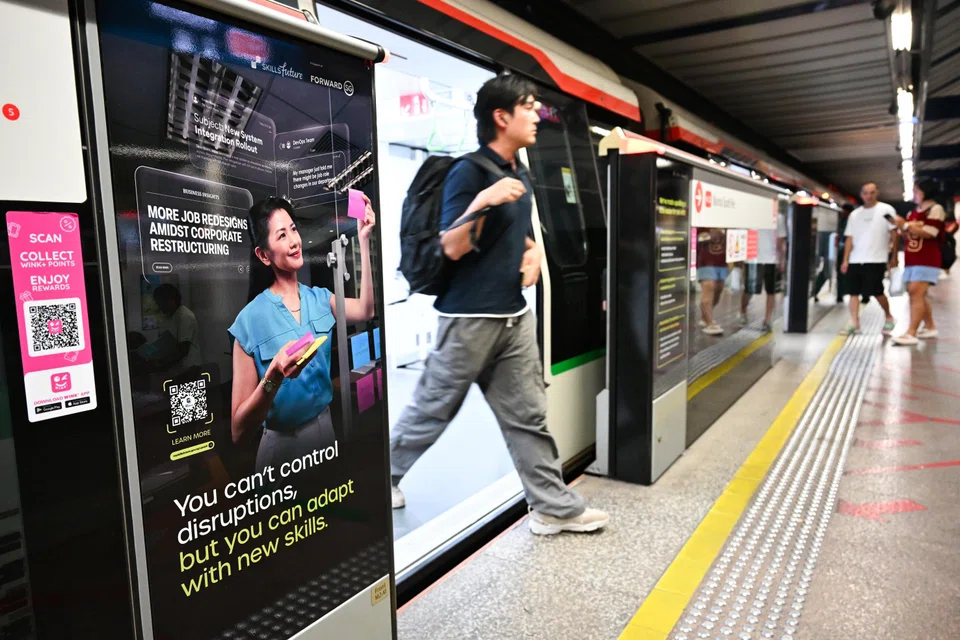
ONCE the reminders went out, there was a rush – quite naturally – to use up the S$500 SkillsFuture Credit (SFC) from the 2020 one-off top-up, which were to expire on Dec 31, 2025.
The surge in attempts to use those credits at the last minute caused intermittent outage of the SkillsFuture online portal, but this was resolved within a day. SkillsFuture Singapore had said that, as at September 2025, about seven in 10 people had not yet used their credits.
This credit top-up in question was given to Singaporeans aged 25 and above in 2020, during the Covid-19 pandemic. It is separate from the first tranche of SkillsFuture credits of S$500, which all Singaporeans aged 25 and above received, and which do not expire.
The Straits Times provided options about courses that were available for under S$500; these ranged from mobile photography to those that teach the use of Excel spreadsheets. Overall, the range of courses is mind-boggling, catering to a variety of individuals, with varying levels of work experience, interests and who are at different life stages.
Launched in 2015, SkillsFuture has the laudable aim of encouraging individuals to take ownership of their own skills development and lifelong learning. Singaporeans can use the credits offered under this programme to offset the course fees for eligible courses which support their skills development and make them future-ready, life-long learners.
Many individuals, given the rush to use up the credits, may have chosen somewhat fluffier courses rather than those that would have furthered their career or equipped them with lifelong skills – although that may not be a bad thing in itself.
A friend looking to further her knowledge of artificial intelligence (AI), when confronted with the extensive list of AI and tech courses, in fact used AI to help her sift through her options.
People I spoke to found the courses useful. They also presented opportunities to network and meet like-minded people.
Singaporeans by and large grasp the importance of lifelong learning and that fundamentally, they should take responsibility for their career planning, but given that many have unused credits, can employers get more involved?
There are career coaches who advise those who are looking to switch careers, and there is even Career Kaki, an AI coach which assists with some queries. So employers could perhaps step up to play a larger role in guiding their employees during their career with them.
Some human resource (HR) departments informally recommend SkillsFuture courses that are suitable for their employees. But perhaps more can be done on this front.
HR departments may not want to be seen recommending certain course providers over others. Neither should companies see this as a way for employees to bear their own training costs. However, if appropriate career development courses are available, highlighting these as a possible option for employees could create a win-win situation.
HR professionals who manage talents are best-placed to identify the appropriate skills that the employees and employers need. Providing more guidance for employees at the varying stages of their career would be a positive thing for workers as well as businesses.
This would be preferable to letting the credits sit around unused, and would be a more efficient use of public resources.
TRENDING NOW

Nvidia reinstates Jensen Huang as CEO; Trump says move poses no national security risk

Indonesia’s coal tycoon Low Tuck Kwong replaced as Bayan Resources president-director

Nvidia surges 33% after reinstating Jensen Huang, reviving AI trade; stocks soar in US and Europe

Consider lowering homeownership barriers for some non-resident foreigners

