THINKING ALOUD

Count the companies worth owning, not the ones listed

Between the opening bell and the exit door, what matters is whether a business becomes worth owning

Summarise
Anita Gabriel
Published Wed, Jul 29, 2026 · 07:00 AM
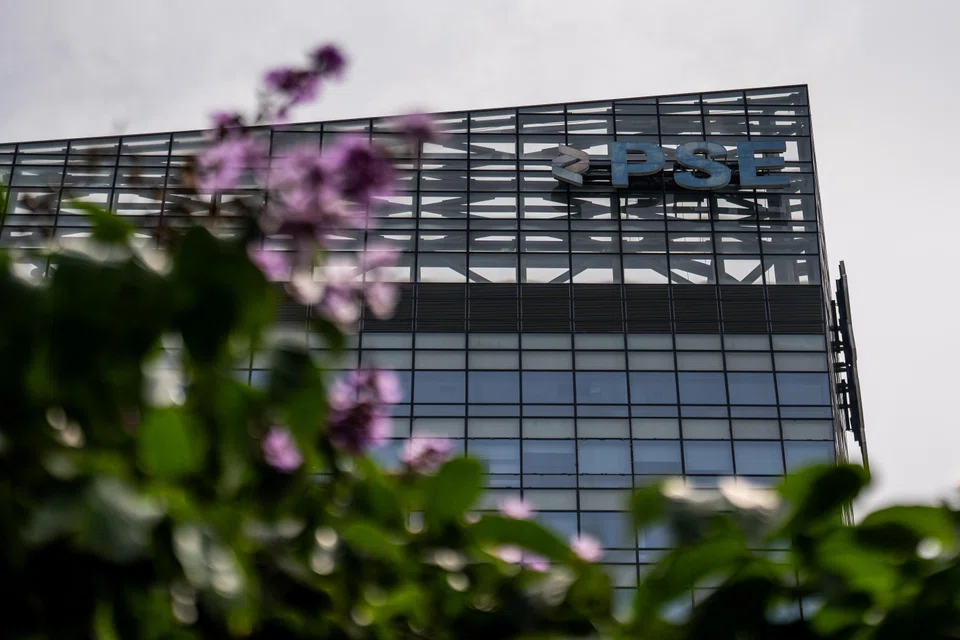
    • Many exchanges, such as the Philippine Stock Exchange, continue to treat every delisting as a defeat.
    • Many exchanges, such as the Philippine Stock Exchange, continue to treat every delisting as a defeat. PHOTO: BLOOMBERG

    EVERY stock exchange celebrates an initial public offering. Few celebrate what the company looks like two years later.

    That says a lot. Exchanges tend to be judged – and judge themselves – by how many companies are listed, rather than how many become well-run, investable businesses. This risks rewarding scale over strength.

    Take IHH Healthcare , for example.

    In 2010, Malaysia’s Khazanah Nasional won a bitter takeover contest with India’s Fortis Healthcare for then Singapore-listed Parkway, took it private and pulled it off the Singapore Exchange (SGX).

    At the time, it was read, among other things, as a straight loss for Singapore: one fewer listing.

    Two years and several deft moves later, Parkway resurfaced as part of a formidable franchise, IHH, which floated in July 2012 with a primary listing on Bursa Malaysia and a secondary listing on the SGX. It was one of the region’s biggest IPOs that year. The earlier delisting was just part of the story, not the end of it. SGX later gained a secondary listing of one of the world’s largest private hospital groups.

    That kind of value creation makes exchanges stand out. Yet, many exchanges continue to treat every delisting as a defeat.

    The Philippine Stock Exchange (PSE) is one such illustration.

    President and CEO Ramon Monzon said last year the exchange would give suspended companies more time to comply before removing them, citing an already small roster of listed companies.

    To delist more, he said, would be “counter-intuitive”.

    This month, he went further to say PSE was studying whether to stop involuntary delisting altogether.

    The reasoning – a suspended shell at least preserves the chance of a back-door listing, in which a private company buys a public company and hence gets listed. That might one day return something to trapped minority shareholders.

    Here is one truth – a shrinking exchange is not necessarily unhealthy, just as a large one is not necessarily vibrant.  

    A market full of illiquid, poorly governed or chronically undervalued companies is not made better by keeping them on the board.

    The reluctance to lose listings is understandable. The contest for new listings has intensified since the days when companies largely listed in their home markets.

    Now, they flock to exchanges that provide attractive valuations, deeper liquidity pools, specialised rules and access to global capital.

    Policymakers are zealously plugging their market gaps. Across South-east Asia, exchanges are spending heavily, and rewriting and relaxing rules to court issuers, all in pursuit of much-vaunted liquidity.

    Singapore’s Equity Market Development Programme is putting public money with fund managers to invest in local equities, while strengthening research coverage and broadening the listed product market.

    Malaysia’s MY Value Up is an intentional plan to push for stronger governance, better capital allocation and value creation from its public-listed companies.

    Thailand has expanded the state-backed Vayupak Fund and offered tax incentives for long-term investors, while Vietnam has eased pre-funding requirements for foreign institutional investors.

    Different medicine, similar malady: lagging valuations, weak liquidity, and rising competition for capital from global and private markets.

    These efforts matter, but their successes cannot be measured simply by how many companies enter or leave an exchange.

    Perhaps the better test ought to be whether an exchange can keep producing companies that flourish, govern well, engage meaningfully with investors and reward shareholders, long after the IPO fanfare has faded.