

Count on our magnificent three – DBS, OCBC and UOB – to drive growth in local stock indices
Singapore’s financial hub strength underpins the trio’s dominance in the domestic bourse

WHERE America leads, much of the world follows. The US equities market boasts the magnificent seven – Apple, Microsoft, Google parent Alphabet, Amazon.com, Nvidia, Meta Platforms and Tesla – which are key drivers of US stock market gains.
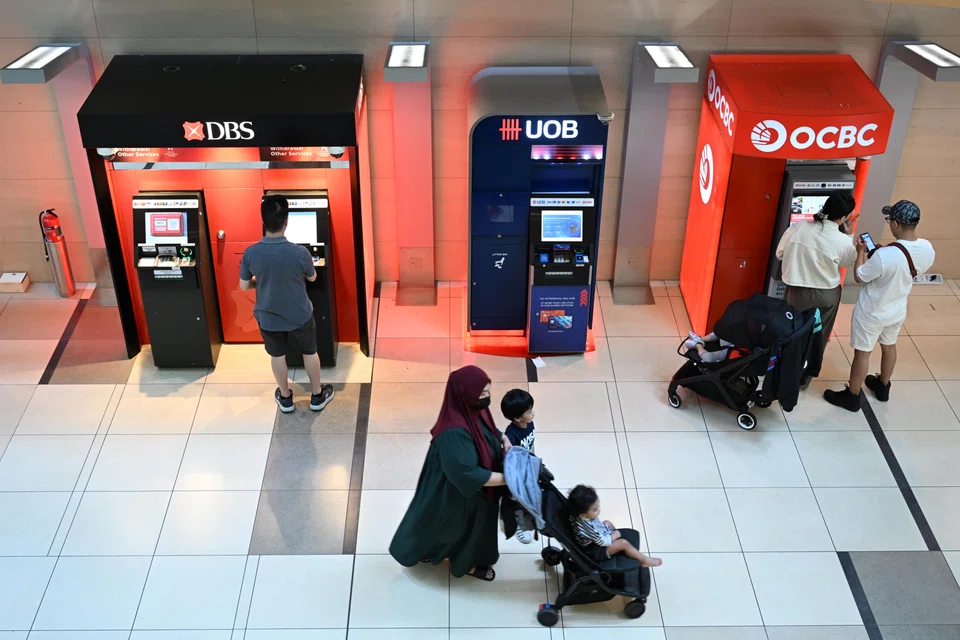
Singapore has its own magnificent three to largely propel gains in the benchmark Straits Times Index (STI) – local financial groups DBS Group , OCBC and UOB .
While America’s magnificent seven are technology groups that demonstrate the US’ leadership in innovation and artificial intelligence, perhaps fittingly Singapore’s strongest large listed groups are in finance. After all, Singapore has undoubted strength as a financial hub, and the sector’s growth prospects are strong.
Singapore the financial hub
Powerful forces drive Singapore’s growing importance as a financial hub. For one thing, the Republic is in the right place. Asia is a leading contributor to global economic growth, and South-east Asia – with its large number of young people – is a bright spot. The addressable market for financial services in Asia will rise as individuals and businesses grow richer from rising trade within the region, countries moving up the economic value chain and more people entering the middle class.
Helped by its political stability and social cohesion, Singapore can capture a large share of the flow of funds. Singapore also welcomes foreigners and has pro-business policies. It has rule of law and is tax-friendly. Moreover, the country carefully cultivates ties with the competing powers of the US and China.
Singapore is well-connected to the region and globally. There are direct passenger flights to many destinations from Changi Airport. With good public infrastructure, low crime, a strong healthcare system, reputable educational institutions and clean air, Singapore offers wealthy individuals and businesses an attractive environment.
In addition, Singapore has strong leisure offerings such as its leading integrated resorts, world-class restaurants and bars, and luxury shopping. The city state also hosts numerous premier concerts as well as sporting and cultural events.
Adding to all this is the Monetary Authority of Singapore as a credible and progressive integrated financial regulator.
Strong earnings and balance sheets
Perhaps instead of investing in the STI or other broad-based market indices, investors eyeing the local bourse need to focus their firepower on only Singapore’s magnificent three.
DBS, OCBC and UOB have good track records, strong earnings growth prospects and robust balance sheets.
Market leader DBS’ Q3 net profit climbed 17 per cent year on year (yoy) to a record S$3.03 billion. Wealth management was a strong performer in Q3 – assets under management (AUM) reached a new high of S$401 billion, helped by net new money inflow from high-net-worth individuals of S$6 billion during the quarter.
The bank is eyeing profit upside from the incoming Trump administration in the US. A more inflationary regime could keep monetary policy tighter than projected, which helps net interest margins.
OCBC’s net profit for Q3 grew 9 per cent yoy to S$1.97 billion. Net new money inflows contributed to non-interest income growth. AUM hit a record high of more than S$280 billion, with contributions from Bank of Singapore, premier private client and premier banking segments.
UOB’s Q3 net profit increased 16 per cent from the same period a year ago to S$1.61 billion. The bank’s performance was driven by new record highs in net fee income plus trading and investment income.
The local banking trio generously rewards shareholders with dividends that grow over time. Thus, investors in the said trio can bank on a combination of growth plus yield, which are built on sound fundamentals. At present, the dividend yield based on annualising DBS’ latest quarterly dividend per share is about 4.9 per cent.
With their strong capital positions, the banks are undertaking capital management efforts that will enhance shareholder returns.
UOB’s chief executive Wee Ee Cheong noted that with about S$2 billion to S$2.5 billion in excess capital from Basel IV reforms, the bank is open to investing it in growth or returning it to shareholders – whether through share buybacks or more dividends.
In November 2024, DBS announced that the board had established a new share buyback programme of S$3 billion. Under the programme, shares are purchased in the open market and cancelled. The programme marks the first time that repurchased shares are cancelled, and is over and above share buybacks periodically carried out for the purpose of vesting employee share plans.
Meanwhile, OCBC’s chief executive Helen Wong expressed a preference to give dividends over share buybacks to return excess capital to shareholders.
Mind the regulatory risks
Of course, all equities investments have risks. Perhaps the biggest risk facing the magnificent seven in the US is regulatory risk. Governments may want to shrink the influence of the seven companies as their sheer scale can impede innovation and growth of competitors.
Singapore’s magnificent three should be mindful of regulatory risks too. For example, while banks may make good money from serving wealthy customers, could scrutiny grow over whether banks do enough to serve the needs of the poorer segment of society?
Should more isolationist voices gain prominence in global politics, the overseas operations of our banking trio may face pushback. Also, overseas regulators might thwart plans by Singapore’s local banking trio to expand regionally.
On top of all this, if the current capitalist system is radically reformed due to a backlash against rising inequality in some parts of the world and fraying societies in various places, the business models of banks may be severely disrupted.
Still, while there are risks and challenges, expect the banking trio to continue dominating over and crowding out other listed groups on the Singapore Exchange.
With size and earnings momentum, the trio can invest in people and technology to sharpen their competitive edge. Scale and performance will also help the banks grab more investor attention and funds.
Currently, rewards largely accrue to winners in whatever fields across different countries. DBS, OCBC and UOB occupy the winners circle on the local bourse. Investors will likely continue to prosper by backing this trio.
The writer owns shares in the three banks
TRENDING NOW

Once staunchly pro-China, Malaysian Chinese businesses are now distancing themselves from Beijing

Britain’s mansion tax shows the difficulty of targeting wealth

Three hats, one goal: How Ng Kian Swan runs sustainability at NUHS

COE review: The gap between luxury and mass-market cars isn’t the only one worth bridging

