Critical minerals rise up global economic and political agenda
Potential disruptions along the value chain would undermine key goals, including economic and climate
RUSSIA’S 2022 invasion of Ukraine helped trigger a major energy shock in Europe. However, one of the longer-term political and economic impacts of that continuing conflict has been to focus attention on global supply chains for wider natural resources, including critical minerals.
The importance of this agenda will be showcased on Wednesday (May 21) in the International Energy Agency’s (IEA) 2025 Global Critical Minerals Outlook report. This will provide assessments of the latest market and investment trends, along with their implications for critical mineral security, including lithium, nickel, cobalt, copper, graphite and rare earths.
The study will also explore key issues such as mineral supply chains for emerging battery technologies; innovations in mining, refining and recycling; policy mechanisms to support diversification; and strategic minerals for applications beyond the energy sector. Moreover, it includes a comprehensive review of regional mineral markets and policy developments.
The report will be widely viewed by governments across the world, including those in the West. The Ukraine war showcased the overdependence of Europe on Russia energy, and subsequent actions have shown that this will not be allowed to happen again, certainly while President Vladimir Putin remains in power.
Earlier this month, the European Union released a comprehensive plan to try to fully eliminate all remaining Russian energy imports by 2027. Last year, EU countries still paid 23 billion euros (S$33.5 billion) to Russia for energy and, so far in 2025, the EU has imported over five billion euros of Russian energy, according to the Centre for Research on Energy and Clean Air think tank.
The ambition to eliminate Russian energy completely will rest heavily on the EU’s political will, and this will be fortified with several legislative proposals for implementation. The 27 EU member states will also now be required to submit national Russian energy phase-out plans by the end of this year encompassing gas, oil and nuclear.
On the gas front, a new EU ban will be placed on new contracts and end spot market contracts for Russian gas by the end of 2025. There will also be a ban on remaining Russian gas imports under long-term contracts by the end of 2027. For the oil sector, new steps include an intensified attempt to tackle Russia’s so-called shadow fleet smuggling oil.
On the nuclear front, measures that will come into place next month include restrictions on imports of uranium, enriched uranium and other nuclear materials; a ban on new European Atomic Energy Community-co-signed supply contracts with Russian entities; and the launch of European Radioisotopes Valley to secure medical isotope supply.
Monitoring and enforcement will be stepped up with EU legislation which will be adopted by qualified majority voting, not unanimity which would give outsized power to states with sympathy to Moscow, including Hungary. There will also be new rules to improve traceability and transparency of Russian energy flows.
The road map is designed to be gradual, secure and legally binding, minimising market disruption. However, EU Energy Commissioner Dan Jorgensen is right that it is “not without consequences” and the EU needs to deliver “in a coordinated way”.
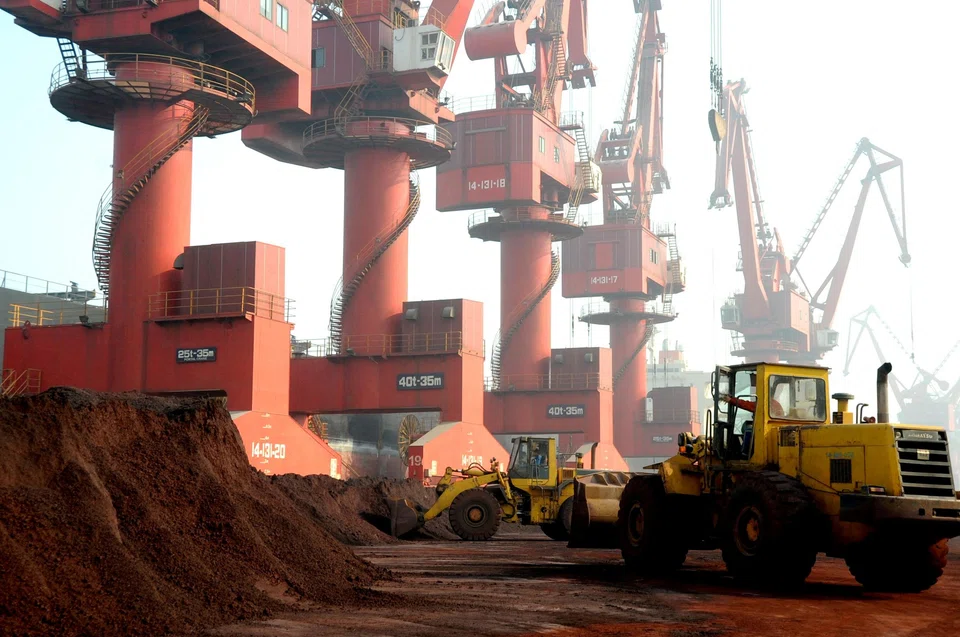
The challenges of Europe diversifying from Russian energy since has helped grow awareness that concentration of wider global critical minerals supply chains is a major issue. While mining of critical minerals is heavily concentrated in a small number of countries, the processing and refining of these minerals – complex, resource-intensive and highly specialised – is even less diversified.
So potential disruptions along the value chain would undermine key goals, including economic and climate policy ambitions. Companies manufacturing electric vehicles, batteries, wind turbines and other essential components of the energy economy would face severe challenges, endangering jobs in often fast-growing sectors.
Based on this energy experience, European and wider countries do not want to mirror over-reliance on other nations for other natural resources, especially critical minerals. Potential disruptions along the value chain would undermine key goals, including economic and climate.
This impulse to diversify natural resources supply chains has already led the EU to initiate a series of new trade deals, including with the Mercosur bloc in South America, and the UK with India. However, this dynamic goes well beyond Europe.
The desire of the US for critical mineral supply chain diversification may yet help Ukraine secure continued military and intelligence support from Washington under President Donald Trump in its war against Russia. Washington and Kyiv have agreed a deal that establishes a joint investment fund aimed at the reconstruction of Ukraine, capitalised partly by revenues from natural resource extraction, especially critical minerals.
This important agenda should not be driven by governments alone. Instead, there needs to be a cross-cutting public, private and third-sector dialogue, including major consumers and producers around the world, industrial leaders, international organisations and civil society to discuss main risks and identify solutions, to ensure secure and fair energy transitions while enhancing global energy security.
If this is done well, governments and industry can work together to develop responsible, sustainable critical mineral supply chains that have a double win. Not only will they diversify global supply chains, but they can also enhance local economic prosperity and protect ecosystems in resource-rich nations, too.
Local communities do not always fully benefit from critical minerals projects through job creation, skills training and infrastructure investment. Limited access to energy and underdeveloped infrastructure can also limit the development of new projects in some countries. Critical minerals projects require access to stable electricity, water supply and wider infrastructure for moving goods, so new projects can present an opportunity for countries to deliver wider benefits for the communities.
Mining and processing projects can have negative environmental impacts and affect local ecosystems. Environmental protection can also be ensured through responsible mining practices, reduced carbon footprint and promotion of circular economy approaches.
Taken together, this critical mineral diversification agenda will be a bigger, more challenging task than Europe’s moves to end reliance on Russia energy. So it will be a long-term agenda that necessitates government dialogue with the private and third sectors to ensure wins for resource rich nations, too.
The writer is an associate at LSE IDEAS at the London School of Economics