Crossing the tech chasm in preventive healthcare
Singapore has one of the fastest-ageing populations in the world, which threatens to buckle its healthcare system. Can technology help people keep diseases at bay?

Claudia Chong

FOR the first time in seven years, entrepreneurs Kenneth Lou and Chew Tee-Ming were free to work on whatever they wanted.
It was August 2022. The duo had just exited Seedly, a top personal finance platform they had been building ever since their university days. With years of startup experience to tap, Lou and Chew began searching for their next challenge.
They didn’t have to look far. The rise of artificial intelligence (AI), rapidly changing lifestyles and a looming worldwide crisis all pointed to one thing – the next big thing will come from healthcare.
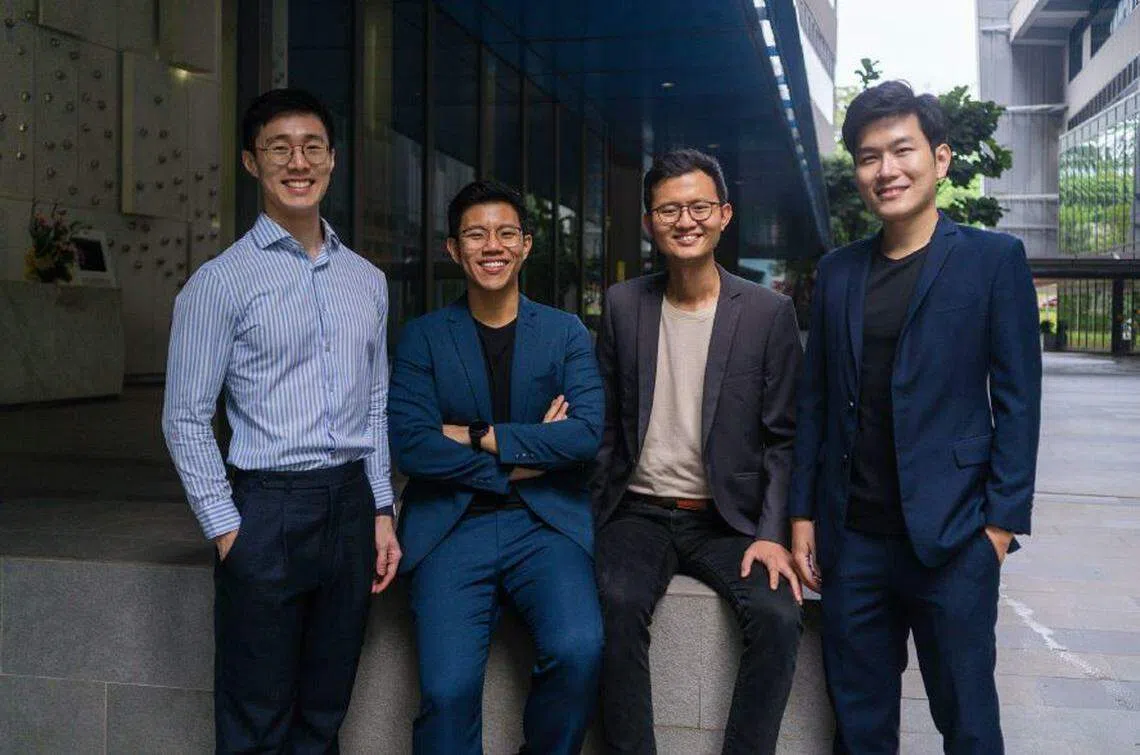
Lou and Chew launched Mito Health in Singapore last month, along with two other co-founders. The platform analyses insights from blood tests, family history, wearables and past medical data, then forms personalised health plans that help reduce the likelihood or severity of chronic diseases.
Mito Health aims to address a gap formed as a result of the current approach to healthcare, which is largely reactive. Most people visit the doctor or start thinking about their health only after they have fallen sick.
So even though life expectancies have generally increased globally, it’s not enough, explains Lou. “You wouldn’t want to live longer, but with a bad quality of life.”
That’s the entire premise of preventive healthcare, which has piqued the interest of techies everywhere. Mito Health has drawn the backing of the founders of ShopBack, Carousell, PatSnap and Glints.
They’re not the only ones pursuing healthtech. Over the last year, the founders of Spotify, Coinbase and Instacart have raised hundreds of millions of dollars to fund their new healthcare companies.
These seasoned entrepreneurs see an industry worth trillions of dollars that’s been left in the dust as other sectors transform with technology.
Preventive health, alone, has sparked a scramble to reimagine patient journeys and the healthcare supply chain. Business ventures range from wearable technology to AI-driven health services, genetics testing, wellness apps and platforms for clinicians.
Some of the world’s biggest companies, including Apple, Google and Amazon, are going after a slice of that pie. Apple is reportedly working on non-invasive blood glucose monitoring technology for its Apple Watch, and an AI-powered health coaching service. Amazon launched its virtual health service Amazon Clinic last November.
Old design
Interest in preventive healthcare technology comes amid the rapid ageing of the world’s most important economies, including the United Kingdom and Japan.
Singapore has one of the world’s longest life expectancies, but its population is also among the fastest ageing in the world.
In 2010, about a tenth of Singaporeans were aged 65 and above. Only a decade later, it rose to about one in six.
By 2030, about a quarter of the population will be 65 years old and above.
Government officials have been anxious about the strain this would place on the country’s healthcare system. Singapore spends about S$22 billion a year on healthcare. That’s expected to balloon to S$60 billion in 2030.
Some of that spending goes to treating diseases that are preventable to an extent. The city-state, for instance, leads the world in diabetes-induced kidney failure. Every day, 5.7 new patients are diagnosed with the condition.
Most health systems around the world focus on hospital care, the most costly part of the patient journey. But these systems were designed when life expectancy was much lower.
“As life expectancy rose, so did the disease burden, and the old design starts to break down. It’s like you have been training very hard for a sprint, and you realise your race is a marathon,” said Health Minister Ong Ye Kung last month in Parliament.
“The situation is like an overflowing kitchen sink. We can mop and soak up the water on the floor, but the work is endless and the effort increasingly trying. At some point, we need to figure out how to turn down the tap.”
Singapore’s response to this was to launch Healthier SG, a healthcare reform plan that shifts more focus to prevention instead of treatment. Starting from the second half of this year, Singaporeans will enrol with general practitioner (GP) clinics, with the goal to have one family doctor to every citizen.
The movement involves the community in promoting healthy lifestyles, and rethinks financial policies to incentivise healthcare providers to focus on prevention.
More than S$1 billion over the next three to four years will be spent on setting up the initiative, such as implementing new IT systems. Singapore spends about 6 per cent of its annual healthcare budget on preventive care. This could double with Healthier SG, said the minister.
Filling the gaps
Still, the country has a long way to go in significantly nudging the behaviour of citizens. Leong Choon Kit, who runs Mission Medical Clinic and leads a primary care network under the Ministry of Health, says the current state of preventive healthcare in Singapore is negligible.
Dr Leong has been practising medicine for 32 years. The patients he’s seen since their childhood have grown up to have children of their own.
In all that time, he’s come to learn that most people do not have the habit or urgency of managing their health. Many GPs assume the public is not interested in prevention, or that patients feel the fees are too high, says Dr Leong, who founded GP+ Co-operative, a group aiming to transform healthcare delivery.
For example, preventive care involves managing existing health conditions to keep people out of hospitals. Despite advances in medicine, Singapore’s asthma mortality and hospitalisation rates are two to three times higher than other developed countries.
“Most asthmatic patients in Singapore do not use preventive inhalers and default on their regular follow-up with the medical professionals,” says Dr Leong.
The Covid-19 pandemic appears to have hindered the take-up of medical screening as well. The National Population Health Survey 2021, published last December, found that fewer Singapore residents were screened for chronic disease and cancers compared with previous years.
The survey showed 59.2 per cent went for chronic disease screening, compared with 63 per cent in 2020 and 66.3 per cent in 2019.
Some industry players are keen to help plug the gaps in preventive healthcare with the aid of technology. Singapore-based startup Mesh Bio is working on predictive analytics to help primary care providers with recommendations for their patients.
“Health ownership means realising that my choices today have implications in the next 10 or 20 years,” says chief executive officer (CEO) Andrew Wu, who was previously chief operating officer of cancer diagnostics company Biolidics.
Yet, the need for more personalised care could put a greater strain on doctors. “There’s so much data that’s at the doctor’s disposal. They know how to assess it, but do they have the time and headspace… especially when they need to get through their patient load?” says Wu.
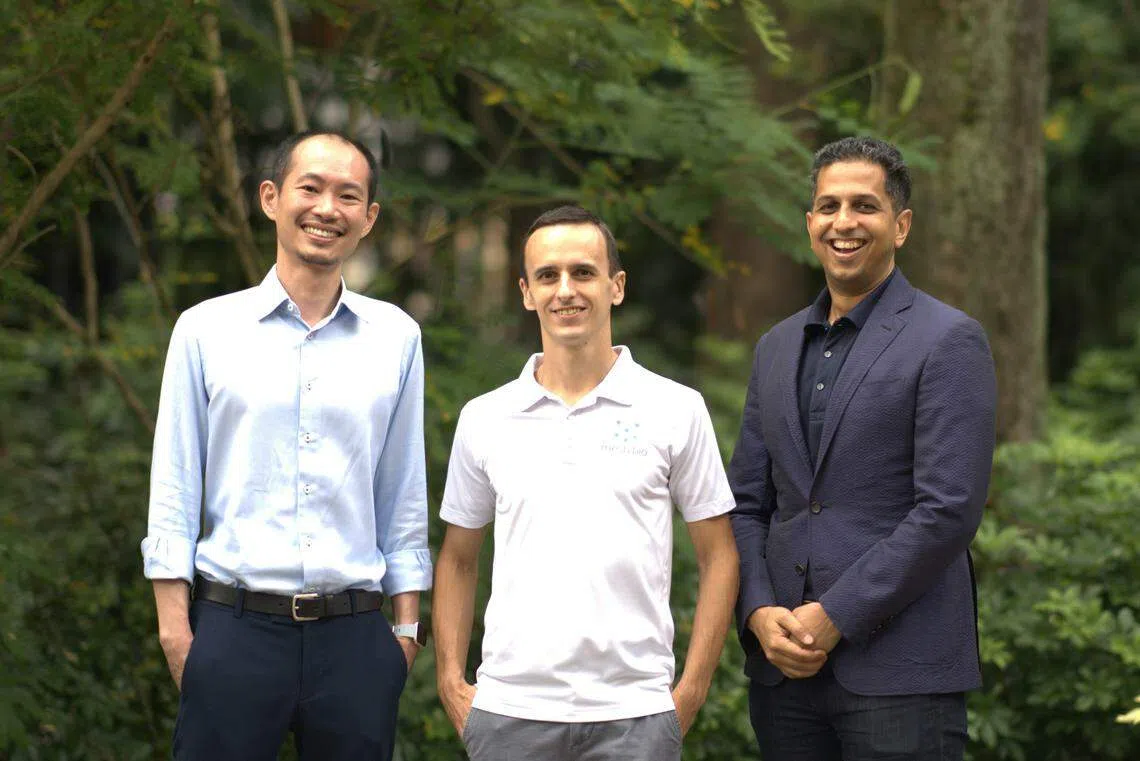
Mesh Bio aims to reduce the administrative load on doctors. Its platform covers the entire health screening journey, from registration to report delivery. It automatically integrates critical data points, such as medical history.
The reports quantify the key contributors to a patient’s risk of disease, and present them in a way that is easy for patients to understand and act on, says Wu.
Currently, 19 medical groups in Singapore use Mesh Bio’s platform. The startup also signed a contract with Pramita Labs in Indonesia.
Challenges ahead
Still, the road to embracing technology is a tough one. The launch of ChatGPT-4 has fuelled the imagination about what AI could do for every industry. But the healthcare sector faces concerns over data privacy and security, and fragmented data sources.
Industry watchers worldwide have flagged issues about consumers being lured by small incentives to give up data, under the belief it will help monitor their health. Some are kept in the dark about other usage, such as risk profiling, says Dario Heymann, chief research officer at healthtech intelligence company Galen Growth.
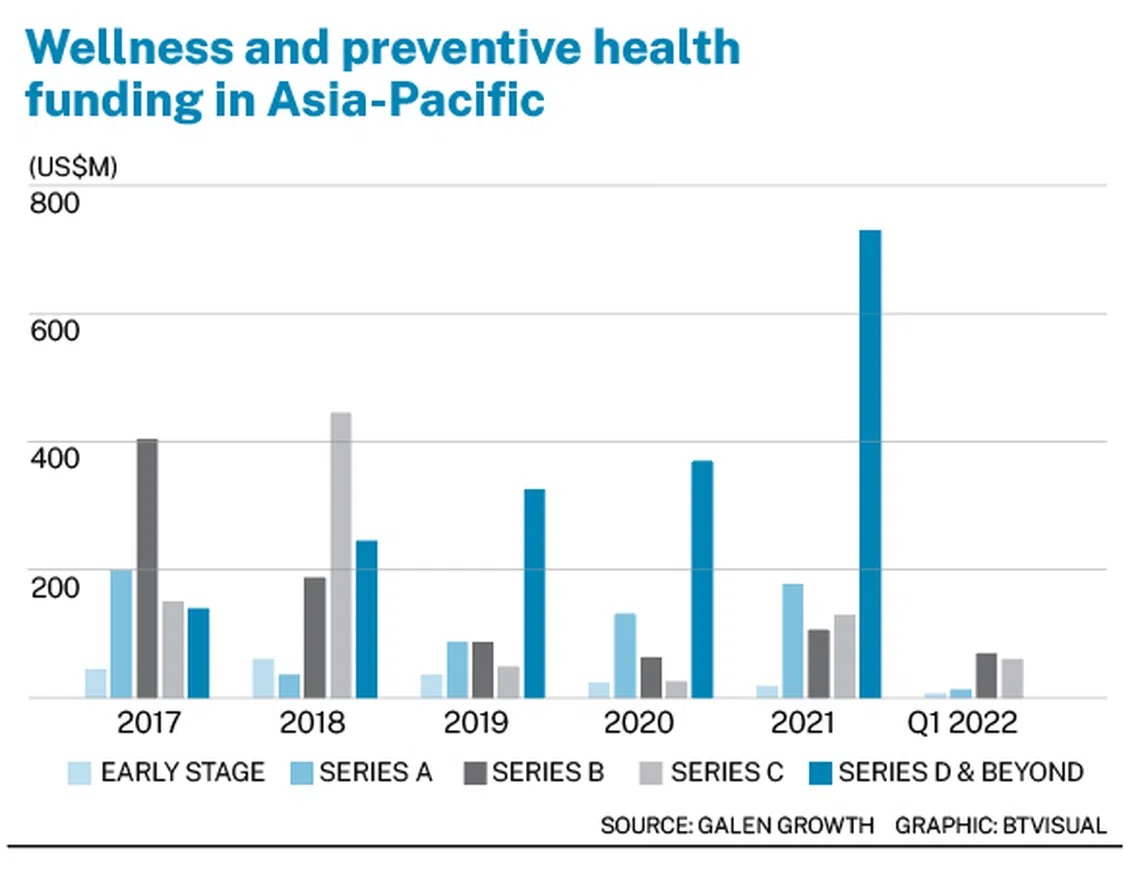
While preventive health businesses have taken off in the US and China, venture capital (VC) funding for such businesses remains low in South-east Asia. Total funding over the past five years amounted to US$181 million, representing just 4.3 per cent of the total funds raised in Asia-Pacific, Galen Growth indicated.
“The investor activity in South-east Asia remains low due to the traditionally long time till a notable return on investment can be achieved, and high upfront investment required to build sales channels,” says Heymann.
Startups have struggled to distinguish themselves in a market flooded with apps and wearable devices. Drop-off rates have been high – consumers either don’t need to use the service often enough for it to be top of mind, or the data collected does not generate much deep actionable insights.
Crucially, most startups can’t land on a stable revenue stream. The issue of who is willing to pay for preventive health has plagued the industry for years.
It is difficult to put a value on the service, says Chik Wai Chiew, CEO of healthcare investor Heritas Capital.
“Startups that may get me intrigued are those that can have a pathway to evidence showing that by taking the solution, it could lower certain indications by X per cent. That translates to Y dollars, and therefore customers pay a portion of Y,” says Chik.
“It’s a lot harder for preventive health because we don’t know enough. So maybe the path forward is to study what actions will lead to certain outcomes. But you need data to understand this, and then be able to pitch the value of your preventive measures.”
Startups often hit a wall in search of a payer because healthcare is a complex industry involving multiple stakeholders. Hospitals, care providers, patients, third parties and insurers all have different interests and incentives.
Many business-to-consumer (B2C) ventures outside South-east Asia have grown into disease management in a drive for profitability, says Heymann. Their business models become B2B2C-centric, which attract large companies to sign up their entire workforce.
Revenue for Noom – a weight loss company operating in North America, the UK, Australia, Ireland and New Zealand – increased 69 per cent to more than US$400 million in 2020, as a result of this shift.
It may take some time before preventive healthtech companies take off in South-east Asia.
“South-east Asia is a different problem. It’s about access. How do we get people who are deserving and in need of healthcare, to healthcare?” says Remi Choong, principal at deep tech venture firm Elev8.
“The issue is not to prevent people from going to hospitals; it’s how to get people to hospitals,” he says.
Preventive health could face the same issue of accessibility. The trend of sleek wearables and the quest for longevity have often been driven by the ranks of the elite.
Mito Health, the company started by the founders of Seedly, will first target executives in Singapore before expanding to other developed cities. This group of users demonstrates more willingness to pay, says Lou.
Still, there could be an opportunity for healthtech startups to serve users on a larger scale. Prominent Silicon Valley VC firm Andreesen Horowitz recently predicted that the biggest company in the world will be a consumer healthtech company.
Poor consumer experience is one of the biggest problems in healthcare.
“In addition to cultural change and policy change, what’s needed is people who can build better experiences to engage patients in their health,” the firm’s partners wrote. “No one is better suited to solve these problems than the technologists who have excelled at consumer engagement in tech.”
Preventive health remains a challenging sector to invest in, but investors are keeping their eyes peeled for the startup that can make a breakthrough.
“The barrier is low for getting in, but high for making it,” says Heritas’ Chik.