Culture shift needed to curb controlling shareholders’ ‘long shadow’, boost investor confidence
The stewardship of majority owners and vital discipline provided by minority investors must be championed

[SINGAPORE] Twenty-one years ago this month, Ho Ching gave a speech that set the Singapore real estate investment trust (S-Reit) sector aflutter.
At an event marking the listing of Mapletree Logistics Trust (MLT) on Jul 28 2005, the then-chief executive of Temasek warned of “irresponsible or incompetent” S-Reit managers possibly acquiring assets at inflated prices, supported by unsustainable rents from “financially troubled or desperate” vendors.
She also brought up the risk of S-Reit managers attempting to circumvent investment hurdles when they acquired assets by deferring the issue of new units. “Such charades shore up short-term performance indicators at the expense of longer-term pain.”
Ho’s message of caution about “clever financial engineering” by S-Reit managers came at a time of extreme bullishness in the market.
MLT’s initial public offering that very month achieved a subscription rate of nearly 44 times. It debuted on the Singapore Exchange (SGX) mainboard on the day of her speech at a 28.7 per cent premium to its IPO price.
The combination of Ho’s powerful voice and the general sense that all stakeholders stood to lose something seemed to quickly change everyone’s behaviour. Managers of S-Reits that had artificially boosted the short-term yields from their assets suddenly found themselves having to explain these arrangements more thoroughly.
Some market watchers joked at the time that “financial engineering” had become a pejorative term overnight.
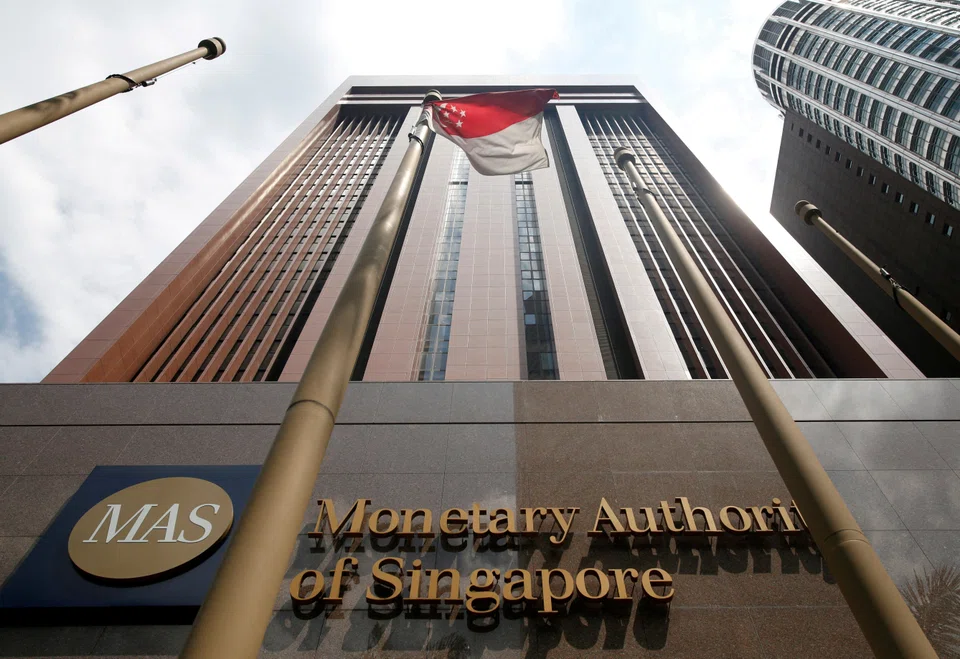
As attitudes changed, the rules changed too. In 2007, the Monetary Authority of Singapore (MAS) introduced revised guidelines for property funds, which included enhanced disclosure requirements on the use of short-term yield-enhancing arrangements.
In my view, a change in boardroom culture led by influential voices is now needed to bolster investor confidence, and sustain the national effort to revitalise the local market. In particular, the time seems ripe to address the matter of minority shareholder rights and protections.
Controlling shareholders’ long shadow
One feature of the Singapore market that casts a long shadow over discussions of corporate governance is that many companies have controlling shareholders who effectively determine their business strategies and the appointment of all their directors.
A paper published late last year by Aurelio Gurrea-Martinez, a professor of law at the Singapore Management University’s Yong Pung How School of Law, noted that even when the independent directors (IDs) of such companies behave independently, the mere risk that they may favour the controlling shareholders can make minority investors nervous and result in lower market valuations. This hampers the ability of these companies to access capital, and saps the vibrancy of the market.
“In companies with such concentrated ownership structures, corporate governance strategies primarily designed to address conflicts between managers and shareholders – the principal concern in most listed companies in the UK and US – are often ill-suited to deal with the more salient conflict between controlling shareholders and minority investors,” he noted.
So what should Singapore regulators do? One potential reform put forward in the paper is requiring the appointment or removal of IDs to be approved by a majority of all shareholders voting at a general meeting as well as the majority of minority shareholders.
Gurrea-Martinez said this “double vote” would strike a good balance between the interests of controlling and minority shareholders. “Since both groups need to approve the candidate, controllers would have a strong incentive to propose individuals who are genuinely independent and broadly respected.”
An alternative means of curbing the power of controlling shareholders is to provide minority investors with practical ways to seek legal redress.
One idea put forward by Gurrea-Martinez is for Singapore to come up with a well-designed regime for class action lawsuits. Another is to encourage the use of Section 216A of the Companies Act, which allows a shareholder to bring an action on behalf of a company against its directors or controlling shareholders when the company itself does not act.
Gurrea-Martinez said: “The interplay of mandatory disclosure requirements and private rights to sue leads to increased stock market capitalisation, higher trading volumes and a greater number of IPOs, whereas systems relying solely on public enforcement are often less effective.”
Evolving attitudes, culture
These ideas are not exactly new. This column has for years lamented the seeming irrelevance of IDs at companies with dominant shareholders, and suggested they be subjected to regular two-tier votes to incentivise them to be more proactive in addressing issues of concern to minority investors.
The idea of allowing class action lawsuits as an investor protection mechanism also comes up from time to time, though it would need changes to Singapore’s legal system in order to work.
Meanwhile, MAS held a public consultation late last year on a number of proposals to better enable investors to seek compensation for losses due to market misconduct under the Securities and Futures Act.
This was one of two key recommendations of the Equities Market Review Group to boost investor confidence as the local market shifted towards a more pro-enterprise, disclosure-based regime.
The other was the Value Unlock programme, which seeks to help listed companies strengthen their shareholder engagement capabilities and sharpen their focus on value creation.
The way I see it, the effectiveness of these two initiatives, and whether further measures to promote investor confidence and protection are introduced, depends on how attitudes in boardrooms and the market evolve.
Indeed, the Value Unlock programme is fundamentally about changing boardroom culture, and fostering a virtuous cycle of stronger performance and more active and robust engagement with investors.
As baseline performance expectations rise, it may come to feel quite natural for investors to seek legal redress in the wake of wrongdoing, and for IDs to face greater scrutiny and perhaps be subjected to a “double vote” when they are appointed.
The big question is whether there is consensus in the market that minority investors are indeed a force for good. Are boards and management of locally listed companies really inclined to allow minorities greater influence over the appointment of IDs? Are local market regulators prepared to accept more activism in the market?
My own sense is that there is some ambivalence out there. For effective rules to be put in place, there needs to be a shift in culture, in my view.
This brings me back to the former Temasek CEO’s speech two decades ago. Perhaps it is time for similarly influential voices to reshape attitudes in boardrooms and the market – by making it clear that controlling shareholders play a crucial stewardship role at their companies, and that minority investors are a collaborative mechanism for discipline.