

The curious case of the 0.1 per cent service charge
Businesses that try to get around displaying GST-inclusive prices would find that the rules are not quite so easy to circumvent.
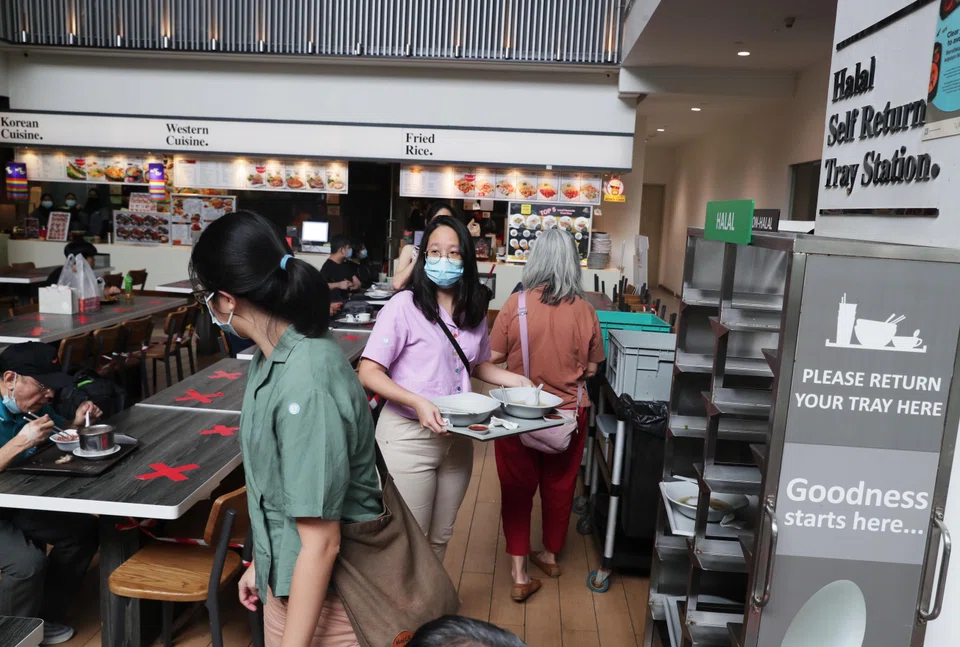
EARLIER this year, readers may have been shocked to read about a coffeeshop zi char chain which imposed a 0.1 per cent service charge on its dine-in customers. The service charge was applied from 1 August 2022 and lasted a mere two weeks before it was reversed due to “customers’ reactions”. The move prompted considerable debate about the reasonableness of a stall in a coffeeshop imposing a service charge and what level of service could be expected to justify such a charge.
Beyond the shock factor of coffeeshop stall deciding to impose a service charge, another curious issue was the rate of the charge, at 0.1 per cent. At such a rate, the revenue derived from the service charge would be minimal at best, prompting the question as to why the stallholders would risk raising the ire of patrons unhappy with the charge “on principle”. In this case, there was far more to the story than it would initially seem.
It turns out that under Singapore’s Goods & Services Tax regulations, whenever a merchant lists or states the price of goods and services, the price stated must be GST-inclusive. Failure to do so would subject the merchant to a fine not exceeding S$5,000. This would naturally mean listing a higher price (by 7 per cent) than if the price were GST-exclusive. However, there is an exception to this rule for goods and services provided by hotels and food and beverage (F&B) outlets that are subject to a service charge. In such cases, the GST-exclusive price can be stated, but customers must be informed that the prices displayed are subject to GST and a service charge. Further, even if the service charge is imposed only on dine-in patrons, there is no need to display two price lists; a list stating the GST-exclusive prices will suffice.
In light of these rules, a 0.1 per cent service charge starts to make more sense. An F&B business seeking to display lower prices on a price list could charge a nominal service charge in order to list GST-exclusive rather than GST-inclusive prices. This arrangement would appear to be quite ingenious, and also most definitely against the spirit of the rules. Apparently, the Inland Revenue Authority of Singapore (IRAS) thought so too, for after the story broke, the IRAS website and e-Tax Guides were updated to state that the exception would not be applicable to “F&B establishments that levy a nominal service charge without genuine business reasons other than to avoid displaying GST-inclusive prices”.
This clarification from the IRAS makes eminent sense, for it would indeed be astounding if it were possible to circumvent the GST rules with such a simple arrangement. After all, these rules were put in place to ensure price transparency for consumer protection. However, did the IRAS have the legal right to insist that the exceptions would not apply to arrangements “without genuine business reasons”? The short answer is, definitely yes.
While the requirement to display GST-inclusive prices is laid out expressly in the GST regulations, the exception is not. Instead, it is what is known as an “administrative concession”. In other words, the IRAS, as an administrative body in charge of enforcing the GST rules, can choose to waive or relax certain rules if it is of the view that it would be beneficial to do so. Just as the IRAS has the power to grant the exception to take into account the operational difficulties in listing GST-inclusive prices, it also has the power to amend the exception by clarifying that it would not apply to arrangements “without genuine business reasons”.
With the upcoming GST rate increase from 7 per cent to 8 per cent starting from 1 January 2023, and rather high rates of inflation, businesses may attempt to stealthily mask price increases by imposing a nominal service charge and displaying GST-exclusive rather than GST-inclusive prices. A product may be displayed at the same price of $5 before and after the switch to a GST-exclusive price on 1 January 2023. However, this hides a price increase of $0.40 payable by the consumer with an extra $0.33 going to the seller. Clearly such a disguised price increase would be detrimental to consumers and thus it is good news that the IRAS has stepped in to clarify that imposing a “non-genuine” service charge will not relieve a business of the obligation to display GST-inclusive prices. Any businesses thinking of entering into such arrangements to disguise a price increase should therefore carefully rethink their actions. On the other hand, consumers should continue to be vigilant and report businesses which are not transparent with their prices and display GST-exclusive prices when not allowed to.
Then again, the experience of the coffeeshop zi char chain suggests that even without intervention by the IRAS, the market may not be willing to stand for inappropriate service charges, however nominal. It would appear that many patrons focused on the very existence of a service charge and largely ignored the fact that it was imposed at the nominal rate of 0.1 per cent. Perhaps one day patrons may be willing to pay a service charge regardless of whether they are at a restaurant or a coffeeshop, if the food is served to them and they do not need to return their own tableware. However, it would appear that the market would require some persuasion on this point at the present moment.
The writer is a lecturer at the Yong Pung How School of Law, Singapore Management University (SMU) and specialist counsel at Legal Ink LLC. The views herein are the writer’s and do not represent those of SMU or Legal Ink LLC.






