Davos meets at troubled tipping point
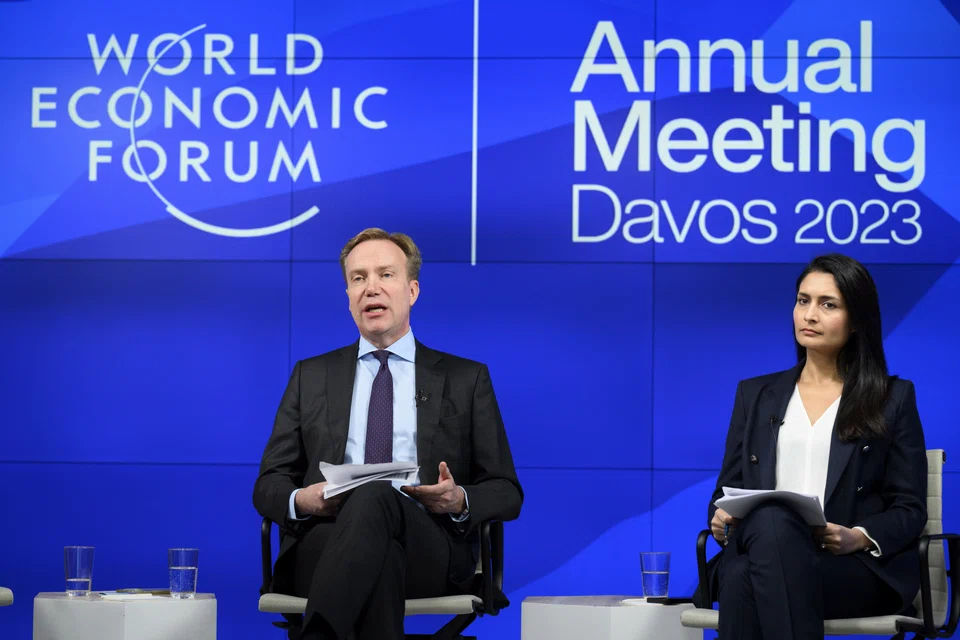
AMOST three years since the start of the pandemic, the World Economic Forum (WEF) holds next week (Jan 16 to 20) its first agenda-setting winter Davos meeting since January 2020, albeit in the most challenging context for years.
Under the theme of cooperation in a fragmented world, the 2023 annual WEF meeting will bring together more than 2,700 leaders from government, business and civil society, at a pivotal time for the world. More than 50 heads of state and government will show up next to 56 finance ministers, 19 central bank governors, 30 trade ministers and 35 foreign ministers. Heads of the United Nations (UN), International Monetary Fund and World Trade Organization will be among 39 leaders of international agencies.
Key political leaders in attendance include: German Chancellor Olaf Scholz; European Commission President Ursula von der Leyen; South Korea President Yoon Suk-yeol; South African President Cyril Ramaphosa, while Ukrainian President Volodymyr Zelensky will join by video conference. There will also be the highest ever business participation at Davos, with over 1,500 leaders registered across 700 organisations.
As these leaders prepare to travel to Switzerland, not only are multiple crises deepening divisions and fragmenting the geopolitical and economic landscape, there is a pressing need for laying the groundwork for a more sustainable, resilient world given wider global challenges around issues like biodiversity, climate change and the continuing pandemic. For while the eyes of much of the world are currently on the Ukraine conflict, which is nearing its one-year anniversary, this is only the most prominent manifestation of a broader so-called “polycrisis” facing the globe today. Given the unprecedented number of overlapping challenges, a “permanent” sense of crisis has apparently become the new normal amid a growing anti-establishment, anti-globalisation mood across much of the world – to the alarm of many in the business and political communities who attend Davos.
The key themes of promoting cooperation and a more sustainable world at this year’s Davos underlines how many expectations around how the contemporary world might look have been dashed, not least around international cooperation. The WEF itself has ridden this wave of optimism and pessimism through its provision in recent decades of a global platform for dialogue.
Its early successes in bolstering international cooperation included the Davos Declaration signed in 1988 by Greece and Turkey, which saw the two turn back from the brink of war. In 1989, moreover, North and South Korea held their first ministerial-level meetings at the WEF in Switzerland, and the Forum was also where East German Prime Minister Hans Modrow and German Chancellor Helmut Kohl met to discuss German reunification that year.
This idealistic future vision held by some then of a universal order of liberal, capitalist, democratic states living in peace and contentment has been undermined. As multiple reports highlight, there is currently a potentially toxic cocktail of trade disputes, environmental risks, cyberthreats, and geopolitical dangers threatening the fundamental fabric of the global political economy.
To be sure, as a generation ago, the United States remains the world’s most powerful country, certainly in a military sense. And it may still be able to project and deploy overwhelming force relative to any probable enemy.
Yet, there are now multiple challenges confronting the post-war order today which the US was so instrumental in creating, which have helped drive the international fractures that the WEF will discuss. For instance, Western relations with China, not just Russia, are now more strained than at any time in recent memory; the Israeli-Palestinian peace process shows no sign of rejuvenating under the latest prime ministership of Benjamin Netanyahu; nuclear diplomacy remains stalled on the Korean peninsula; climate crises are becoming more commonplace, including last year’s flooding in Pakistan; economic inequality is growing in many countries; and the growing “democratic recession” and phenomenon of political populism is also destabilising the global landscape.
In this context, the WEF will assert next week that the world today is at a critical inflection point with the sheer number of ongoing crises calling for bold collective action through constructive, forward-looking dialogues and help find solutions through public-private cooperation. For while there are no easy answers to meeting the current array of crises, it is sometimes forgotten that there are some success stories to build from.
Take the example of the landmark global climate change deal agreed in Paris in 2015, which still represents a welcome fillip to tackle global warming. Moreover, that accord’s review framework means that countries can toughen their response to climate change in the future, especially if the political and public will to tackle the problem increases with time.
At Davos in the coming days, a preliminary agreement is hoped to be signed with the United Arab Emirates about the COP28 UN climate conference which will be held in Dubai at the end of the year. This will reportedly include a special focus on how developing countries and emerging economies can afford what is necessary when it comes to global warming adaptation and mitigation strategies.
As for the Russian aggression in Ukraine, it is actually one of the countries which is a relative bystander in the war – China – that may have the biggest bearing on whether the polycrisis of today gets better or worse. It should be remembered here that Xi Jinping became the first Chinese president to give a speech at Davos, well received at the event in 2017, where he made an impassioned defence of globalisation in the face of growing protectionism.
The stance of Beijing has potential to be either a growing source of tension with Washington and the wider West, or just possibly develop into a more fruitful partnership. Growing bilateral rivalry, rather than an increasingly cooperative relationship, is widely seen as the most likely scenario for future relations post-pandemic. However, there remains an outside chance that a different future is possible that sees great cooperation, especially around softer issues, such as climate change, and less tension on harder issues, including security.
The direction of that bilateral relationship in coming years is perhaps the key uncertainty in the global landscape today, and could be a force for significantly greater global instability and tension, or collaborative partnership. If the latter path is chosen, the bold collective action that WEF rightly asserts is now needed globally may yet come into fruition.
Andrew Hammond is an associate at LSE IDEAS at the London School of Economics.