

DBS’ incoming CEO should make light of filling big shoes and grow the next leadership core
Winning over the confidence of stakeholders is tough when one succeeds a long-serving, highly regarded and charismatic leader

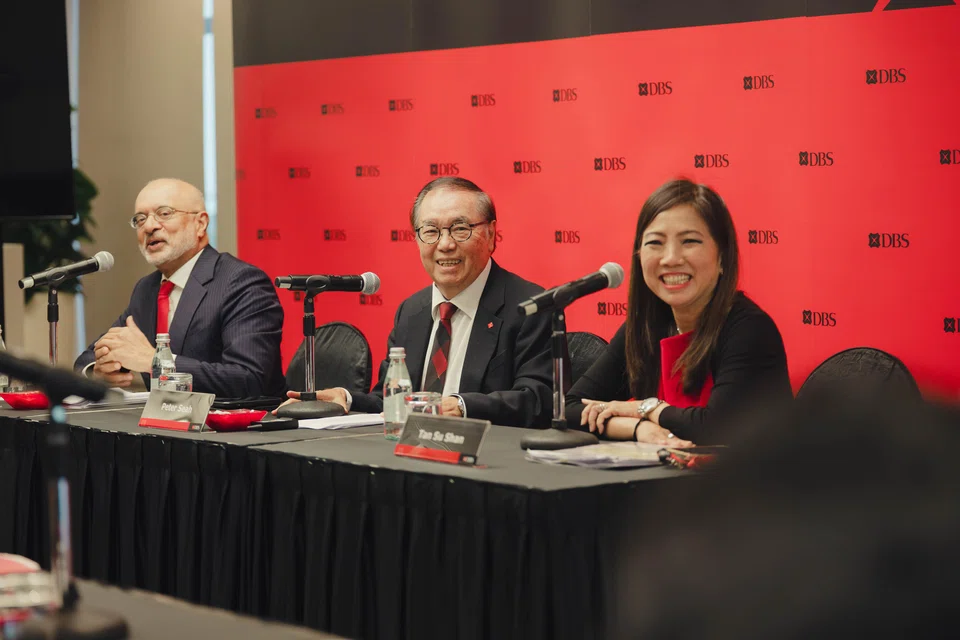
DBS has done a good job of smoothly handling the thorny issue of leadership succession. It speaks well of the bank’s succession planning that the group chose an internal candidate who has served in various roles for many years to be its new chief executive officer.
Sure, there may have been some jostling for the much coveted top job. However, DBS’ board was unanimous in choosing 56-year old Tan Su Shan from among many senior figures to be the next CEO of Singapore’s largest company by market capitalisation.
On Wednesday (Aug 7), DBS’ board announced Tan’s appointment as deputy CEO, in addition to her existing role as group head of institutional banking. She will succeed Piyush Gupta, who turns 65 next year, when he retires at the next annual general meeting on Mar 28, 2025.
A period of nearly eight months between the announcement of Tan as the incoming CEO and her assuming the role looks right. There is time to handle transition issues internally and offer assurance to customers as well as investors. Meanwhile, problems surrounding having a “lame duck” outgoing CEO may be largely avoided.
Tan’s elevation is path breaking as she will be the bank’s first female chief executive. However, the seasoned banker will have her hands full. She needs to ensure DBS leads in digital banking and adeptly navigates artificial intelligence risks.
Certainly, DBS has a strong platform. The bank’s Q2 net profit rose 6 per cent from the corresponding period a year ago to S$2.79 billion. Return on equity for the quarter was 18.2 per cent. For 2024, DBS is eyeing net profit growth in the mid to high single digits.
Keep the faith
Still, might the bank’s exposure to Hong Kong, which is facing huge challenges to keep its position as a financial and business hub, and China’s struggling economy, weigh on DBS’ growth?
Moreover, with many countries turning inward looking, banks financing international trade and investment flows could find the going tough. And Singapore players might even face backlash in overseas operations.
To achieve strong earnings growth, the bank may need to pursue mergers and acquisitions that move the needle. While DBS has the capital to fund inorganic growth, finding the right deals and post-deal integration will be challenging.
Banks sit at the heart of capitalism. Can banks like DBS contribute to keeping the faith of many people in capitalism by helping ensure inclusive economic growth?
Perhaps, Tan’s biggest task is that she has gigantic shoes to fill. Gupta is possibly Singapore’s best corporate leader in recent times. He will have been at the apex of DBS for over 15 years by the time he leaves the helm.
Certainly, Tan is someone whom DBS’ board, staff, customers and investors are familiar with. Nonetheless, winning over the confidence of stakeholders is tough when one succeeds a long-serving, highly regarded and charismatic leader. Think of the troubles that storied English football club Manchester United has had in filling the managerial shoes of the legendary Alex Ferguson ever since he retired in 2013.
When she finally assumes the helm, Tan would do well to focus on her own strengths and ignore comparisons with her predecessor.
A top priority for Tan from day one as DBS’ chief would be to work assiduously at leadership succession.
Maybe, there will be fairly immediate gaps to fill in DBS’ top team should some senior leaders, who were in the running for the CEO job, leave the bank, possibly for top jobs in other financial institutions. After all, DBS’ leaders are likely to be viewed as good catches by other players.
Tan could be helming DBS for around eight to 10 years assuming she holds the job until her mid-60s. Therefore, expect Tan from early on in her tenure as DBS’ chief to start grooming and pushing a new generation of leaders, who are in their 30s and 40s, into DBS’ senior leadership.
DBS is a national treasure whose success is a source of national pride. DBS’ continued success benefits Singaporeans by creating and sustaining many high quality jobs in Singapore as well as contributing to the performance of its major shareholder Temasek.
The investment returns of Singapore reserves, which are managed by the likes of Temasek, supplement the annual budget through the net investment returns contribution.
The hope is that Tan will be able to bring DBS to new heights, thereby demonstrating that female leaders and Singaporean leaders can excel in corporate leadership.
TRENDING NOW

Green fuels, autonomous ships: How Singapore is future-proofing its shipping industry

US trade chief to consider trade deal tariff caps in excess capacity probe

Grab CEO’s wife Chloe Tong on life with Anthony Tan and finding her purpose

Deal between tycoon friends sparks scrutiny of Philippine power sector

