
HOCK LOCK SIEW

DBS, OCBC, UOB could benefit as the Middle East’s ultra-rich relook where to park their billions

The three local lenders have all spent years expanding their private banking capabilities to capture a growth in global wealth flows

Summarise
Jude Chan
Published Wed, Mar 18, 2026 · 06:02 PM
    • A potential inflow of wealth from the Middle East could help Singapore's banking trio as interest rates soften and net interest margins inevitably face compression this year.
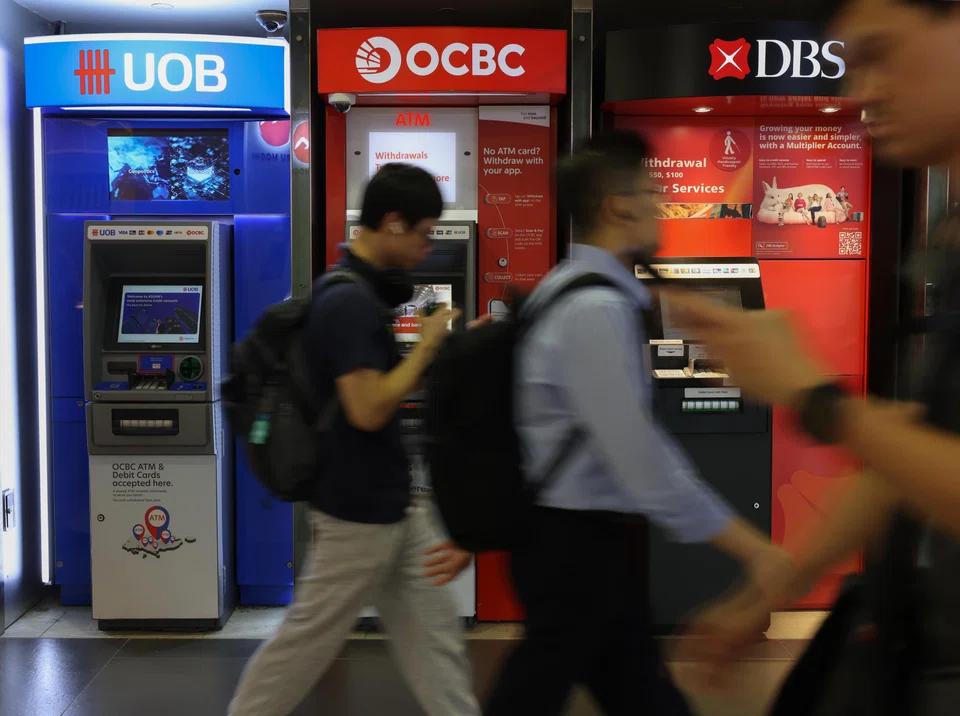
    • A potential inflow of wealth from the Middle East could help Singapore's banking trio as interest rates soften and net interest margins inevitably face compression this year. PHOTO: TAY CHU YI, BT

    [SINGAPORE] Private bankers and wealth managers are known to be a tight-lipped bunch. But from the marbled office lobbies of the Marina Bay Financial Centre to the private dining rooms of Raffles Place, whispers are rising by half a decibel: As geopolitical sands shift in the Middle East, a quiet, accelerating wave of ultra-high-net-worth (UHNW) capital could be actively charting an exit ramp – including to Singapore.

    ​For the better part of the last two years, Dubai was the darling of the family office world. It offered zero tax, a golden visa that felt like a VIP pass to the future, and a regulatory touch so light it was almost ethereal.

    For a single-family office (SFO), however, the first rule of stewardship is capital preservation. And with the turmoil in the Middle East now in its third week, one longer-term implication could be that a permanent risk premium will now be attached to Gulf assets.


    To be clear, it is unlikely that there will be a dramatic exodus of capital from the Middle East. The region remains one of the world’s most significant sources of wealth and its financial centres have grown increasingly sophisticated.

    Speaking to The Business Times just after the start of the conflict, wealth managers in Singapore said that the Republic could see “incremental inflows” if geopolitical tensions escalate further.

    Indeed, global wealth rarely moves in dramatic waves. It trickles, hedges and diversifies – a new banking relationship here; an investment vehicle there; gradually, a deeper footprint in financial centres that promise stability.

    But Singapore has spent decades positioning itself for moments like these. It has cultivated a reputation as a neutral, predictable financial centre where global capital can sit quietly, protected by strong legal institutions and a regulatory environment that prizes stability.

    Supported by a deep banking sector, a growing base of asset managers and a regulatory framework designed to accommodate private investment structures, Singapore’s family office ecosystem has expanded rapidly in recent years. In calmer times, its reputation attracts business. In uncertain times, that becomes a strategic asset.

    Shift to safety

    For some family offices managing multi-generational fortunes, a second financial hub abroad can function as a form of insurance against the sort of geopolitical volatility that no portfolio manager can model with precision.

    UHNW families in the Middle East – those with investable assets north of US$30 million – have long maintained what some wealth managers call a “diversified domicile strategy”.

    In practice, this means keeping money in multiple jurisdictions simultaneously: a Swiss private bank for legacy holdings; a London account for children in school; and increasingly, an Asian booking centre for exposure to the region’s growth story.

    What is changing now is the weight assigned to each of those legs.

    Prolonged periods of geopolitical stress reinforce the need for these wealth hedges. And Singapore’s Big Three local banks could find themselves well positioned to rise with the tide.

    With the massive private wealth stock in the Gulf region – estimated to be over a trillion dollars – even a trickle flowing through could translate into meaningfully incremental assets under management for DBS , OCBC and UOB .

    The three local lenders have all spent years expanding their private banking capabilities to capture a growth in global wealth flows.

    DBS, South-east Asia’s biggest bank, has been steadily strengthening its own wealth management franchise alongside its institutional banking operations. It has set its sights on becoming a top-tier wealth manager in Asia, and Middle Eastern inflows would help accelerate a journey already well under way.

    Meanwhile, OCBC – through its private banking arm, Bank of Singapore – has built a reputation as a gateway for international wealth entering Asia, with advisory teams that understand the often complex governance structures that characterise Gulf UHNW households.

    UOB, traditionally the most domestically anchored of the three, has also been quietly expanding its wealth management footprint in ways that suggest it is thinking beyond its historical core markets. The Gulf wave could represent an opportunity to close the gap with its larger rivals.

    To be sure, the Singapore banking trio will not easily displace the global giants.

    For example, Swiss houses such as UBS, Julius Baer and Pictet have the brand recognition and longstanding relationships with Gulf royalty and merchant families that come from decades of cultivation.

    But for investors watching DBS, OCBC and UOB and wondering where the next chapter of their wealth management growth is written, it may be worth looking towards the Middle East.

    ​These SFOs do not just park cash in fixed deposits. They require sophisticated brokerage, custodial services, complex credit facilities and bespoke advisory. This feeds directly into the local banks’ wealth management fee engines.

    ​As interest rates soften and net interest margins inevitably face compression this year, the Big Three are under pressure to supercharge their non-interest income. A rising tide of Middle Eastern wealth provides the perfect offset.


