

DBS, OCBC, UOB may grab attention as Fed shifts stance, copes with new tariff uncertainty
Even if interest rates are bottoming, the normalisation of net interest margins at the three banks may continue through 2026

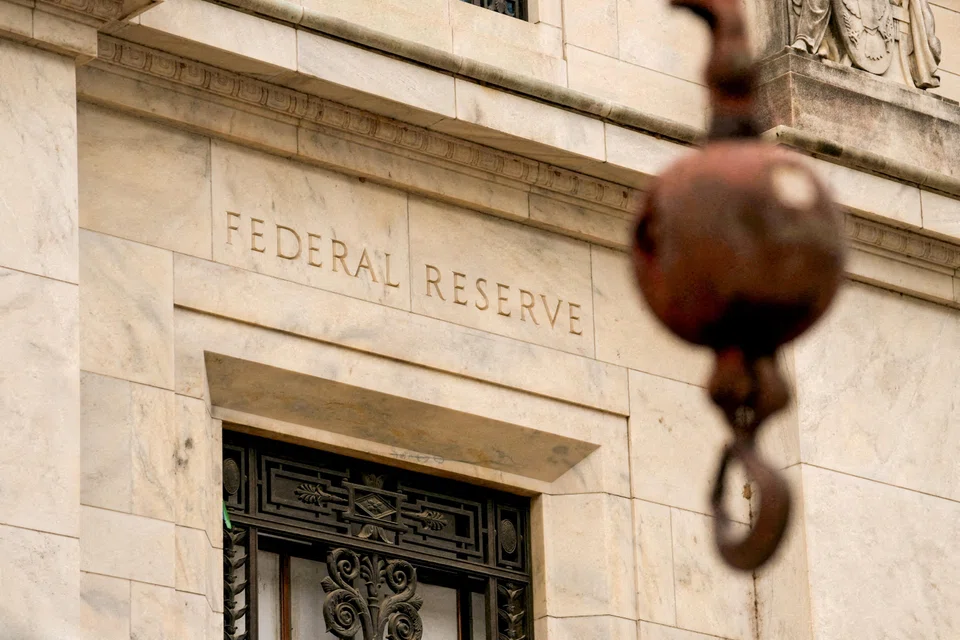
[SINGAPORE] There was little immediate market reaction last week to minutes of the US Federal Open Market Committee’s Jan 27-28 meeting that suggested “several participants” had the possibility of rate hikes on their minds.
Yet, it may just be a matter of time before the Fed’s apparently shifting view on the appropriate path for the federal funds rate in the months ahead begins colouring market sentiment around the world. Renewed US trade policy uncertainty could further complicate the picture.
In Singapore, a slower pace of Fed rate cuts could have implications for the profitability of DBS, OCBC and UOB – which account for more than half the Straits Times Index (STI).
When the current reporting season began, the market seemed to be anticipating that interest rates would bottom in 2026, and take pressure off the net interest margins of the three banks. While a less dovish Fed may just reinforce that view, it may also reshape expectations of loan demand, asset quality trends and collateral values.
On Feb 19, the day after the Fed meeting minutes were released, OCBC and UOB – which are scheduled to report their 2025 financial results this week – climbed 2.3 per cent and 0.7 per cent, respectively. DBS, which reported its 2025 results earlier this month, rose 1.3 per cent.
The STI was up 1.3 per cent on the same day.
At its Jan 27-28 meeting, the Fed held the target range for the federal funds rate unchanged at below 3.75 per cent, after three consecutive cuts of 25 basis points at its meetings in December, October and September.
The decision was not unanimous. Two of the 12 members of the committee dissented, preferring a further rate cut of 25 basis points.
The minutes of the meeting said several participants expressed the view that further rate cuts are likely to be appropriate if inflation declines in line with their expectations.
But some participants commented that it may be appropriate to hold rates steady for some time, and that further cuts may not be warranted until there are clear signs of disinflation.
The minutes went on to state: “Several participants indicated that they would have supported a two-sided description of the committee’s future interest rate decisions, reflecting the possibility that upward adjustments to the target range for the federal funds rate could be appropriate if inflation remains at above-target levels.”
Dissension at the Fed
The Fed’s policy rate decisions over the past few months have been rather fraught, because of the impact of tariffs on inflation data, concerns about the effect of artificial intelligence on the labour market, and pressure from US President Donald Trump to cut rates.
At the Fed’s Jul 29-30 meeting, there were two dissensions to its decision to keep the federal funds rate unchanged at below 4.5 per cent. Michelle Bowman and Christopher Waller preferred a 25 basis point cut.
This was reportedly the first time since 1993 that two members of the rate-setting committee had dissented at a single meeting.
A third member, Adriana Kugler, was absent and did not vote. On Aug 1, the Fed said Kugler had submitted her letter of resignation to Trump and would step down on Aug 8. She had served as a governor of the Fed since 2023.
Trump subsequently picked Stephen Miran to take over from Kugler. Miran was at the time chairman of the Council of Economic Advisers, an agency within the Executive Office of the US President.
Since then, Miran has dissented every decision of the rate-setting committee. At the Fed’s Sep 16-17 meeting, when it decided to cut the federal funds rate by 25 basis points to below 4.25 per cent, Miran called for a larger cut of 50 basis points.
At the Oct 28-29 Fed meeting, when the federal funds rate was cut by another 25 basis points to below 4 per cent, Miran again called for a 50 basis point cut. Another member of the rate-setting committee, Jeffrey Schmid, preferred to keep rates unchanged.
At the Fed’s Dec 9-10 meeting, when the federal funds rate was cut by yet another 25 basis points to below 3.75, Miran once again called for a 50 basis point cut. Two other members of the committee – Austen Goolsbee and Jeffrey Schmid – wanted to keep rates unchanged.
Miran was also one of the two dissenters at the Fed’s Jan 27-28 meeting. The other was Christopher Waller.
Less dovishness?
Miran has recently toned down his calls for steep rate cuts, though. In the Fed’s quarterly Summary of Economic Projects in December, he had projected the federal funds rate to fall below 2.25 per cent by end-2026.
Last week, he reportedly told an interviewer that stronger-than-expected jobs numbers and goods inflation had prompted him to return to the view he held in September, when he had projected the federal funds rate to fall below 2.75 per cent by the end of this year.
This still implies a full percentage point rate cut, and leaves Miran the most dovish member of the rate setting committee. Still, it brings his views closer to those of his Fed colleagues.
Meanwhile, Trump’s nomination of Kevin Warsh as the next Fed chair, to replace Jerome Powell when his term ends in May, is being viewed as a conventional and credible choice by the market. Immediately after news of his nomination broke, the US dollar firmed while precious metals sold off.
Fresh tariff uncertainty
Last month, Powell said during his customary post-meeting press conference that “it isn’t anyone’s base case right now” that the next move will be a rate hike. In fact, he expressed confidence that the inflationary impact of the tariffs will soon abate – perhaps as soon as the middle of this year.
“The expectation is that we will see the effects of tariffs flowing through goods prices, peaking, and then starting to come down, assuming there are no new major tariff increases,” he said.
Less than a month on, a fresh bout of US trade policy uncertainty is unfolding. Immediately after the courts struck down a broad swathe of Trump’s tariffs last week, the US president said he will impose global tariffs of 15 per cent under a different set of laws.
This will, no doubt, complicate the outlook for tariff-induced pressure on inflation data. It may also impact economic activity, creating fresh tension between the Fed’s policy objectives of maintaining stable prices and maximum employment.
It could also refocus market attention on the US budget deficit, which Powell has described as being on an unsustainable path, resulting in upward pressure on bond yields and tighter monetary conditions.
So, what does all this mean for DBS, OCBC and UOB?
While net interest margins at all three banks have already declined significantly, they are still higher than they were before the post-pandemic surge in inflation.
The way I see it, even if interest rates are now bottoming, the normalisation of net interest margins may continue through 2026, weighing on their headline profitability.
Asset quality and collateral value risks may also deliver some negative surprises in the coming quarters.
The banks will probably remain solidly profitable through this difficult phase, of course. But declining profitability could make it tough for them to improve on the capital return initiatives that have excited the market.






