‘Dear You’ should prompt a revaluation of culture
Updating Singapore’s cultural policies would boost its soft power and economy
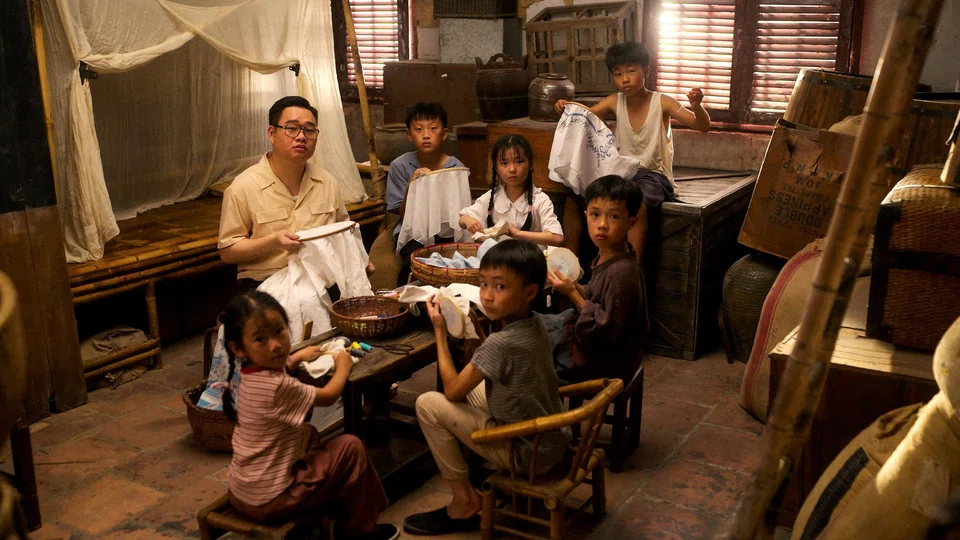
DEAR You, a Teochew film from China, has sparked a still-ongoing public debate about language, heritage and identity in Singapore.
Much attention focused inwards, re-examining media regulation policies set from decades ago, especially the continued relevance of the Speak Mandarin campaign and restrictions on dialect use.
Yet, one should also zoom outwards, to consider the impact of such cultural policies on the future of Singapore’s soft power, including the potential economic benefits.
Research on international relations suggests that soft power, a country’s ability to influence other nations through persuasion and attraction, draws from its appealing attributes: how aware outsiders are of a place, and how much they appreciate its particular characteristic such as its cultural resources, which then affects how much they like that country.
In times of crisis, a country's soft power can play a key role in shaping how quickly and broadly the rest of the world lends its support.
Soft power can also boost the overall worth of any economy, as well as the brand value of its companies.
For example, the government of Japan announced in June an economic development programme with 17 strategic areas. It includes promoting its content industry by actively supporting the overseas expansion of anime, manga and online games, and cultivating creators and artists.
Japanese civil servants who previously discouraged their children from “wasting time” on anime and manga may now find that their job today is to promote such media to rejuvenate the economy.
South Korea is the chief international showcase of soft power economics; its television series and films (such as the Oscar-winning Parasite) are consumed worldwide, dubbed and subtitled in multiple languages.
The Korea Creative Content Agency estimates that the cumulative export value of the content industry reached about 14.8 trillion Korean won (US$10 billion) by the third quarter of 2025.
Soft power often draws substance and spirit from culture. And culture that resonates with people is authentic, unique and based on heritage.
These qualities are what make a film like Dear You endearing: While carrying deep, long-held cultural meaning for a people, it is also intriguing and interesting to outsiders.
Growing Singapore’s soft power
Singapore’s soft power grows every time there is authentic, engaging material that allows the world to appreciate what differentiates Singaporeans from any other cultural group.
Such stories are, naturally, best told by Singaporeans, or by those who have gained enough understanding of the soul of this place.
The value of such content lies in many aspects, including building social cohesion, national identity, geopolitical security, and the country brand.
In fact, every public policy on culture should factor in its possible impact on Singapore’s soft power: What can be tweaked to boost, or, at least, not hamper its expression?
This is why now is an appropriate (if overdue) time to review, and adjust, some policies of old, as well as the whole country’s way of thinking about the value of culture.
Some of today’s media regulation policies perhaps still carry instincts derived from decades ago.
When I was a member of the 1991-92 Censorship Review Committee (CRC, a citizens’ panel that recommends updates to Singapore’s censorship policies), one agenda item was whether to censor risque calendars (printed on paper in the pre-digital age) featuring scantily clad women. Such questions would be laughable today.
I served on two more CRCs in 2002-03 and 2009-10. There have been no CRCs since then, despite an accepted recommendation from 2002-03 to convene such panels every five years instead of every 10, given the fast pace of evolution of media technology and tastes.
Keeping with the times
Today, the media landscape is vastly different. Much content that was the subject of fierce debate at every CRC meeting in the 1990s and noughties, is now freely available online, and significantly, also on TV, in every household.
The imagined harms of having less regulation never really surfaced. Instead, regulation has brought some downsides; for example, some commentators have suggested that Singapore is a first-world nation in many aspects, but not culture.
The past holds many examples of missed opportunities for Singapore’s soft power to be expressed more fully.
The TV series Emerald Hill was the first Mediacorp Chinese drama to reach No 1 on Netflix Singapore. How much more interesting could the series have been, if the characters had spoken in the more authentic Baba Malay, along with other “campur” (mixed) dialogue, with subtitles in English and other languages?
Speaking of “campur”, the Teochews in Singapore have always been evolving a local variant of Teochew, for instance, adopting Malay words like “sabun” (soap) and “pasar” (market).
What other uniquely Singaporean cultural products could have developed – had writers, content creators and artists more room for manoeuvre – will now never be known.
The same dynamic applies also to every other cultural group in Singapore. For example, Tamil is still the official language for people of Indian ethnicity here, but newer cultural resources are emerging from immigrants in recent years who speak in other tongues, such as Hindi or Gujarati.
Maintaining four official languages remains paramount, of course, for nation-building in Singapore. But, just as one no longer needs to censor calendars (because social norms and market forces would take care of that), there is also no need for the same old limitations on niche languages or dialects.
In my view, they could never displace the mainstream languages.
Supporting and promoting home-grown culture offers real payoffs: Citizens will feel more pride, businesses will have more cultural resources for brand differentiation, and the country stands to win more admirers, alongside tourists and investors.
That can only be good for everyone.
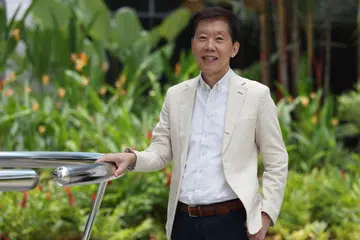
The writer, a country branding adviser, is author and editor of more than 40 books, including Brand Singapore
TRENDING NOW
Grab CEO’s wife Chloe Tong on life with Anthony Tan and finding her purpose
He built the Vingroup empire. Now South-east Asia’s richest man is handing some key roles to his sons
Singapore’s S$80 million vertical farm must pass the 50-cent test to succeed
Data centre energy demand from Asean telcos not a ‘big risk’, says industry group