Decarbonisation is making a comeback thanks to the Iran war. The test is whether it can be sustained
Efforts to accelerate renewable energy deployment across South-east Asia have been slow

[SINGAPORE] After plenty of prodding, nudging and urging – as well as some regulatory pressure – nothing was more effective in driving home the urgency of the low-carbon transition than when the Iran war hit.
Clean energy is suddenly back in vogue, after being pushed to the sidelines last year when US President Donald Trump came to power and rolled back several climate-friendly policies.
As governments and corporates scramble to address immediate concerns, such as securing energy supplies, there is a reckoning that the clean energy transition is not just about achieving climate goals, but also long-term energy independence and security.
The question, though, is whether people will remember the lessons from the war and continue pushing forward with the momentum, even after the most disastrous impacts of the war subsides.
Impact of the war so far
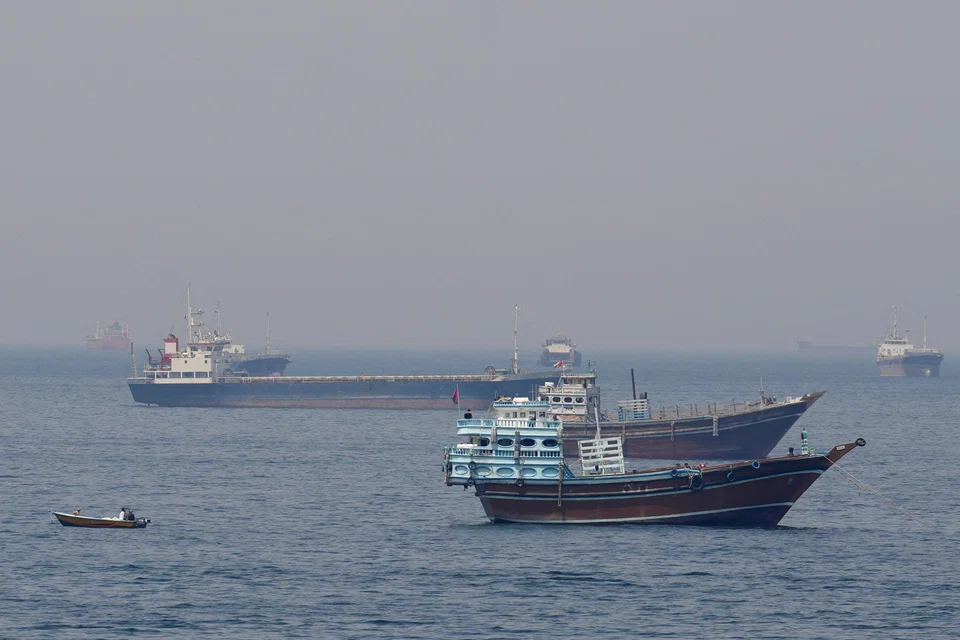
In retaliation against the US and Israel’s attacks, Iran has blockaded the Strait of Hormuz – a critical chokepoint for global energy supplies – sending energy price shocks rippling through the global economy.
Oil prices have surged 55 per cent since the start of the war, while liquefied natural gas spot prices in Asia have gone up 54 per cent.
Fatih Birol, director of the International Energy Agency, said the ongoing war has triggered the worst energy crisis in history.
The International Monetary Fund cut its 2026 global growth forecast to 3.1 per cent, and warned that this could spiral into global recession if the war worsened.
The effects can already be seen in Singapore’s first-quarter gross domestic product estimates, which came in weaker than expected.
Economic growth slowed to 4.6 per cent year on year for the quarter, compared with 5.7 per cent over the same period the year before. This fell short of Bloomberg’s estimates of 5.8 per cent growth.
Responses in South-east Asia
Governments in South-east Asia have so far responded largely with short-term crisis management tools.
The Philippines has declared a national emergency, which authorises the government to procure fuel and petroleum products.
Thailand has cut diesel tax and temporarily ordered the reopening of two coal-fired power plants that have been decommissioned.
Indonesia has frozen subsidised fuel prices and introduced austerity measures, including restricting subsidised fuel purchases to 50 litres for each vehicle every month.
These are necessary near-term responses to manage the volatility of energy prices and ensure there is enough supply to keep the lights on, as they work on longer-term plans to shift energy systems away from fossil fuels.
The issue is whether the lessons learned will be remembered – and whether the current momentum will endure.
What Asean is going through now is reminiscent of what many European markets experienced in 2022, when gas supplies from Russia were cut following the invasion of Ukraine.
That episode should have been a warning of what Asean could face if a similar disruption were to hit the region. Yet, apart from Singapore, efforts to significantly accelerate renewable energy deployment across South-east Asia have been slow since 2022.
Singapore’s ambassador for climate action, Ravi Menon, has aptly described past oil shocks in the 1970s and 1980s, as well as the energy crisis triggered by Russia’s invasion of Ukraine, as “movies we’ve seen before”, while speaking at the launch of a new council earlier this month.
“We will see this movie again and again. The question is, do we learn from this movie?” he asked.
Unfortunately, historical amnesia and complacency suggest that these “movies” tend to end in much the same way each time.
Around the world, while the oil crises of the 1970s led to the expansion of nuclear energy in several countries and the build-up of strategic oil stockpiles, structural dependence on oil – including from the Middle East – has persisted to this day.
Efforts to diversify away from Middle Eastern supply did not last once oil prices collapsed in the 1980s amid a global glut.
The same pattern can be observed across other major crises beyond energy.
Excessive leverage – one of the key vulnerabilities exposed during the 2008 global financial crisis – has gradually crept back into parts of the financial system.
The outbreak of Sars also did not adequately prepare the world for the Covid-19 pandemic. Then there was the quick pivot away from work-from-home arrangements the moment the pandemic was largely over.
The current enthusiasm around artificial intelligence echoes the 2001 dotcom bubble, particularly in its high expectations for transformative technology, elevated valuations and fear of missing out-driven investment behaviour.
These episodes point to a familiar pattern of historical amnesia. Once disruptions fade and normalcy returns, complacency sets in again. The question is whether the same outcome will follow once the Iran war subsides.