

Decisive dynamics, diplomacy and dialogue: South-east Asia in the arc of uncertainty
Besides geopolitics at play, strategic trust and peace between Asean states are also being put to the test

NEW year, new beginnings. But the turn of the year does not, of course, suggest that the challenges confronting the international community will simply fade away.
Addressing these challenges – as well as the new ones that will emerge – ultimately requires diplomacy, negotiation and dialogue to be at the forefront. Experience from recent years, however, suggests precisely the opposite: headwinds against diplomacy, negotiation and dialogue, as well as multilateral cooperation.
How can we reverse such negative dynamics, in order to preserve and promote a pacific Asia-Pacific? This is one of the key tasks ahead. After all, the preservation of peace has been a sine qua non for the region’s economic progress and prosperity.
While a sense of deep global and regional uncertainty prevails, there are at least three key dynamics in the Asia-Pacific that are likely to remain relevant and which will require diplomacy, negotiation and dialogue.
Three dynamics in 2026
First, the region is set to remain encumbered by ever-complex and uncertain geopolitical dynamics.
Second, it is likely to continue demonstrating the complicated nexus between the internal, or national political dynamics, and external milieus.
Third, issues convergence is expected to loom large, not only in the all-encompassing geopolitical dynamics and the management of national economies, but also in the weaponisation of so-called global common issues.
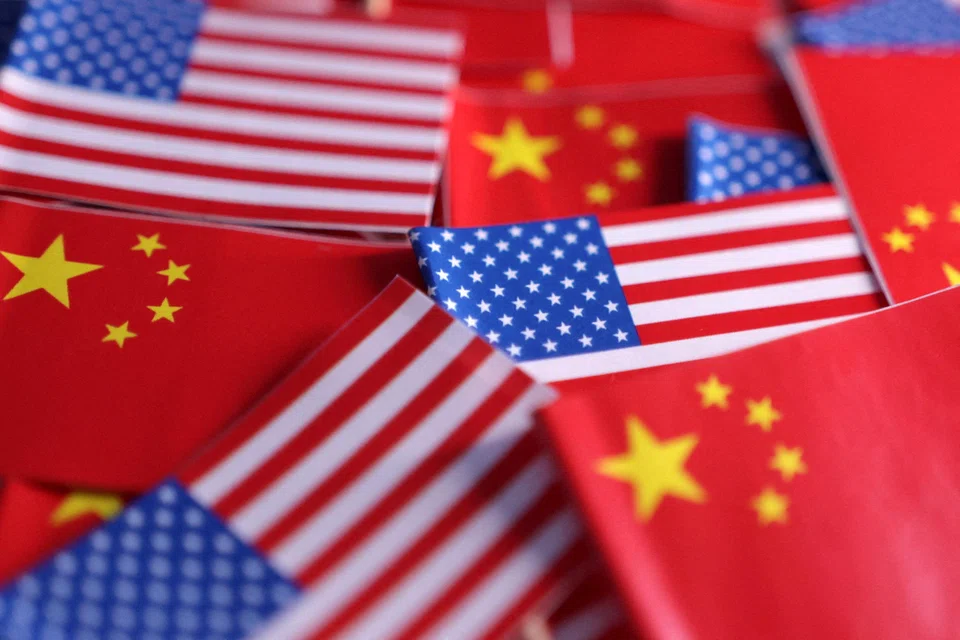
The ebb and flow of China-US relations – whether veering towards confrontation or cooperation – will figure large in the first set of dynamics. Governments in the region are likely to have factored in the possible scenarios and their implications.
Besides Sino-US ties, other geopolitical forces at play will also affect South-east Asia.



Recent developments in China-Japan links, for instance, are a reminder of the fragility of the conditions in North-east Asia, already beset by tensions on the Korean peninsula. Adding to the complexity is the uncertain nature of other key bilateral relations that are still shaped by historical experiences and constantly tested by unresolved territorial disputes.
Nor can South-east Asia be oblivious to the complex dynamics at play in Sino-India and India-Russia ties. Moscow’s relations with Beijing are also demonstrating greater consequence, not least within the context of the Global South narrative and in linking the Indo-Pacific dynamics with that of the Euro-Atlantic.
Over in the southern Pacific, China-US competitive dynamics are also being increasingly felt – this completes the arc of uncertainty surrounding South-east Asia.
In essence, the complex web of competitive geopolitical dynamics in Asia-Pacific – marked by deep trust deficits and unresolved territorial disputes – underscores the indivisibility of peace and security in the region, and defies any suggestion of clearly delineated and autonomous sub-regions.
South-east Asia certainly cannot insulate itself from the fragmentation and division of the wider region simply by asking to be left alone and not be forced to choose sides.
Even within South-east Asia itself, decades of strategic trust and peace between Asean states are now being put to the test. The assertion that the region remains an oasis of calm amid fragmentation elsewhere is at risk. The conflicting maritime claims in the South China Sea – long seen as containing the seeds for potential open conflicts – remain stubbornly difficult to manage through diplomacy.
Apart from the unresolved situation in Myanmar, the open conflict between Cambodia and Thailand is also negatively impacting the region.
The case for diplomacy and dialogue
In the face of these developments, it is vital that countries in South-east Asia spearhead a renewed emphasis on diplomacy, negotiation and dialogue. Amid deepening geopolitical fragmentation, Asean could proactively chart policies aimed at promoting strategic stability and a dynamic equilibrium.
In essence, shifting power dynamics and diffusion of power are a constant and enduring feature in the region. Attempts by any country to secure preponderance – even under the guise of seeking a “balance” of power – are inherently destabilising, as they will lead to an action-reaction chain of events.
While geopolitical competition may indeed be inevitable, open conflict – either by design or because of miscalculation – is not. Hence, diplomatic initiatives aimed at striking an equilibrium, including a firm code of behaviour for the region, would be invaluable.
At one time, Asean was well-placed to promote a culture of peace in the Asia-Pacific. However, the lack of progress in addressing the Myanmar issue and, in particular, the open conflict between Cambodia and Thailand risk impairing the bloc’s much-claimed centrality. The need to vigorously tackle these issues at the heart of South-east Asia cannot be overstated.
In this connection, the special Asean Foreign Ministers’ Meeting last month in Kuala Lumpur on the Cambodia-Thailand conflict is of immense importance in reasserting Asean’s capacity to manage the region’s affairs. Only when the guns are silenced in South-east Asia can Asean call for peace in Asia-Pacific with credibility.
“Stage-manship” versus statesmanship
A second dynamic to anticipate is the complex nexus between the internal and external milieus.
Asia-Pacific is replete with examples of how internal or domestic political dynamics – of unbridled populist instincts and the inclination for “stage-manship” rather than statesmanship – can trigger long-dormant or managed disputes, and render diplomacy and dialogue futile.
Efforts at finding common ground and convergences have been made more difficult by the tendencies to court domestic public opinion as the single most important pursuit. While this has always been prevalent, it is increasingly so today in the age of social media.
South-east Asia, once renowned for its strength in informal and quiet diplomacy, has not been spared. The Cambodia-Thailand conflict attests to that. Trust and confidentiality, critical in any diplomatic undertaking, are becoming rare traits.
It would be vital for policymakers in the region to look beyond the immediate situation, and once again establish an equilibrium or synergy between national and regional interests. It is also crucial to make a case for the futility of conflict, and the importance of finding political solutions to conflict situations.
Carving out “safe spaces”
The third dynamic – issues convergence – has been most clearly manifested in the link between geopolitical dynamics and the economy.
The overt use of trade, finance, technology, food and energy links to exert pressure for geopolitical ends shows little sign of abating. This affects how we address global common issues, such as the climate crisis, that demand cooperative solutions.
It is vital that countries carve out “safe spaces” through diplomacy and dialogue to ensure that such issues are shielded from zero-sum geopolitical dynamics.
As the Asia-Pacific region faces the uncertainties of the year ahead, there is a critical need for a surge in diplomacy, negotiation and dialogue.
The writer is founder of the Amity Circle, which brings together individuals in the Asia-Pacific with deep ministerial policy experience. He served as Indonesia’s foreign minister from 2009 to 2014.
This essay is part of our new series, New Global Order, which explores how the changing world landscape is reshaping business, politics and beyond.
Decoding Asia newsletter: your guide to navigating Asia in a new global order. Sign up here to get Decoding Asia newsletter. Delivered to your inbox. Free.
Share with us your feedback on BT's products and services






