Despite ceasefire in Iran, businesses should follow Singapore’s model
Whether the ceasefire holds, firms should not assume business as usual
US PRESIDENT Donald Trump did not follow through on his threat to end a whole civilisation in Iran. Markets went up as a result. This does not mean long-term geopolitical risk and realignment will no longer occur.
Trump remains president. While he sits in the Oval Office and the Islamic Revolutionary Guard Corps rules in Teheran, fuel prices higher than those pre-war are likely here to stay.
As a result, governments across much of the world will need to continue helping their citizens alleviate this hit by, for instance, cutting taxes on fuel – at a cost to be borne elsewhere.
Companies should be auditing their supply chains for single points of over-reliance, diversifying energy sources and identifying where geographic concentration in the Middle East creates vulnerability.
Singapore has activated its Homefront Crisis Ministerial Committee, the government’s top steering body that coordinates Singapore’s national response to crises.
Businesses and investors should be studying the Crisis Committee and its actions, and use it as a model for their operational and strategic response.
War’s progression could lead to even worse times to come
Times are already tough across Asia. The best-case economic scenario for the war’s outcome will be that the ceasefire holds, with a few more months of high prices and a lack of supply.
It could also get worse.
The best economic outcome with the war’s end would be a reopening of the Strait of Hormuz with full freedom of navigation, meaning no escorts required for vessels and no risk of attack from Iran requiring elevated insurance premiums.
This would eventually bring energy prices closer to pre-war levels.
Derek Grossman, founder and chief analyst of Indo-Pacific Solutions, who served over a decade in the US intelligence community, noted, “While the US-Iran negotiations allow for a diplomatic off-ramp, the world should not count on a clean or quick outcome.”
Business leaders need to prepare for a new geopolitical reality and understand the consequences for operations, supply chains and financial exposure for different potential outcomes.
Focus on energy and supply chain resilience plus conservation
Singapore has sprung into action, and its playbook offers a practical template for businesses to follow.
On Tuesday (Apr 7), Singapore’s Parliament made official what companies should already be pricing in.
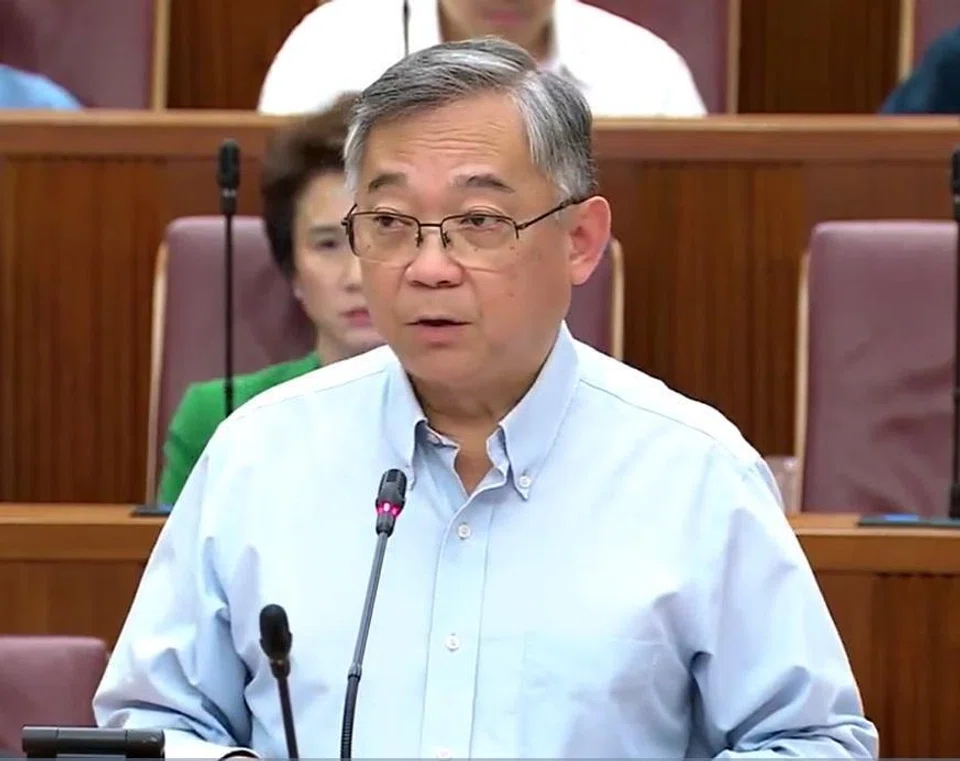
Deputy Prime Minister Gan Kim Yong confirmed inflation will exceed earlier projections. The government has committed close to S$1 billion in new support measures to cushion its people.
Businesses have no excuse to assume the impact will pass without a plan.
In announcing he would hold off on sending “destructive forces” to Iran, Trump posted on social media that this ceasefire hinges on a “complete, immediate and safe opening” of the Strait of Hormuz.
On free passage through the strait, Foreign Minister Vivian Balakrishnan drew the line some other nations have not: Singapore will not pay Iran a toll or negotiate for transit. “It is not a toll to be paid. It is a right of all nations’ ships to traverse,” he declared on Tuesday.
Will the US guarantee any ceasefire ensures this right?
The analysis of the current crisis should go beyond that of economic impact. It signals about which rules still hold and which are already bending.
Many other countries do not recognise this.
Countries such as India, Iraq, Thailand and Pakistan have secured safe transit, while China’s Ministry of Commerce website, citing a recent Lloyd’s List report, said some ships are paying US$2 million fees to Iran for transit through the waterway.
With all this uncertainty, the Singapore government is undertaking multiple actions to strengthen its energy and supply chain resilience.
Refineries and chemical companies are scaling back production and sourcing oil and feedstock from outside the Middle East. Liquefied natural gas importers are securing alternative supplies as well.
The government looks to deepen cooperation with Australia, and work with New Zealand to open supply lines for essential goods and food.
Singapore urges businesses and households to conserve energy and reduce waste – steps that lower operating costs and extend the runway before harder choices become necessary.
Companies across Asia should be doing the same.
The sectors most exposed include agriculture, aviation, chemical, manufacturing and tourism – but even businesses that believe they carry no exposure will eventually feel the impact.
Energy remains the foundation for the global economy.
Mitigate risks and meet societal demands
The Pakistan-brokered ceasefire announced on Tuesday – with B-52 bombers already en route when the deal was struck – buys two weeks.
Maybe it will hold. If it does, businesses that treat it as a return to the status quo ante misread the situation. There might yet be an off-ramp through negotiations, but the off-ramp does not lead to a U-turn.
Both governments and business leaders must mitigate the risks exposed by the conflict, and look to address the societal challenges this war brings.
Two opportunities already emerge from this crisis.
Alternative energy – particularly renewables – will be in increasing demand as governments and firms scramble to reduce exposure to Middle East supply.
Defence spending will rise as every country in the region recognises the need for self-defence in this new geopolitical era.
Times are bad, but there will be chances to be part of the solution.
Businesses and investors need to recognise this new era. Singapore’s approach offers the clearest model available for how to do so.
The writer is chief executive officer of Apac Advisors, a geopolitical strategy and responsible investment firm headquartered in Singapore. He was elected as chair to multiple terms of the American Chamber of Commerce in Singapore and served in the Clinton administration as deputy general counsel at the US Department of Transportation. Noemie Viterale, manager at Apac Advisors, contributed to the piece.