

Despite Q3’s decline, multi-year up-cycle in private home prices will continue
Rising population and steady economic growth meet stable supply

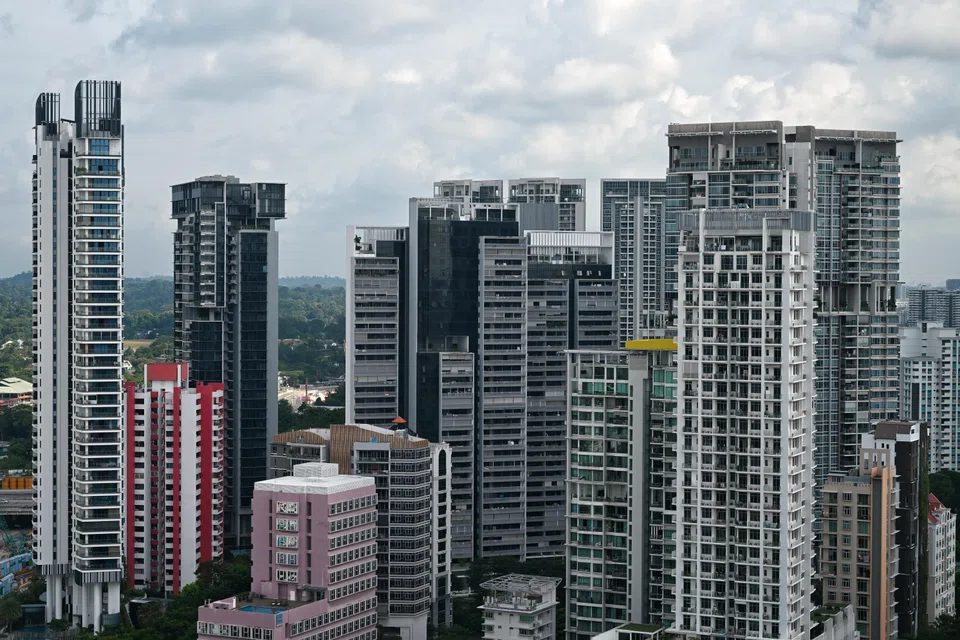
PRIVATE home prices fell in the latest quarter. The private residential property price index by the Urban Redevelopment Authority (URA) declined 0.7 per cent quarter on quarter in Q3. This is one of two instances when the index fell over the last 18 quarters.
However, major condo launches this month fared well. High-end project Meyer Blue in District 15 by UOL Group and Singapore Land Group (SingLand) sold over half of its units at its launch weekend, at an average price of S$3,260 per square foot (psf).
Suburban project Norwood Grand in Woodlands by City Developments Ltd sold 84 per cent of its 348 units, over its launch weekend, at an average price of S$2,067 psf.
Should an individual waiting to buy a private home for owner occupation expect respite via home prices correcting, or bite the bullet and buy a home today?
Imagine a person who sold his home in late 2019, just before the outbreak of the Covid-pandemic, with the intention to buy a replacement home for owner occupation.
That person may have patted himself on the back for selling a home ahead of the pandemic, especially in the darkest days when economies tanked and fears over the virus were widespread.
But the same individual might have then been slow to buy a home when pandemic fears receded, and thus been left staring helplessly as prices quickly roared back. Between Q1 2020 and Q3 2024, the URA’s property price index of private homes rose 34.6 per cent.
There have been down-cycles in the past. For example, the URA’s private residential property price index fell 11.6 per cent between Q3 2013 and Q2 2017.
However, an analysis of major forces impacting the private housing market suggests that prices over the next few years could largely be in positive territory.
Economy and interest rates
One, the global economy may be doing fine, with the US likely to be heading for a soft landing, while China’s sluggish economy could be boosted by a recent spate of stimulus measures.
Sure, there are retrenchments in different sectors and concerns over Singapore’s wage competitiveness. Nonetheless, the unemployment rate here is low, and the government is well placed to stimulate the economy if needed.
Crucially, homebuyers might be buoyed by lower interest rates. For example, a borrower with a S$1 million 25-year home loan sees his monthly instalment fall from S$5,278, based on an annual interest rate of 4 per cent, to S$5,006, assuming an interest rate of 3.5 per cent.
Population and demography
Two, while there are worries over the low birth rate, Singapore’s population is growing. The total population stood at a record 6.04 million in mid-2024, up 2 per cent from a year ago.
The annualised population growth rate was 1.1 per cent over mid-2019 to mid-2024, slightly above that of the 0.8 per cent in the period from mid-2014 to mid-2019. Between mid-2019 and mid-2024, the number of Singapore citizens rose by 3.9 per cent to 3.64 million, while the number of permanent residents (PRs) climbed by 3.7 per cent to 0.54 million.
Assuming more talented and wealthy foreigners become Singapore citizens and PRs, the pool of potential private property buyers here will expand.
Meanwhile, if the average household size shrinks, the growth in the number of resident households could outpace the growth in the resident population. All this adds to sustained increase in housing demand.
As the population ages, some elderly retirees will downgrade their homes to free up funds.
However, the labour force participation rate among older age groups has been rising and could continue climbing, given a tight labour market. Indeed, economically active older persons might fuel liquidity in the housing market by helping their adult children with purchasing homes.
Supply
Three, the supply of private homes appears stable. As at the end of Q3, there was a total supply of 35,475 uncompleted private homes, excluding executive condos (ECs), in the pipeline with planning approvals, of which 19,940 units remained unsold. In comparison, there were 49,173 uncompleted private homes (excluding ECs) in the pipeline with planning approvals, of which 30,162 units were unsold, as at end of Q4 2019.
Generally, the government releases land with housing components at a measured pace through the Government Land Sales (GLS) programme. The non-award of some confirmed list GLS sites with residential components may constrain future housing supply.
Meanwhile, not many new homes are being built on en bloc sites, given the slowdown in the residential collective sales market, as developers have been cautious in taking on new private housing projects.
However, activity in the housing en bloc market could pick up with the announcement over the weekend by UOL, SingLand and CapitaLand Development that they signed an option to acquire the 99-year leasehold Thomson View Condominium for S$810 million via a collective sale.
Policy
Four, the high homeownership rate among Singapore residents is unlikely to change. Through the generations, many eligible locals start their homeownership journey by buying subsidised Housing and Development Board (HDB) Build-To-Order (BTO) flats. Many homebuyers also receive various housing grants.
Some BTO homeowners realise profits by selling their BTO units and subsequently purchasing private homes. The strength in HDB flat resale prices could continue, given the price gap between HDB resale flats and private homes.
Also, locals who bust the household income ceiling to buy BTO homes and PRs who cannot buy BTO homes often resort to buying resale HDB units. These factors support HDB resale flat prices, especially of larger units in good locations, and the buying power of HDB upgraders.
There are tough property cooling measures. High taxes apply to citizens and PRs who buy multiple homes and non-PR foreign homebuyers.
Nevertheless, the private homes market has been resilient in the face of cooling measures. Moreover, any new policy measures need careful calibration, as a nasty private housing price correction will have huge negative repercussions on the financial system and the wider economy.
An individual who has been waiting on the sidelines to buy a private home for owner occupation might hugely regret not acting sooner to make a purchase.
Still, the same person is probably wise to set regrets aside and bite the bullet to buy a home today, because private home prices should continue their multi-year upswing.
TRENDING NOW

Singapore government slaps loan curbs on individual private-hire car buyers

If Europe goes to war, the fallout will be felt in East Asia
The grid is the transition: Why Asean’s next energy challenge is coordination

Indonesia stocks suffer worst plunge in nearly 30 years as MSCI proposes standalone status

