Despite SIA’s multiple strengths, shareholders need to brace for turbulence
Much can go wrong, given the global nature of the group’s business and the many staff, suppliers and customers with which it deals

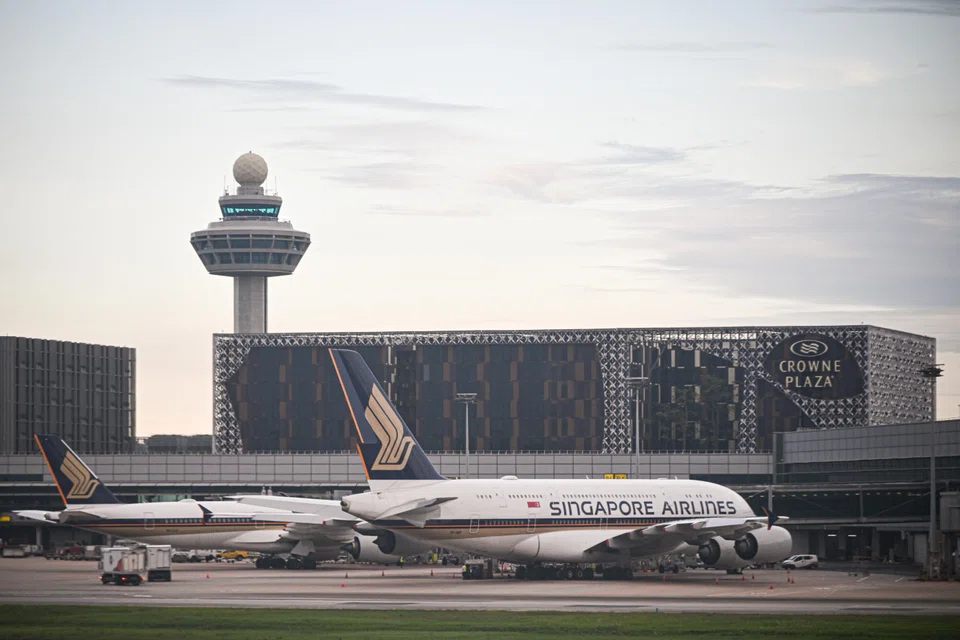
THE Covid-19 pandemic hit many businesses hard, with airlines among the worst affected. National carrier Singapore Airlines’ (SIA) business nosedived when international borders were largely sealed off.
Fast-forward post-pandemic and airlines have recovered well, with the lust for travel leading to a surge in demand and airfares.
Multi-award-winning SIA and low-cost carrier Scoot, which are part of listed SIA Group , have gained from air travel’s recovery. Both carriers achieved record passenger load factors for the financial year ended Mar 31, 2024.
For FY2024, the group posted a 24 per cent year-on-year increase in net profit to a record high of S$2.7 billion, as revenue climbed 7 per cent to S$19 billion. Return on equity holders’ funds hit 14.8 per cent in FY2024, compared with 10.2 per cent in the previous financial year. SIA Group expects to reach pre-pandemic passenger capacity levels in the current financial year.
Including the proposed final dividend, dividend per share (DPS) for FY2024 is S$0.48, up from S$0.38 for the previous financial year. Based on DPS of S$0.48, the dividend yield is more than 7 per cent.
Following the group’s record earnings, the profit-sharing bonus for eligible employees was nearly eight months for FY2024.
Perhaps questions can be raised over whether the air transportation services group, which received huge government support during the pandemic, should be richly rewarding shareholders and staff because of its strong earnings.
Managing turbulence
However, shareholders and staff may not be basking in the group’s robust performance.
Last month, SIA Flight SQ 321 from Heathrow Airport in London to Singapore encountered severe turbulence and was diverted to Suvarnabhumi Airport in Bangkok, Thailand. A British man died and multiple people were injured, some of whom were admitted to the intensive care unit in Thai hospitals.
SIA appears to have managed the unfortunate incident well. Help was promptly extended to passengers and crew who were affected as well as their loved ones.
Importantly, the group’s chief executive officer, Goh Choon Phong, was highly visible in managing this incident. For example, he was on hand to welcome a relief flight that brought back passengers and crew members to Singapore. He also posted a video message addressing the incident, wrote a memo to staff offering gratitude and assurance, as well as met affected passengers, crew and their loved ones in Bangkok to personally offer his support.
Effective crisis management is critical for SIA, which deals with many suppliers and customers, including individuals of diverse nationalities. Missteps can be costly and could quickly undo years of investment in brand building, ensuring high service standards, and championing safety as well as reliability.
Strengths
The SIA Group boasts multiple strengths. It has a dependable, large shareholder in Singapore investment company Temasek, which stepped up to support the group in fundraising to help it ride through the Covid-19 pandemic.
The SIA brand is strong and the airline is a market leader. The group serves many customers in Asia, where demand for air travel could grow rapidly amid rising income. The group will also benefit from the huge investments being made in its key hub, Singapore’s Changi Airport.
Being financially strong, the group can fund investments in aircraft, passenger experience and digitalisation to stay ahead of its competitors.
Crucially, SIA may command pricing power to mitigate inflationary pressures. Think of serving passengers who pay for a premium experience to pamper themselves and create memories.
Moreover, if SIA’s leaders excel in crisis management, this will help preserve the airline’s reputation, which is crucial to its revenue generation. Even as competition intensifies, SIA can command passenger loyalty and charge higher fares should passengers perceive that it has a superior offering. Having a good reputation also helps attract and retain talent.
Still, investing in airlines is not for the faint-hearted. Therefore, investors who seek peace of mind may wish to avoid SIA Group.
Risks aplenty
Many risks that the group faces can be covered by insurance policies. Still, the business is subject to much turbulence.
Sure, air travel is a very safe transportation mode. However, any air disasters may have a huge casualty toll and generate much negative publicity. With climate change, incidents of severe air turbulence may get more frequent and more extreme.
Outbreaks of health epidemics or armed conflicts could suddenly disrupt air travel. Airlines may face swingeing environmental regulations or be targeted by aggressive climate change activists.
Airlines and global air travel are susceptible to cyberterrorism and technological malfunctions. Will cross-border travel decline in a more fractured world, which retreats from globalisation?
Then there are the risks that come with SIA Group’s scale of operations. In FY2024, SIA and Scoot carried a combined 36.4 million passengers. As at end-March, the group’s passenger network covered 118 destinations in 35 countries and territories.
Much can go wrong, given the global nature of the group’s business and the many staff, suppliers and customers of different nationalities with which it deals. In addition, disgruntled customers or staff may use social media to air any grievances.
As yet, I have not mustered up the risk appetite to invest in SIA Group, despite a compelling investment case.
Nonetheless, I root for SIA’s management to master handling turbulence in order to deliver shareholder value as well as help fly SIA’s flag high for the benefit of Singapore.
As the national carrier serves many people globally, it can be a potent force of soft power for our country, helping us survive by making friends in a more hostile world. A successful SIA Group can also help Singapore grow as a global aviation hub amid fierce competition.
Some years back, I travelled extensively and enjoyed being a member of SIA’s highly valued Priority Passenger Service (PPS) Club, albeit I did not do enough to qualify for the airline’s highest Solitaire PPS Club status.
Today, while I travel much less, I continue to enjoy flying with SIA, and look forward to an upcoming leisure trip on our flag carrier with confidence.