

Devastating Hamas attacks on Israel shock wider world
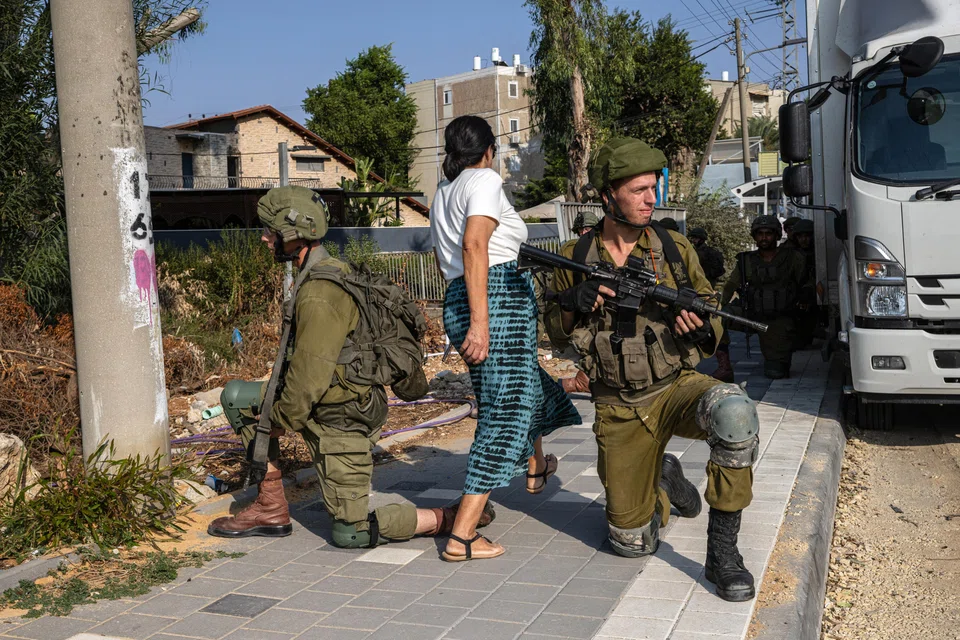
THIS year has seen some of the deepest divisions in Israel over domestic policy in recent times, yet, foreign affairs have again come to the fore of the nation this past weekend with the devastating terror attacks by Hamas, which may ultimately come to be seen as Israel’s 9/11.
The attacks on Saturday (Oct 7) represent the worst intelligence failure in Tel Aviv since almost exactly 50 years ago with the Yom Kippur war. So this is a significant historical moment, and one of the few certainties now is that a big Israeli military counter-response – which started over the weekend – will build in days to come.
An intelligence review is also underway into how the terrorist group Hamas was able to plan and launch such a carefully coordinated assault on Israel, seemingly in total secrecy. This is so surprising because Israel’s surveillance of Palestinian society is highly sophisticated.
World markets are also on edge after the attacks. While neither Israel or the Palestinian territories are oil producers, the Middle East accounts for a third of global output, and West Texas Intermediate (the benchmark for US oil) spiked on Monday (Oct 9).
The attack comes in the context of some of the deepest Israeli domestic divisions of recent decades, following controversial judicial reforms launched by the government of Prime Minister Benjamin Netanyahu. The surprise attack by Hamas may have sought to take advantage of this political and institutional crisis.
However, these Israeli divisions will be much reduced following the weekend’s attacks. Indeed, it is possible that Israel’s opposition leaders will form a joint emergency government with Netanyahu offering a unity government to bring in opposition Yesh Atid leader, Yair Lapid.
In the space of several hours on Saturday, it appears several hundred militants broke through the Gaza Strip’s border fence into southern Israel, surprising local military positions, with hundreds – if not thousands – of rockets also launched. Gunmen kidnapped and murdered Israelis in the southern border communities, filming their assault as they advanced in numerous locations.
The death toll has reportedly risen to more than 700 at the time of writing on Monday morning, with over 2,000 people injured. To put the first number into context, it is more than half of the roughly 1,300 Israeli civilians who have been killed by militants since 1993, when the Oslo Accords were signed.
The weekend’s military offensive by Hamas is without precedent in the more than 15 years since the terrorists took control of Gaza. Rarely, if ever, has Israel lost control of its own towns, and this is also the first time Palestinian forces have managed to seize territory inside the Green Line since 1948.
The Gaza-based militants’ act of hybrid warfare from land, air and sea used hundreds of rockets as the prelude to a mass breakout at multiple points along the normally impregnable border fence. On Saturday, more than half a dozen Israeli communities were reportedly under Hamas control.
The weekend’s attacks come after months of violence and rising tension between Israelis and Palestinians. Although most of the conflict has been concentrated in the West Bank, which is the territory Israel has occupied since 1967, that stretches between Jerusalem and the border with Jordan.
Following the devastating attacks, Israel has said that Hamas has effectively declared war on Israel. It is possible Tel Aviv will now perhaps put troops into the densely populated (two million people) Gaza Strip, where electricity, fuel and wider goods supplies have now been cut off by Israel. This is where many Palestinian people living there have little freedom of movement, and healthcare, electricity, sanitation and other crucial infrastructure have all but collapsed.
Key questions include what happens now – not just in and around Gaza – but also in the West Bank and Jerusalem, given the uptick in tensions there between Palestinian and Israeli forces.
There is also danger of a broader military conflagration, which could further impact world markets should the Iranian-backed terrorist group Hezbollah choose to escalate on Israel’s northern border with Lebanon, where artillery strikes were exchanged this past Sunday. The Lebanon-Israel border has been relatively calm since Israel and Hezbollah fought a war there in 2006, but tensions escalated in recent months.
Israel’s military is now on a war footing, with Netanyahu having called an emergency meeting of security officials on Saturday.
The prime minister has said that “the enemy will pay a price it has never known” for the attacks in what he called “a long and difficult struggle ahead”. The first stage of the Israeli counteroffensive is air attacks and the full scale of the Israeli response could be very large now, including troops on the ground in Gaza.
However, the next steps are full of risk for Israel. Hamas has taken a significant number of hostages, which according to the Israeli Embassy to the United States is more than 100 people. Palestinian groups have in the past used hostages as bargaining chips to secure the release of militants held by Israel.
For instance, Israel secured the release of its soldier Gilad Shalit by freeing more than 1,000 Palestinian prisoners in 2011. Around 200 had been on life sentences for preparing or carrying out attacks inside Israel. Overall, it is reported that there are around 4,500 Palestinians in prison, on what Israel defined as “security” grounds.
International reaction has almost universally condemned the attacks, including Brazil which holds the presidency of the United Nations Security Council.
On Saturday, US President Joe Biden spoke with Netanyahu. Biden and US Secretary of Defence Lloyd Austin have said they will ensure Israel has what it needs to defend itself and protect civilians from indiscriminate violence and terrorism. European leaders have also condemned the attacks, and EU security chief Josep Borrell has had calls with regional leaders including Egypt and Saudi Arabia, on the urgent need for cessation of hostilities, de-escalation, and the liberation of hostages and negotiations.
While the Hamas attacks have been widely condemned, the adviser to Iran’s supreme leader Ali Khamenei, Yahya Rahim Safavi, indicated his support at the weekend. He said: “We congratulate the Palestinian fighters. We will stand by the Palestinian fighters until the liberation of Palestine and Jerusalem.”
Moreover, Hezbollah also congratulated Hamas militants in a carefully worded statement. It said the attacks are a move against normalisation of international relations with Tel Aviv. This is probably a reference to Gulf nations, including Saudi Arabia, which has been in negotiations with the US regarding a potential peace deal with Israel.
Taken together, the weekend’s attacks may well be only the start of a huge period of intense conflict ahead. A big Israeli military operation is building, and a key question now is whether its adversaries may open further fronts, threatening a broader conflagration.
The writer is an associate at LSE IDEAS at the London School of Economics
TRENDING NOW

First Resources blames El Nino, outside fires for Kalimantan hotspots amid haze scrutiny

High Court rules against Julius Baer’s Singapore trust arm in US$50 million family trust dispute

Singapore key exports jump by higher-than-expected 68.4% in September, led by non-electronics

MSCI proposes standalone status for Indonesia; Jakarta stocks plunge 8%

