Developing countries win big at COP27 – but only in theory for now

Janice Lim
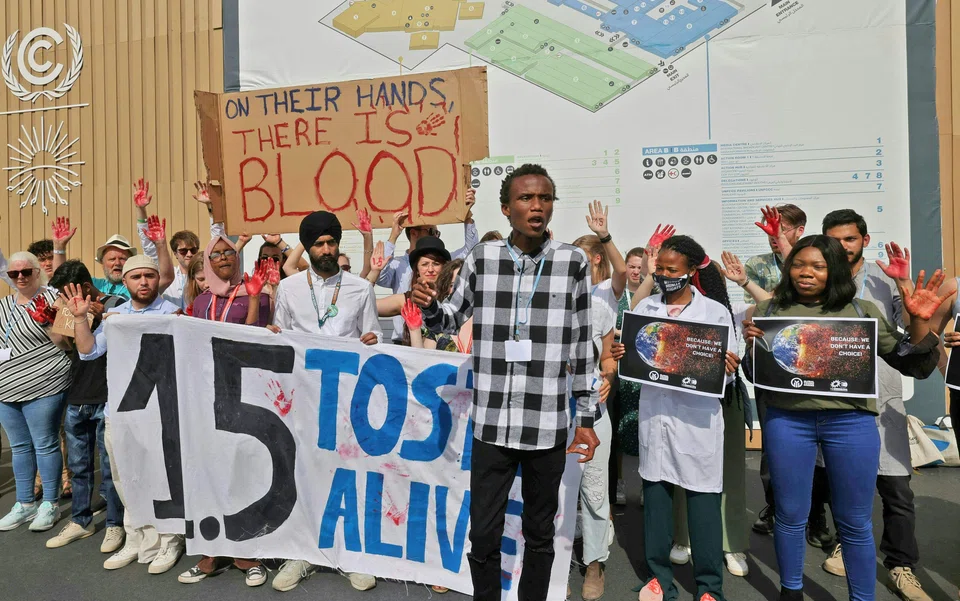
THE decision to create a loss-and-damage fund towards the end of negotiations at the 27th United Nations climate conference (COP27) at the Egyptian beach resort town of Sharm El-Sheikh was hailed as a historic moment since climate talks began decades ago.
Such a fund has been long shunned by the developed world over concerns of legal liabilities surrounding historic emissions, but developing countries and those vulnerable to the effects of climate change can now claim the fund as a diplomatic coup after years of pushing for it.
The establishment of this fund essentially means that developing countries, which often bear the brunt of the devastating impacts of climate change, are able to receive funding to cover permanent losses from extreme weather events.
But it could take several years before these countries actually receive anything through this fund.
The question of who pays, the countries eligible to receive this money and how it would be disbursed would have to be worked out over the next few years. The aim is to agree on the outlines of the fund and sources of financing by COP28, to be held in the United Arab Emirates next year.
Going by how long it took for the Green Climate Fund to come into being, some observers say it could take about two years for anything concrete to happen.
As one of the regions most vulnerable to climate-change effects, member countries of the Association of South-East Asian Nations (Asean) could stand to gain from the establishment of this fund. Countries such as the Philippines and Indonesia are already facing loss and damage from climate change.
And Asean countries could nominate representatives to be part of a transitional committee that would be set up to work out how the new funding arrangements for loss and damage are to be operationalised.
However, Asean nations have traditionally been less vocal about loss-and-damage financing, compared with African and Pacific island nations. It is unclear how much influence this region would have on the specific design of this new fund.
One factor that appeased developed nations enough to get the agreement across the line was that funds could come from a variety of “innovative sources”. This includes international financial institutions such as multilateral development banks (MDBs), but this also opens up a potential space for private-sector finance.
Grants offered through the fund or by MDBs could be used as public guarantees in a way that makes it attractive for private investments to come in, thereby opening up possible blended finance deals.
Another option for private-sector involvement is by taxing polluting sectors, such as those related to fossil fuels, and directing the tax collected to the loss-and-damage fund.
Outside of loss and damage, other blended finance deals were also underway, such as the US$20 billion Just Energy Transition Partnership (JETP) between Indonesia and several high-income nations, led by the United States and Japan.
The deal, which aims to help South-east Asia’s largest economy accelerate its shift from coal to renewable energy sources, while ensuring coal workers are able to make the transition to clean-energy jobs, will be split roughly 50-50 between public and private finance.
An initial US$10 billion in public funding will be provided over a three- to five-year period, contingent on the country peaking and limiting power sector emissions at 290 million tonnes by 2030. An additional US$10 billion in private capital will also be mobilised by the Glasgow Financial Alliance for Net Zero — the world’s largest coalition of financial institutions.
While critics have accused “just transition” advocates for using this approach as an excuse to slow down energy transition, its momentum grew at the climate summit. The Indonesia JETP follows from a similar arrangement inked with South Africa last year at COP26; talks are ongoing for similar deals with Vietnam and India.
COP27’s win over the creation of a loss-and-damage fund, however, came at the expense of stronger commitments to curb emissions, especially around the final wording on fossil fuels.
The COP27 deal text largely kept the wording from the Glasgow Climate Pact — the outcome of COP26 — and called parties to accelerate “efforts towards the phase-down of unabated coal power and phase-out of inefficient fossil fuel subsidies”. It also did not mention oil or gas.
Already, the increased presence of lobbyists from the oil and gas sector at COP27 has drawn criticism. The “polluter pays” principle, which is fundamental to loss and damage, may come under pressure, however, with COP28 heading to a petrostate.
Alok Sharma, the previous COP president, said that negotiators had to “fight relentlessly to hold the line of Glasgow”.
It remains to be seen whether this line can still be held in the UAE next year.