

Developing Gillman Barracks and Sunset Way: Don’t mourn losing some green spaces
Singapore has to constantly transform to meet evolving ‘live, work and play’ needs
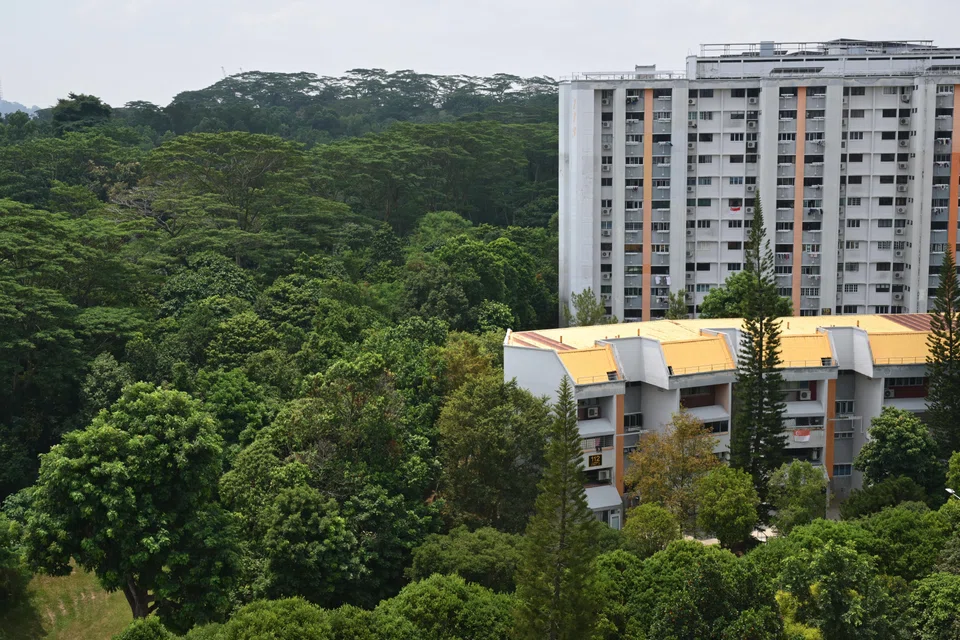
[SINGAPORE] Losing an unblocked view because a new block of flats is being built in front of one’s apartment. Having a favourite space taken away to make room for new flats; or, seeing a building, which one has nostalgic memories of, undergo redevelopment. What about losing a chunk of scarce forest for property development?
Unfortunately, all these are very much part of life for many Singapore residents.
Since independence, Singapore has been a city in constant transformation. Islandwide, spaces are being developed and redeveloped to meet changing “live, work and play” needs.
At this year’s National Day Rally, Prime Minister Lawrence Wong said that several islands in the west, including Semakau, Bukom and Sudong, may be merged into a larger island to support a new generation of industries.
Escaping the din of construction noise in the city-state is difficult.
Still, going forward, transforming plans to remake places into reality may get trickier.
Gillman Barracks and Sunset Way
On Jul 10, the Housing & Development Board announced plans to build new homes at Gillman Barracks and Sunset Way, following the completion of environmental and heritage studies on the impact of development on some 25 hectares (ha) of native forest.
Gillman Barracks, a former military site with heritage buildings off Alexandra Road, and part of the forest nearby will be developed into a 40 ha mixed-use residential neighbourhood with public and private homes.
Meanwhile, the Sunset Way site in Clementi will be developed for public housing.
In the initial plans for the sites, which were developed with the involvement of nature groups, about 40 per cent of the green spaces in Gillman Barracks and 35 per cent in Maju Forest in Sunset Way would be retained.
Not surprisingly, the plans drew public outcry from residents and nature groups.
Subsequently, following public feedback, the government said that more green spaces in Gillman Barracks and Maju Forest would be retained, with the trade-off being that fewer homes can be built on both sites.
Still, a rally at Hong Lim Park – held shortly after the government announced that it would keep more greenery at both sites – saw participants calling for greater transparency in land-use decisions and voicing concerns over the loss of green spaces.
Nevertheless, the government’s adjusting of development plans at Gillman Barracks and Sunset Way can arguably create a win-win outcome – new homes will be built to meet housing needs, while concerns of residents and nature groups are also being addressed.
However, on reflection, what has unfolded regarding plans to develop the two sites may hold worrying signs.
Sure, residents love having green spaces nearby. Enjoying easy access to such spaces can boost physical and mental well-being.
Still, could some passionate calls to preserve green spaces near one’s home be driven more by owners wanting to have lush green spaces surround their residences because this helps push up the prices of their properties?
After all, in a nation with a high homeownership rate, a home accounts for a large part of the net worth of many resident households.
In future, might urban planners go slow when drawing plans to transform various areas because they fear intense public scrutiny and even incurring the public’s wrath?
Also, residents who are affected by future development plans could become increasingly vociferous in pushing back on the said plans.
As the world undergoes tremendous shifts driven by geopolitics and technological advances, constant changes in the Republic’s urban landscape can exacerbate the sense of unease among people.
Nonetheless, given its land scarcity, Singapore likely has to continuously transform its cityscape to support the economy. In turn, a strong economy creates good jobs and generates tax revenue to fund the needs of an ageing population.
Having new property developments and redevelopments that meet housing, business and leisure needs will help draw businesses and talent to the Republic.
Population growth
Crucially, finding land to build homes to meet rising housing demand from household formation and population growth is a must.
In 2025, Singapore’s total population was about 6.11 million, up 7.5 per cent from around 5.69 million in 2020 and 10.4 per cent from around 5.54 million in 2015.
Last year, the number of resident households was about 1.49 million, up 8.3 per cent from around 1.37 million in 2020 and 21.4 per cent from around 1.23 million in 2015. More homes are needed amid rising demand by singles and couples to live independently.
Indeed, while many young people here can become homeowners, those in many global cities struggle to achieve such dreams – in part because objections by existing homeowners to new developments help create a housing shortage. Housing shortages in these cities cause social cohesion to fray, and the economy to be hurt.
With its stability, sophisticated economy, strong governance and good infrastructure, Singapore is attractive to many potential migrants.
If migration is to play a key role in driving population growth, having ample housing supply matters, so that home prices can be kept at reasonable levels.
And growing the population is vital, so that there are more working-age people as well as new ideas to drive the economy.
Government actions
Government actions play a major role in the local housing market. The government can both be friend and foe to property developers and owners.
Homebuyers face tough measures that are aimed at preventing speculation in properties.
When the government develops an area, some residents may be negatively affected. Think of losing some precious green space nearby or greater congestion due to the building of new homes.
Furthermore, could erecting a new crematorium near one’s home create a huge outcry?
Still, on the positive side, homeowners often benefit substantially from the government’s development plans.
Think of how building new MRT stations, parks, healthcare facilities, malls, sports amenities and so forth near residential properties add significant value to the said homes.
Perhaps, even more importantly, if the government can constantly transform Singapore to meet changing “live, work and play” needs, the economy thrives and housing prices, in general, rise.
Invariably, while taking in the views of residents, nature groups and heritage advocates is critical when the government works on strategies to develop places, no plan can please everyone. And some ideas might benefit many people, while hurting some others.
Singapore needs to progress and transform. Let’s not shed tears when beloved physical spaces are carefully and sensitively, yet boldly, transformed to meet the growing, as well as changing, needs of people and businesses.
TRENDING NOW

Once staunchly pro-China, Malaysian Chinese businesses are now distancing themselves from Beijing

Looking beyond looming CEO succession, should UOB potentially pursue a transformative merger?

Could stablecoins be the future of money?

Grab CEO’s wife Chloe Tong on life with Anthony Tan and finding her purpose

