

Digital twins can future-proof South-east Asia’s urban development
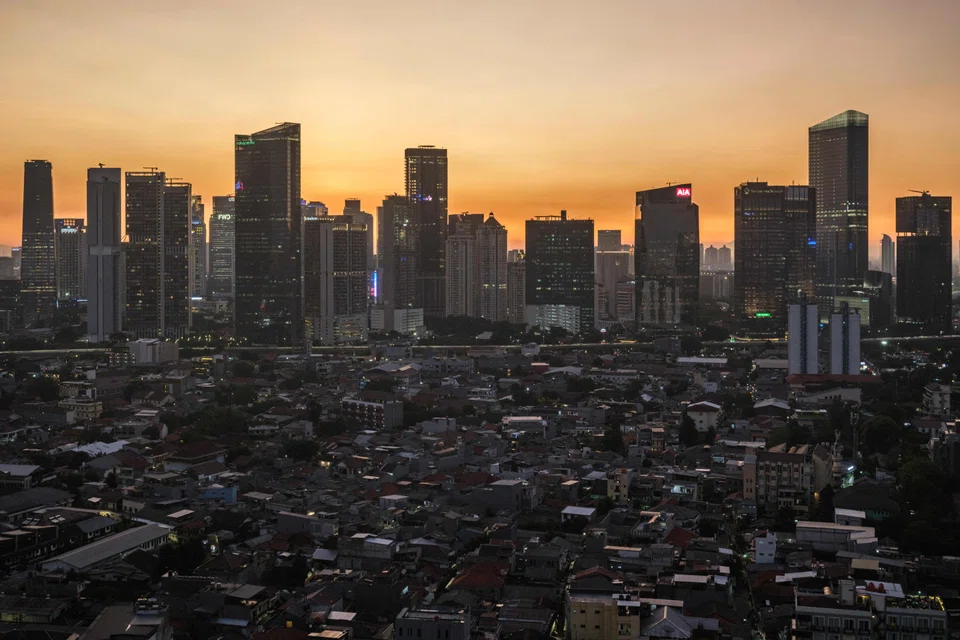
FROM the bustling roads of Bangkok and the soaring skyscrapers of Singapore, to the sprawl of Kuala Lumpur and Hanoi, South-east Asia’s metropolises are at the forefront of economic growth and future sustainable development.
Across the region, these dynamic cities are undergoing rapid urbanisation, attracting a constant influx of newcomers, offering economic, social, and cultural opportunities. Indeed, the United Nations Human Settlements Programme (UN-Habitat) sees urbanisation as a defining megatrend of the 21st century.
South-east Asia has been forecast to emerge as a powerhouse driving global economic growth, with anticipated growth rates of close to 5 per cent, snapping back from pandemic-led disruptions. Nevertheless, the region’s long-term prosperity faces a critical challenge in the form of an infrastructure gap, owing to population growth.
It’s clear that the region’s cities aren’t quite ready to handle such explosive growth, with prevailing issues such as traffic gridlocks, port congestion, and around waste management.
What’s more, the Asian Development Bank has warned that in the face of extreme climate events, disaster risk management has to be factored into the design and planning of all infrastructure works – which includes everything from buildings, roads, public transport, and water supply – to enable communities to be more resilient.
For South-east Asia’s cities to withstand the challenges posed by tomorrow’s urban population, governments must seek more intelligent approaches to urban design and management, while remaining focused on mitigating sustainability concerns.
Embracing technology within construction is the ultimate way forward, empowering developers and city planners to conceptualise, simulate and optimise the design of buildings and infrastructure, in alignment with the evolving needs of an urban population.
Rise of digital twins in urban planning and construction
Conventional construction methods can create difficulties in achieving optimal outcomes as a result of the growing complexity of projects on physical, commercial, environmental, and societal fronts.
Typically, these processes are characterised by manual-intensive methods, siloed technology, and communication gaps throughout the project’s life cycle.
In contrast, technology-enabled workflows such as common data environments and interconnected construction processes operate with a greater emphasis on collaboration, providing teams with the means to overcome the resource limitations that have historically constrained the construction industry.
It’s widely acknowledged that the architecture, engineering and construction (AEC) industry has been slower in adopting digitalisation and data-driven decision-making compared to other sectors.
However, a transformation is certainly under way, as industry experts recognise the need to adopt new mindsets and work practices to design mission-critical aspects of modern cities. Climate change issues and disruptive technologies are here to stay, and the built environment industry needs to rise to the challenge with innovation and adaptability.
With the Internet of Things (IoT), artificial intelligence (AI), and cloud computing technologies propelling digital transformation in the AEC industry, digital twins are rapidly gaining prominence as an innovative solution that urban planners need to address liveability in South-east Asia’s cities.
Digital twins aren’t just the latest shiny tool, but rather a technology that is solving major challenges in both design and operations, unlocking greater potential for optimising the built environment.
Unlike a static digital model or a fixed simulation, a digital twin is dynamic and ever-evolving.
Just as the completed building undergoes changes in response to its use, the digital twin mirrors these shifts to forecast outcomes. It remains responsive, continuously adapting as it receives additional data, including insights from AI and data from sensors, to simulate real-world conditions and make predictive decisions based on a building’s actual state.
As a result, digital twins can help urban planners identify and solve current and potential problems in cities by enabling them to mimic their localities’ environment on a screen, allowing users to visualise how proposed designs impact everything in the real world.
In the energy sector, for example, utility providers are using digital twins to optimise power generation, distribution, and consumption. By creating a digital twin of a wind farm, organisations can recreate a virtual representation of the farm’s layout, turbine specifications, environmental factors, and even the surrounding terrain.
With the integration of real-time weather data, historical energy consumption patterns, and turbine performance data, organisations can predict energy production volumes and anticipate demand fluctuations.
In another scenario, the technology can also help create new ways to prepare energy facilities, often considered critical infrastructure, against unexpected events such as flooding, by helping to improve drainage design and management of waste water.
Creating liveable cities through innovation
However, one of the most compelling aspects of digital twins lies in retrofitting, focusing on enhancing the original structure by introducing new elements. Users are increasingly working to make and retrofit net-zero energy buildings, reduce embodied carbon, and decrease construction waste, towards smarter and more sustainable cities.
For instance, a global engineering firm harnessed reality capture and digital twin capabilities to revamp a multi-storey headquarters building, achieving a substantial 70 per cent reduction in the total cost of ownership when compared to constructing a new facility.
Amid initiatives such as #BuildingtoCOP28 and the implementation of more rigorous regulations, sustainability is assuming a more significant role in the AEC industry. In this landscape, digital twins are emerging as a particularly promising avenue and there is a growing consensus on the need to prioritise this technology to effectively address the sustainability crisis.
As urban populations across South-east Asia continue to grow, we are also seeing more collaborative efforts from governments – such as Virtual Singapore – for use in simulations and virtual tests of new solutions to urban planning problems.
Infrastructure underpins all vital aspects of economic activity, being key to national prosperity in a competitive global environment.
Although the swift pace of urbanisation does not always spell prosperity and development, progressive cities are getting on board with technologies that help create liveable cities for the future.
The writer is senior director for construction, Asia-Pacific & Japan, at Autodesk
TRENDING NOW

Knight Frank’s Tan Tee Khoon leaves firm, Nicholas Keong takes over auction business
Keppel Energy, Sembcorp Utilities and Tuas Power to supply biomethane in pilot project

GovTech retrenches another 38 staff in second round of layoffs
Take-up of new private homes dives 45% in Q3 as prices accelerate with 1.4% rise

