Digitalisation is opening up new opportunities for shipping supply chains
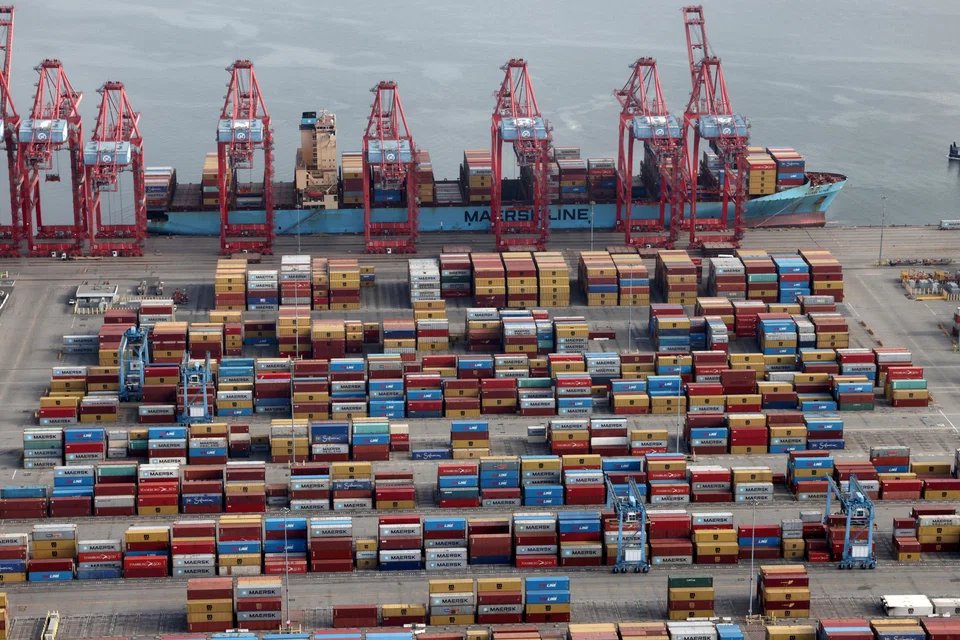
FROM the food on your table to your household products and the smartphone in your hand, most goods and materials enter the shipping supply chain at some (or several) points prior to their manufacture or sale.
Thanks to innovations in container shipping, the world’s trade is transported efficiently and seamlessly by one of the world’s oldest professions. So seamlessly, in fact, that you may only have become aware of the fragility of this carefully choreographed industry when the pandemic struck, causing congestion and disruptions to the just-in-time supply chain on which we all rely.
Of course, the pandemic opened our eyes within the industry, too. In particular, it highlighted that we could do more to make shipping and the supply chain more transparent, efficient, secure and sustainable. As an industry, we have already begun to explore and embrace greater automation and digitalisation. However, we still rely on many manual and paper-based processes and practices, some of which can be traced back centuries to the very origins of shipping.
Momentum for change, but the task is huge
The world is becoming increasingly digitalised, and the shipping sector cannot be an exception. But achieving digitalisation of vessels, containers, documentation and processes is an enormous task, not least because of the sheer size and reach of the container shipping industry.
It is estimated that around 58,000 merchant ships transport more than 11 billion tonnes of trade from one continent to another each year. Singapore is key to this vast ecosystem. As the world’s busiest port in terms of shipping tonnage, Singapore sees an average of 140,000 vessel calls each year. The republic is also the world’s busiest transshipment hub, accounting for 20 per cent of all transshipment traffic.
Upgrading and digitalising the intricate systems that keep this vast and vital industry afloat comes with enormous complexity and challenges. Take, for example, the vast number of parties involved in the global shipping supply chain, from ocean carriers to port and terminal operators, customs organisations and regulators, to name just a few. Each of these stakeholders generates data from different sources, using diverse languages and formats, making communication and interoperability difficult and time-consuming.
To further complicate the picture, ports and vessels are subject to forces outside our control, such as adverse weather and unexpected events, including port congestion, stevedore mishandling, and even earthquakes and pandemics. Such incidents are hard to predict, so shipping companies and ports must be able to act quickly to adapt to changing situations while keeping other stakeholders up-to-date. This makes real-time communication especially crucial.
Digitalisation in shipping is well underway
Internet-of-Things (IOT) technology is already helping us to navigate these challenges effectively. For instance, through our adoption of “smart containers”, standard containers equipped with an Internet-connected device to allow real-time tracking and monitoring.
As important has been the development of industry standards by the Digital Container Shipping Association (DCSA), which MSC is proud to support as one of its nine ocean carrier members.
Such standards provide the foundation for digital transformation across our industry by enabling knowledge and data sharing across all stakeholders in the shipping supply chain. They also add momentum to our own ambitious goals to boost digitalisation across our operations by providing the consensus necessary to replace age-old manual, paper-based processes with robust digital equivalents.
For example, MSC launched an electronic Bill of Lading (eBL) solution in April 2021 to simplify, secure and speed up the shipping experience for customers. The Bill of Lading is the single, most important document in international shipping: it is a legal document that details the type, quantity and destination of the shipped cargo and, when passed from one party to another, it serves as a shipment receipt.
By converting the traditional, paper-based Bill of Lading (BL) into electronic format and sharing it securely via the blockchain, MSC’s eBL solution removed the time, costs and risks (such as theft, loss or forgery) associated with the paper-based BL process. However, for the eBL to succeed, we also needed the entire industry, including our competitors, to also adopt this solution.
That’s why we are excited that the DCSA has not only launched its eBL standards, but that all its member carriers, including MSC, have committed to transition to 100 per cent use of eBLs by 2030, with an intermediate target of 50 per cent within five years.
I believe this 100 per cent eBL commitment will be a critical digital turning point for our industry. It will speed up the shipping process for customers and facilitate the implementation of other forms of e-documentation (such as the certificate of origin and packing list) in the future.
Ours is a vital industry that relies on age-old practices to function effectively. By working together, we can make further progress to embrace digitalisation and achieve our vision of 100 per cent frictionless trade.
Andre Simha is global chief digital and innovation officer of Mediterranean Shipping Company (MSC). He will be part of the “Digital and Green Shipping Corridors” panel at the Singapore Maritime Week, April 24-28, 2023.