

The distortionary effects of ABSD on the property market
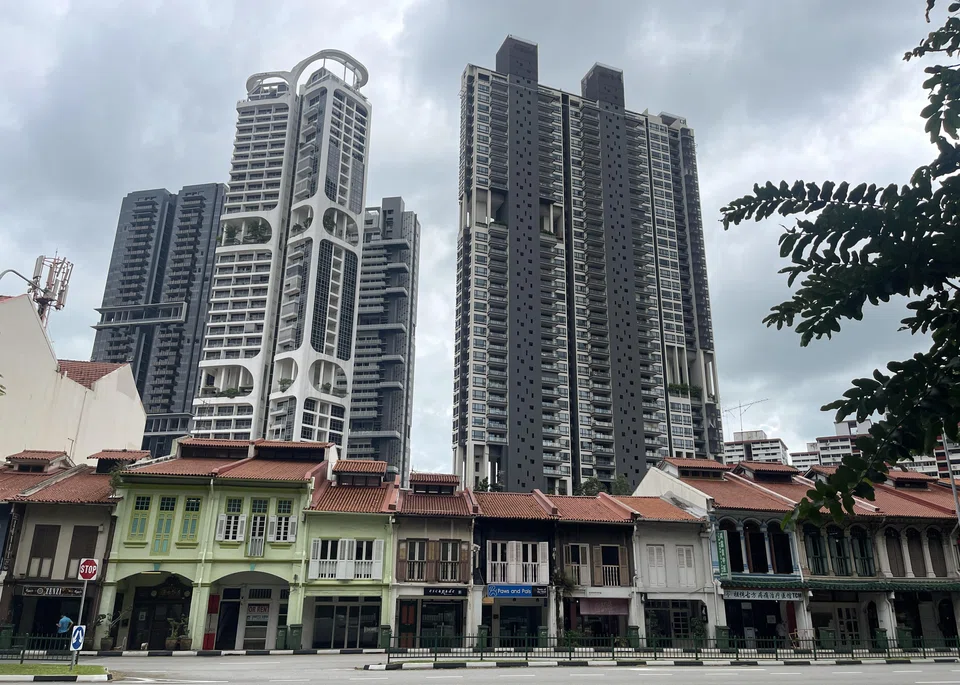
I READ the article Let local couples jointly own two private homes without incurring ABSD (BT, Jan 8, 2024) with interest and thought that the suggestion certainly makes sense. Why would two individuals be allowed to own two separate properties, but a married couple be restricted to one? Certainly, one could view this as a clear disincentive to tie the knot.
On the other hand, one could also argue that owning two properties is decidedly a “first world” problem that few Singaporeans can even dream about. While the writer’s suggestion is entirely logical in my view, I could also understand why the authorities may want to discourage this from a macro-prudential as well as “equality” standpoint.
However, I would like to point out that the impact of Additional Buyer’s Stamp Duty (ABSD) goes far beyond couples trying to own multiple properties. It is another group of people, who ironically cannot afford to buy the additional property, who arguably suffer the most. These are the homeowners genuinely looking to upgrade or downgrade from their current homes and have the budget for only one property.
Under current rules, while ABSD is refundable if the first property is sold within six months, the full ABSD needs to be paid upfront in cash at the point of purchase of the second property – a huge cash outlay for most. Arguably, when the ABSD was 7 per cent around 10 years ago, this made sense as the ABSD served as a dampener on the hot property market, so only those with a cash buffer could afford the purchase. One could argue that this was prudent in the larger scheme of things – for a S$1.5m property, the ABSD amounted to about S$100,000. It is no small sum, but arguably affordable for the common man, being the price of a small car then.
Fast forward to 2024, the ABSD is now 20 per cent. Going by the example in the article, the total stamp duties (ABSD plus buyer’s stamp duty, BSD) would amount to S$345,000. I question whether any couple who has a budget only for a S$1.5m property would have S$345,000 idle cash just to pay the stamp duties, on top of the 25 per cent downpayment? It might all just earn an invite to a kopi session with the Corrupt Practices Investigation Bureau.
So the financially savvy ones would game the system, by “decoupling” before committing to the new home. But again, only in a relatively small number of cases would we see both partners having sufficient financial power to exploit this loophole. Others will resort to selling their first property before buying a second. You can understand why many prudent homeowners would not want to do this: Firstly, timing the sale and purchase simultaneously would seriously lower one’s bargaining power on either the buying or selling side.
The alternative would be to sell the first property and temporarily rent before buying. Again, this has serious drawbacks, including the inconvenience of potentially having to move twice (into a rental property before the new home, and indirectly contributing to the rental market boom). Furthermore, in this seemingly evergreen property bull market, there is no assurance that one would be able to find a suitably-priced property after selling the first. This would again mean that the buyer will have “no choice” but to buy quickly due to rising expectations.
If a couple wants to avoid jumping through hoops to land a new home in the resale market, the remaining choice is to opt for new developments. I suspect many are opting for this route because it is the only one that will allow for progressive payments over the two-to-three-year development cycle and enable buyers to plan their cash flows. No doubt the ABSD will still be a big deterrent, but this could be the least painful option. Any wonder then why new developments, with their trademark ever-higher per square foot (psf) prices and ever-shrinking apartment sizes, are snapped up at launch? Anecdotally, most of these buyers seem to be local.
In my view, it is another distortion caused by the ABSD that buyers are forced into the most expensive option, due primarily to it being the “most affordable” from a cashflow management perspective. The main beneficiaries are, of course, the developers. But the unintended impact on the market is that it artificially drives up psf prices because developers control the bulk of supply at any given point in time and space.
Then resale prices take the cue from primary sales and follow suit even though there is hardly any liquidity. And with the ABSD rules inadvertently helping rents, I cannot help but point out that this looks very much like a classic vicious cycle.
I would like to conclude by offering some suggestions. If it stands to reason that residential properties are, by definition, purpose-built for living, then a different set of rules should apply for people who are genuinely trying to find a new home. This is not unlike the current discussion to bifurcate the COE market between car buyers and rental companies. It would be obvious to point out the many social and financial repercussions if we prevent people from right-sizing their homes whether upwards or downwards over a long period of time, be it for reasons of expanding families or downsizing in financial distress, retirement planning, etc. I feel it is high time to finesse the ABSD rules. The sledgehammer has a purpose, but after a decade of suffering as collateral damage from ever-rising ABSD, perhaps a more targeted solution could be tweaked for genuine homeowners.
Joshua Ang
TRENDING NOW
Stocks to watch: CapitaLand Ascott Trust, Keppel Infrastructure Trust, iFast, ESR Reit, First Sponsor
Indonesia says gas export cuts to Singapore remain within contract terms

If Europe goes to war, the fallout will be felt in East Asia

Government to bring forward raising of retirement age, give employers more financial support to create flexi-load jobs

