

Divisive trillion dollar deal that (nearly) sank COP29 summit
It will provide around US$300 billion a year for the Global South by 2035
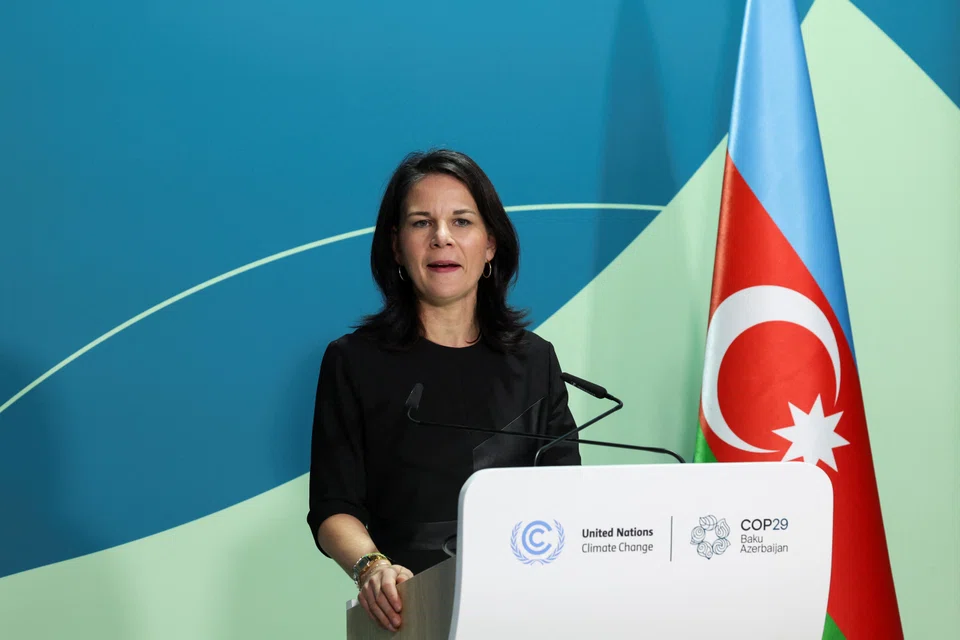
AT THE COP15 climate summit, in Copenhagen in 2009, then-US secretary of state Hillary Clinton told then-US president Barack Obama that the event was “the worst meeting I’ve been to since eighth grade student council” of 13 to14 year olds. However, the just-concluded COP29 in Baku may have seized this mantle of the worst ever organised annual UN-hosted global warming event.
This is not just embarrassing to the Azerbaijani hosts who – grandly – billed the event as a landmark “finance COP”. It also threatens the legitimacy of future climate summits, including Brazil’s COP30 next year which will now require supreme political skill to organise.
Several times last Saturday (Nov 23) the talks threatened to collapse completely. This included a walkout by dozens of countries from the Alliance of Small Island States, which represents countries that are most vulnerable to climate change.
To be sure, some potentially important deals were transacted at COP29. This includes the carbon market agreement that potentially clears the path for nation-to-nation carbon trading and the creation of a regulated global market. Carbon markets are one of the most controversial parts of environmental policy, with mixed evidence that they have been largely effective so far at reducing and removing carbon in the atmosphere. So there are divisions between countries about how they should work.
At COP28 last year, for instance, the EU blocked the agreement due to discord with the United States about technical rules on the creation, trading and registry of carbon credits. Now, they have found compromise, potentially opening up a path for carbon to join oil, gold and other commodities on international markets.
Plastic waste
There was also significant focus on plastic waste at COP29, a discussion which will now be continued at the Global Plastics Treaty final negotiations this week (Nov 25 to Dec 1) in South Korea. This fifth and final session of the Intergovernmental Negotiating Committee on Plastic Pollution is intended to finalise the text of the treaty.
This comes after fresh data shows how some firms in the Alliance to End Plastic Waste (AEPW) have generated massive amounts of new plastic in the past half decade. The AEPW was set up by corporates who collectively pledged to divert 15 million tonnes of plastic waste from the environment in the five years to end-2023, by enhancing collection and recycling, and bolstering a circular economy.
However, new analysis by data specialists Wood Mackenzie, obtained by NGO Greenpeace, reportedly showcases that a handful of firms alone generated 132 million tonnes of two types of plastic – polyethylene and polypropylene – in five years. Astonishingly, this is around 1,000 times the weight of the 118,500 tonnes of plastic waste which AEPW has removed from the environment in the half decade period.
Ultimately, a divisive overall climate finance deal of sorts was agreed on Sunday (Nov 24) in Azerbaijan, more than 30 hours after Friday’s deadline. This will provide around US$1.3 trillion on climate finance for the Global South by 2035, or around US$300 billion a year.
However, how sustainable those arrangements will prove in practice remains to be seen given the largely loveless nature of the agreement. India, for instance, was incandescent at the deal being so quickly gavelled through, asserting that Global South nations were not allowed to voice strong dissent.
The deal’s fragility will be especially relevant given a new era of international relations ahead with the second US presidency of Donald Trump. It seems highly likely that Trump will try to pull Washington out of the 2015 Paris climate agreement again, as he attempted in 2017 before President Joe Biden rescinded the four-year sunset clause.
However, this time around, other politicians of a right-wing populist ilk might follow Trump’s lead. This includes Argentina president Javier Milei, a key G20 leader, who withdrew his country’s negotiators from COP29.
Even before the new Trump presidency starts, there are growing geopolitical divisions plaguing global climate talks, as shown at Azerbaijan. The divisions are sometimes characterised as Global North (or developed nations) versus Global South (emerging markets) but the reality is more complex.
To be sure, developed nations have concerns about committing too much money to climate finance for the Global South. One of the reasons is worries about what Trump’s return to the US presidency will mean, and they did not want at COP29 to overcommit to a figure that they ultimately cannot deliver.
However, schisms go well beyond this Global North-South dichotomy. For instance, one of the critiques at COP29 that came to high prominence is the blocking role of so-called petrostates.
On Saturday, German Foreign Minister Annalena Baerbock became the latest Western politician to slam such nations for their “geopolitical power play on the backs of the poorest and most vulnerable countries…We will not allow the most vulnerable, especially the small island states, to be ripped off by the few rich fossil fuel emitters who have the backing, unfortunately, at this moment of the President (of COP29)... (in) the last stand by the old fossil fuel world”.
Baerbock has not only Azerbaijan in her sights here, but also several Middle Eastern nations. Her argument is that these countries are blocking ambition with climate diplomacy and the energy transition, and also that they -- while technically developing nations -- are wealthy enough to start contributing towards global finance funds for poorer nations.
Need for new model
What all of this bickering points to is the growing need for a new model for world leaders now to try to settle the increasingly thorny challenge of global climate diplomacy. COP29 has been a step backward with the “can being kicked down the road” on key questions critical to the future of the planet.
As former US vice president Al Gore, now chairman of The Climate Reality Project, highlighted, “we cannot continue to rely on last-minute half measures. Leaders today shirk their responsibility by focusing on long-term, aspirational goals that extend far beyond their own terms in office. To meet the challenge of our time, we need real action at the scale of months and years, not decades and quarter-centuries”.
Much of this mess may now fall to the Brazilian government to try to tackle in 2025. However, this will not be easy given growing geopolitical divisions.
Beyond the Global North versus South disagreements, the disruptive role of petrostates and right wing populists is also key. Amid this division, the danger for future COPs is that only a bare minimum will be agreed, even if outright failure is avoided, as in Azerbaijan, when the world needs much more.
The writer is an associate at LSE IDEAS at the London School of Economics
TRENDING NOW
Malaysian king buys stake in Singapore-listed mining firm expanding into rare earths

Grab CEO’s wife Chloe Tong on life with Anthony Tan and finding her purpose

Once staunchly pro-China, Malaysian Chinese businesses are now distancing themselves from Beijing
Longer wait times expected as S’pore healthcare institutions report system disruptions

