Do 70,000 people really need to be at a climate confab?
The expanding crowd risks overshadowing the purpose and turning the meeting into another celebrity-studded gathering of rich people
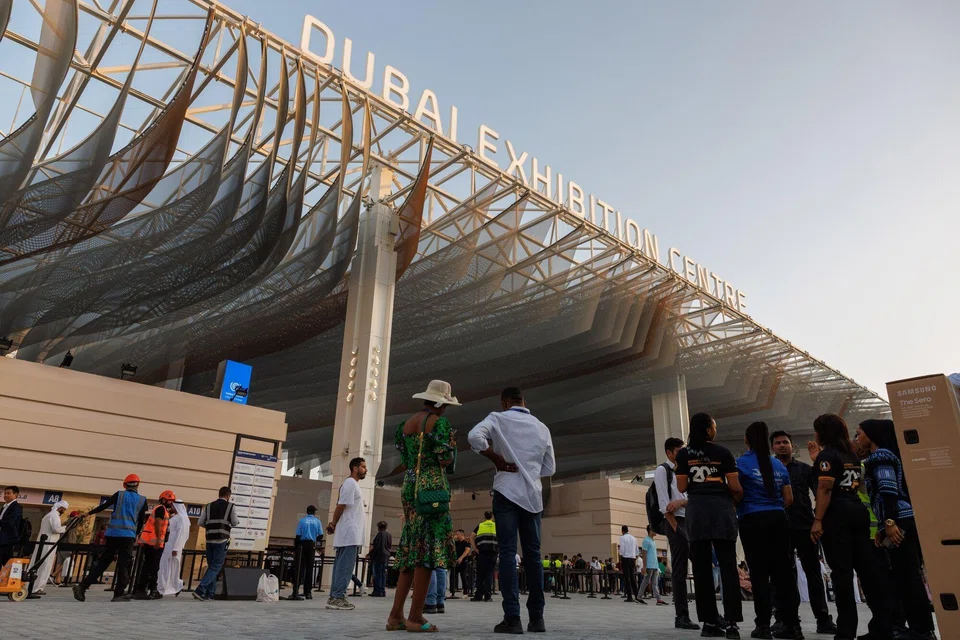
HOW many people do you think it takes to hammer out a global climate agreement? 500? 5,000? 50,000?
Apparently, the correct answer is 70,000. That is about how many people are expected to turn up in Dubai over the next few weeks for COP28, the latest United Nations climate confab, which started on Thursday (Nov 30). This is up from 49,704 at COP27 last year in Sharm el-Sheikh, Egypt, and 38,457 at COP26 in Glasgow, Scotland. Attendance has more than tripled since 2019. In COP’s early years, attendance averaged just 5,000.
Whether this explosion is a sign that the world is taking climate change more seriously, or just the bloat that naturally accumulates around gatherings of humans who control large pools of political and financial capital remains to be seen. Is COP Man devolving into Davos Man? The answer depends partly – but not entirely – on how much real progress gets made over the next few weeks.
On that front, it is difficult to be optimistic. Many of those 70,000 people will spend days continuing a years-long argument over whether the world should phase fossil fuels “out” or “down”, or whether those fuels should instead be “abated” by (iffy so far) carbon-capture technology. Meanwhile, big oil producers are still moving full steam ahead on phasing those fuels up, rapidly shrinking the window of opportunity to limit global heating to just 1.5 degrees Celsius above pre-industrial averages.
“If the ‘success’ of COP was directly proportional to the number of delegates in attendance, COP28 would be a sure-fire triumph,” David Oxley, head of climate economics at Capital Economics, wrote in a note. “However, at best, we suspect that the law of diminishing marginal returns holds true.”
If one wanted to be nitpicky about it, one could argue that 70,000 people riding airplanes to an oil country on the Arabian Peninsula to talk about climate change feels a bit like staging an AA meeting in a Fort Lauderdale nightclub during spring break. You risk losing sight of the purpose.
To be fair, if those 70,000 people all fly commercial, then their climate impact might not be too ludicrous. A first-class round trip from New York’s John F Kennedy International Airport to Dubai produces roughly 3 tonnes of carbon dioxide emissions per passenger, according to a UN calculator. That is less than a quarter of the carbon pollution the average American produces in a year. Flying economy cuts that impact in half again.
By comparison, Taylor Swift’s private jet flights produced nearly 8,300 tonnes of CO2 in 2022, by one estimate. Then again, 70,000 people producing 210,000 tonnes of CO2 for one Dubai shindig is the equivalent of more than 25 Taylor Swift years.
And untold scores of those COP attendees will not be flying commercial. They will be taking private jets, which generate 100 times more carbon pollution per passenger than commercial ones. At least 100 private aircraft flew to Sharm el-Sheikh last year, and 118 flew to Glasgow in 2021. This year, King Charles, Rishi Sunak and David Cameron are each taking their own private jet from the UK to Dubai. Jetpooling is a thing, you guys. Just ask Taylor.
The standard defence to such excess is that, in order to get very important people to very important talks, you might have to accept a risk that less important people will suffer a bit more sea-level rise, drought or wildfire in the future. And as climate talks have become more complicated, they have naturally required more bodies to work on them.
This year’s COP will not just be haggling over words like “down” and “out”. It will also involve detailed negotiations over climate finance and a “stocktake” accounting of exactly how far the world has come in fighting climate change (spoiler alert: not very). It might also involve fossil fuel companies pledging to end methane emissions by 2030, which would actually be a huge development.
Still, if these meetings are to be constructive in the future, then they will need to consider bloat. In a 2021 study, the European Capacity Building Initiative (ECBI), a group focused on making climate talks less terrible, suggested COPs of 20,000 attendees were already too distended. It argued for pruning COPs back to 5,000 people doing the boring technical work of putting treaties into action.
Other business could be spread across smaller confabs throughout the year, the ECBI suggested, including a “Global Climate Action Week” that would fulfill humanity’s need for dog-and-pony shows attracting the world leaders, celebrities and grifters currently turning COP into Green Davos. That still sounds like a lot of flying, unfortunately. But maybe it would be more productive, too. BLOOMBERG