

Do AI-generated works infringe copyright?
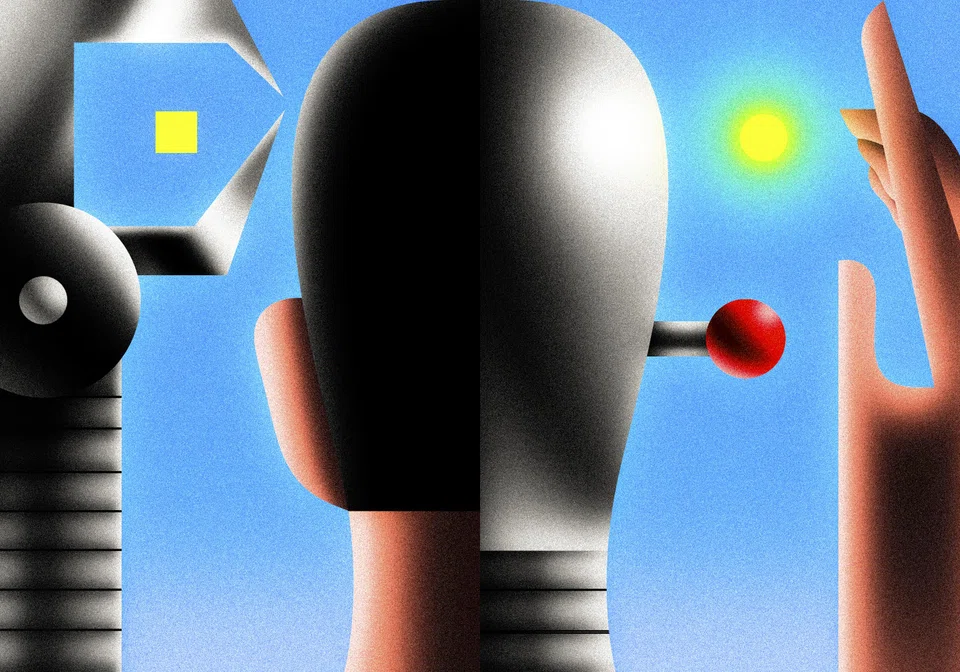
ARTISTS on online platform community ArtStation recently protested against artificial intelligence (AI)-generated artistic work. This arose when AI-generated work surfaced on the platform. This saga highlights an issue confronting artists and any of us who own copyright: Do AI-generated works infringe intellectual property? Do people have recourse regarding use of their work in generating AI work?
AI art software such as DALL-E 2, Midjourney AI and Stable Diffusion create images based on prompts or images inputted by a user. Other AI software produce textual works, for example, ChatGPT, a chatbot operated by OpenAI. A user can type questions into a text box and the software will respond conversationally. These AI software have produced impressive photorealistic images and natural language responses.
The AI systems powering such software have been fed with existing image and text data, and trained through machine learning. As AI systems require substantial data for training, much of the data fed into such systems are images and text scraped from the Internet. However, one problem is that AI software can produce images or copies of copyright-protected works. OpenAI, which runs DALL-E 2, has recognised this risk for its AI model.
Does AI-generated work or the making or use of such AI software infringe intellectual property, in particular, copyright?
Under the Singapore Copyright Act, copyright infringement happens when a person has, without permission, made a copy, published, or communicated to the public, a copyrighted work. To “copy” includes making a reproduction in any material form or storing the work in a computer or any medium by electronic means. Both the input and output processes of AI models must be analysed.
Input
Data processing in machine learning may or may not involve copying or storing of copyrighted works. If not, there may be no infringing act at all. However, if there is copying, the question is whether it is “fair use” or comes under some exception.
Copying may occur when copyrighted images are inputted into the AI model. Often, text and images from the Internet may be scraped for such purposes. This is essentially data mining.
In recent amendments to the Copyright Act, a “computational data analysis” exception to copyright infringement was introduced for data mining. That means “using a computer program to identify, extract and analyse information or data from the work”. There are conditions to this. Thus, if a person training an AI model with copyrighted works fulfils the conditions, such data mining would not be copyright infringement.
However, if the development of the AI model does not come under the above exception, it may still be considered fair use, not an infringement. The fair use exception in the Singapore Copyright Act is similar to that in the United States. The US case between Authors Guild and Google is instructive. There, Google undertook optical character recognition (OCR) scanning and digital copying of entire books without permission for its Google Books search. The court found this was fair use as the use was “transformative” – its purpose was to allow the public to search digital copies of the books, not for reading the whole book.
Some would argue that data mining for training AI models is similar and thus should be deemed fair use. However, it is unclear whether AI-generated works sufficiently repurpose or re-characterise the original data to be deemed “transformative”; would it be considered the use of copyrighted works for (i) training an AI model (presumably, a different purpose), or (ii) the ultimate purpose of generating works similar to the original works?
Output
Infringement could happen if the output reproduced a copyrighted work or a substantial part of it. However, this is generally unlikely. Many AI systems are designed not to output reproductions, but processed data based on inputted works. Such AI art software use a diffusion model which generates data similar to the training data, by adding random Gaussian noise and then applying a reverse noise diffusion process. Also, AI software developers like OpenAI expressly mitigate the risk of “image memorisation” by “deduplication”, that is, removing similar images in the data set. Hence, if one enters the prompt “Mona Lisa”, the output is likely not the famous painting by Leonardo da Vinci but an image similar to that painting and likely in the same style.
Importantly, an artist’s style is not subject to copyright protection. If a user generates images based on the style of an artist but is not substantially similar in content to that artist’s work, it is unlikely to be deemed an infringement.
Of course, it is possible that an AI-generated work qualitatively or quantitatively reproduces a substantial part of someone else’s copyrighted work. In that case, there could be an infringement.
Thus, if an artist finds that an AI-generated work is substantially similar to their copyrighted artwork and there is evidence that their work was used as training data for the AI model, it is plausible for the artist to claim copyright infringement. However, the alleged infringer may raise the fair use defence.
Whom should the artist claim against? The user or the owner, developer or operator of the AI system? This, too, is not clear. Much depends on the technical details of how the system operates.
An analogy may be drawn with a user of a photo-editing software who edits a copyrighted image to produce an infringing derivative work. One may say the user should be liable, but not the software developer or owner. Yet, the user of the AI software does not have the same extent of control over the output as a user of a photo-editing software. However, liability for copyright infringement is not dependent on proving culpability or intention. It is strict liability subject to the fair use defence.
Hence, users of AI software should exercise prudence to avoid infringement – do a reverse image search for existing copyrighted images similar to the output; ensure that prompts inputted are unlikely to generate outputs which are similar to copyrighted or well-known works; and document the process. Similarly, artists and creators should document their process of creation to prove that their work is original, not AI-created and subject to copyright protection.
The foregoing discussion on legal issues is separate from the ethical debate on whether one should make or use AI-generated images. Indeed, perhaps this – moral conscience and the exercise thereof – may be one of the surviving domains of human beings free from the ever-expanding reach of AI. We will do well to roam freely in it while it lasts.
Ronald JJ Wong is a director at Covenant Chambers who handles legal disputes and corporate commercial advisory, with focuses on technology, intellectual property, financial regulations, and employment.






