Donald Trump is copying the wrong things from China
America is getting authoritarianism without the good stuff

US PRESIDENT Donald Trump rarely passes up an opportunity to praise Chinese President Xi Jinping. Over the years, Trump has regularly buttered up China’s leader, calling him “brilliant”, “perfect” and “fierce”, and averring that “there’s nobody in Hollywood like this guy”.
During his second term, Trump has gone further, directly copying elements of Xi’s China. When the American president announced his tariffs in April, his choice of “Liberation Day” sounded, to my ears, after working for years in China, more like Beijing’s terminology than that of a capitalist superpower.
While Americans speak in terms of freedom and liberty, it is the Communist Party that describes its victory over the Kuomintang as the “war of liberation”, delivered by the People’s Liberation Army.
In economic matters, Trump has turned no less a corporate icon than Intel into something akin to a state-owned enterprise with American characteristics. He demanded a “golden share” in US Steel: a moniker with a long history in the West, but especially well-known these days as the name for the legal stake that certain Chinese entrepreneurial firms have offered to the state.
By firing the head of the Bureau of Labor Statistics after a bad jobs report in August, Trump has undermined America’s commitment to data probity, long a complaint that observers have had about China’s economic statistics.
Then there is the pageantry. Summoning so many generals and admirals into an auditorium, as Pete Hegseth, Trump’s secretary of war, did on Sep 30, brings visual echoes of officers who sit neatly inside the Great Hall of the People during important party gatherings. (Beijing, however, delivered a much more impressive military parade than Trump’s lame affair in June.)
Trump expects that all of his policies must be exalted – and their reversals, too – while both leaders can count on a cadre of tenacious loyalists to be vocal in their defence. Neither leader hesitates to publicly berate corporate executives, though even Xi would probably blush at convening tech leaders around himself to televise their praise for him.
There is a more worrying drift in Trump’s emulation of China: a broad cruelty towards people the regime judges to be weak. Both leaders have targeted particular groups who have a hard time resisting the state. It is the already downtrodden in America and China who feel the brunt of their state’s fury. And every crisis is blamed on foreigners or traitors.
But Trump is copying Xi’s methods without achieving the Chinese leader’s broader aims. What America is getting is authoritarianism without the good stuff.
There are plenty of useful things that Trump could have picked up from China. Part of the Communist Party’s political resilience stems from its ability to deliver goods that people need. Over the past four decades the Chinese people have enjoyed a staggering increase in material benefits, even if the methods of producing them have often been brutish.
Residents of Shanghai are able to access new parks, more than 140 of which were opened last year alone, and traverse the city with ease via an ever-expanding network of subway stations. Even poor, rural areas such as Guizhou in the south-west have gleaming high-speed rail, a service America’s richest states are unable to provide.
Over the past 40 years, China has built a vast network of ports, railways, power stations and highways. Its cities grow ever more pleasant. Shanghainese are right to complain that flying into JFK airport feels like stepping into the decrepit past.
Meanwhile, China has also taken a huge lead in deployment of clean technology, with around five times as much utility-scale wind and solar capacity as America.
Trump has never loved renewables, heaping contempt on wind turbines and cancelling new solar developments while praising coal as “clean” and “beautiful”.
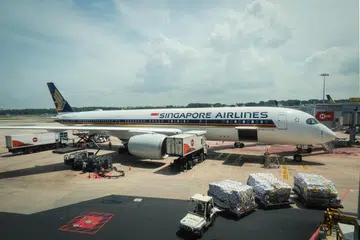
Xi has enacted a long-standing commitment by the Communist Party to achieve technological sovereignty. China’s manufacturing base goes from strength to strength. While its carmakers and other industrial companies find new export markets, American manufacturers continue to gather rust. Intel, Boeing and Detroit’s automotive groups have all suffered from strategic missteps.
And that was before Trump’s tariffs threw the broader American manufacturing sector into deep uncertainty, with the loss of 40,000 factory jobs since “Liberation Day”.
China has displayed a sophisticated approach to attracting foreign investment. Its leaders have enthusiastically welcomed companies such as Apple and Tesla to build their products in China, where they train workers to produce some of the most cutting-edge electronics components in the world.
The Trump administration, by contrast, unleashed immigration-enforcement officers to round up hundreds of South Korean workers in an electric vehicle battery plant in Georgia. Foreign engineers will think twice before they accept a posting to the land of the free when they see images of deportees in chains.
China’s approach to governance comes with social costs, namely all that authoritarianism. Americans would find that intolerable and rightly so. But China has also produced orderly cities, smooth logistics and manufacturing dynamism that Americans would be right to envy.
Trump’s policies are likely to stoke inflation while failing to deliver the material improvements that many Americans need, such as more homes and better mass transit – a failure made even worse by the vindictive cancelling of funding for Democratic states.
What we get out of his flirtation with authoritarianism are gilded ballrooms, detention centres and profound stress on the foundations of American institutions. ©2025 The Economist Newspaper Limited. All rights reserved
The writer is a research fellow at Stanford’s Hoover Institution and the author of Breakneck: China’s Quest to Engineer the Future