

Doomsday Clock and the paradox of nuclear weapons
With more flashpoints around the globe, are we inching ever closer to Armageddon?
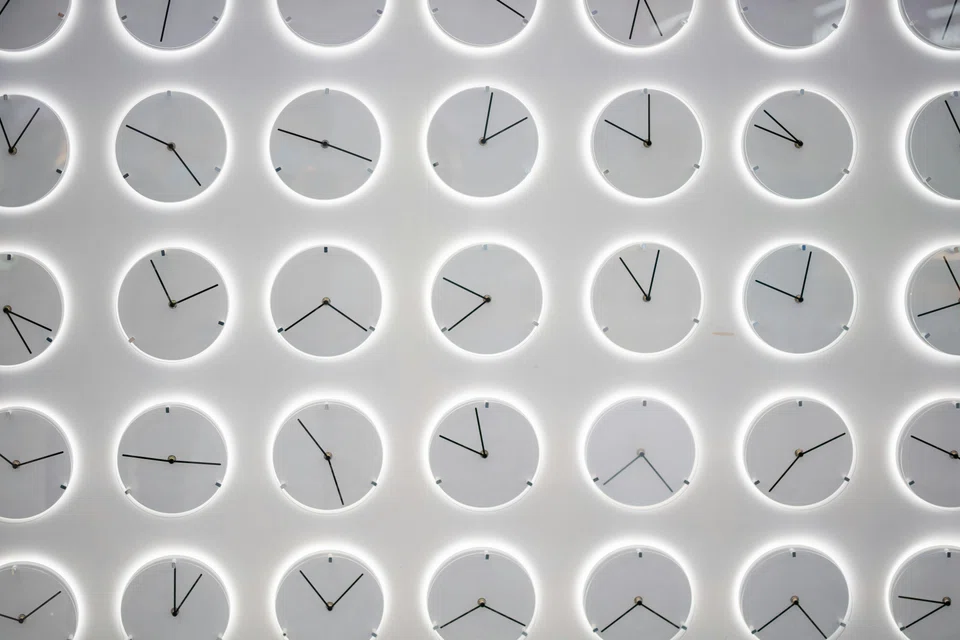

PEOPLE have become blase about the danger of nuclear war simply because the world has avoided it for the past 80 years. But in about three weeks, we will get a reminder of how close mankind really is to Armageddon when the Doomsday Clock is reset.
The Bulletin of Atomic Scientists does this every year to warn how close mankind is to destroying itself with its own technologies.
The Doomsday Clock was initially meant to track the risk of nuclear war. But in recent times, other threats such as climate change and rogue technologies are also given consideration.
Midnight on the clock represents catastrophe, with its minute and second hands denoting how close humanity is to an extinction event. This column will confine itself to nuclear arms issues.
In January 2025, the clock was set at 89 seconds to midnight. The Bulletin cited Russia’s threats to use nuclear weapons amid the Ukraine war for the setting.
If anything, things have worsened since then. Arms control treaties are in tatters. The last one between the US and Russia, limiting the size of their nuclear arsenals, expires on Feb 5. The US wants to resume atmospheric testing.
Closer to home, there was a brief war last year between India and Pakistan, which could have spiralled into a nuclear exchange and may yet come to pass.
Ukraine remains a potential trigger for a nuclear war this year. Kyiv gave up its USSR-era nukes, which might have kept the peace, for a border treaty and suffered invasion.
Now Washington has lost interest. The Europeans are determined to deny Moscow any semblance of a victory – without the means to intervene decisively. France and Britain, as Europe’s only nuclear powers, do not seem ready to go head-to-head with Moscow.
So the Europeans have decided to provide enough conventional arms and money for Ukraine to fight on without any real hope of victory. Will there be a temptation to use nukes if one side or the other looks set to win?
Europe is not the only global nuclear flashpoint.
Despite Washington’s boast that its bombing raid on Iran had destroyed its capacity to enrich nuclear fuel, there is evidence that Teheran has not been thwarted. In fact, US President Donald Trump’s warning in December 2025 that he may order another bombing, following talks with Israel’s Benjamin Netanyahu, is itself an admission that the previous raid was not totally successful.
A perverse outcome, that another raid could push Teheran to a nuclear breakout, cannot be ruled out.
In the Pacific, North Korea is unlikely to ever give its nuclear weapons after watching events in Ukraine, Iran and now Venezuela.
Pyongyang has shown very clearly it has no interest in talks whatsoever with Trump, or anyone else for that matter, on denuclearisation. Both China and Russia, for different reasons, have come to accept North Korea as a nuclear power.
So any notion that Washington has either the clout or ability to offer enough incentives for the Kim regime to give up its nukes is delusional.
Nuclear arms are great equalisers. No surprise, then, that the Trump administration’s National Security Strategy review does not even mention North Korea. The great paradox is that the possession of nuclear weaponry does serve as a deterrent and thereby helps keep the peace.
The Doomsday Clock setters should bear that in mind when they reset the dial.
TRENDING NOW

Britain’s mansion tax shows the difficulty of targeting wealth

Once staunchly pro-China, Malaysian Chinese businesses are now distancing themselves from Beijing

The only common thing in S-E Asia is that we all eat rice: Cisco’s Asean president

Singapore data centre operator DayOne opts for US IPO at likely US$20 billion valuation

